

Report
Mr. Husain Haqqani, Ashley J. Tellis
{
  "authors": [
    "Husain Haqqani"
  ],
  "type": "legacyinthemedia",
  "centerAffiliationAll": "dc",
  "centers": [
    "Carnegie Endowment for International Peace"
  ],
  "collections": [],
  "englishNewsletterAll": "ctw",
  "nonEnglishNewsletterAll": "",
  "primaryCenter": "Carnegie Endowment for International Peace",
  "programAffiliation": "SAP",
  "programs": [
    "South Asia",
    "Middle East"
  ],
  "projects": [],
  "regions": [
    "Iraq",
    "Afghanistan"
  ],
  "topics": [
    "Security",
    "Military",
    "Foreign Policy"
  ]
}
REQUIRED IMAGE
Since the declaration of war against terror, America and its allies have detained or killed 70 per cent of Al Qaida's senior leaders. But the frequency of terrorist acts has increased. This is because US strategy in Afghanistan assumed that terrorists couldn’t operate without state sponsorship. Ideological motivation is now more important for Al Qaida recruitment than a state sponsor.
Source: Carnegie
Victory in the war against terror is far from imminent
Originally published in Gulf News on April 10, 2004
In the 30 months since the US President George W. Bush's declaration of war against global terrorism, America and its allies have ostensibly detained or killed 70 per cent of Al Qaida's senior leaders. But the frequency of terrorist acts across the world, attributed to Al Qaida, has increased, compared with the pre-9/11 period.
Baby Al Qaidas are being spawned in new regions of the world, and a new generation of terrorists is stepping up to take the place of those killed in Afghanistan or detained at Guantanamo Bay.
Is the US under-estimating the enemy and not paying sufficient attention to Al Qaida again? Or is the war in Iraq, and the grandiose scheme of democratising and re-shaping the Middle East it represents, distracting the administration from the pursuit of the perpetrators of 9/11?
The State Department's counter-terrorism co-ordinator, J. Cofer Black, testified last week before the house Sub-committee on International Terrorism, Non-proliferation and Human Rights.
In his testimony, the 28-year veteran of the CIA's Directorate of Operations listed "some important successes against the Al Qaida organisation" resulting from the co-ordination of US efforts with those of its allies.
Al Qaida had been deprived of "a vital safe haven" in Afghanistan, most of its known leadership had been decapitated and it had been "separated from facilities central to its chem-bio and poisons development programmes".
But according to Black, "a new cadre of leaders" and "relatively untested terrorists" has started to emerge.
"Al Qaida's ideology is spreading well beyond the Middle East" and "has been picked up by a number of Islamic extremist movements which exist around the globe. Some groups have gravitated to Al Qaida in recent years, where before such linkages did not exist" – something that "greatly complicates our task in stamping out Al Qaida."
The State Department's senior counter-terrorism official described Iraq as the emerging "focal point for the foreign Jihadist fighters".
In short, the war in Afghanistan struck a severe blow to terrorism but the war in Iraq may have resuscitated them. The US will prevail against terrorism eventually but the problem will be with us for the foreseeable future.
The administration's desire to proclaim "mission accomplished" rather quickly might actually have prolonged the war against terrorism.
US politicians and analysts have said much about how the war against Al Qaida in Afghanistan should have been finished before starting another war in Iraq.
But the conduct of the war in Afghanistan itself has been insufficiently scrutinised. The decision to commit fewer troops to the Afghan war and "outsourcing" the hunt on the ground for Al Qaida to the Northern Alliance and Pakistan probably enabled Al Qaida operatives to disperse instead of waiting to be destroyed by US aerial bombardment.
The only reason the US feels it has destroyed 70 per cent of known Al Qaida leaders is that its knowledge of Al Qaida operatives was limited to begin with.
Less known veterans of the anti-Soviet jihad began slipping out of Afghanistan soon after the US started bombing the country on October 7, 2001.
Pakistan did not deploy significant numbers of troops along its border with Afghanistan until December 7, giving Al Qaida trainers almost two months to slip and spread out. These individuals have most likely served as midwives of the baby Al Qaidas the US now confronts from Morocco to Indonesia.
The core assumption of the US strategy in Afghanistan was that terrorists couldn't operate without state sponsorship. Once the Taliban regime in Afghanistan had been dislodged, and Al Qaida's safe haven destroyed, Osama bin Laden's organisation was expected to wither away or at least decline in significance as a source of threat.
There was little contingency planning for Al Qaida's ability to evolve in new ways, operating without state sponsorship in remote parts of insufficiently governed countries.
It is true that Al Qaida no longer has the elaborate training camps it had when the Taliban ruled Afghanistan. But these camps were partly used for training soldiers for conventional war in defence of Taliban control of Afghan cities.
With no cities to protect, Al Qaida no longer needs conventional military training. Suicide bombers can easily be trained in the caves of south and eastern Afghanistan and North-western Pakistan, the jungles of Mindanao in southern Philippines and in basements of homes in the Sunni triangle in Iraq.
Ideological motivation for young men to join its ranks is now more important to Al Qaida than a state sponsor. That motivation has been provided by the haste to war in Iraq.
Officials in several Muslim countries have noted a rise in recruitment to extremist groups and even US officials (including Black) acknowledge that "there are literally thousands of Jihadists around the world".
These extremists have added anti-Americanism to their local causes, which in the past only involved local separatist wars in remote parts of the world, such as Chechnya and Kashmir.
If terrorist recruitment is up, Al Qaida has morphed into something different but equally deadly and terrorists continue to raise funds through illicit means such as drug trafficking, victory in the war against terrorism is far from imminent.
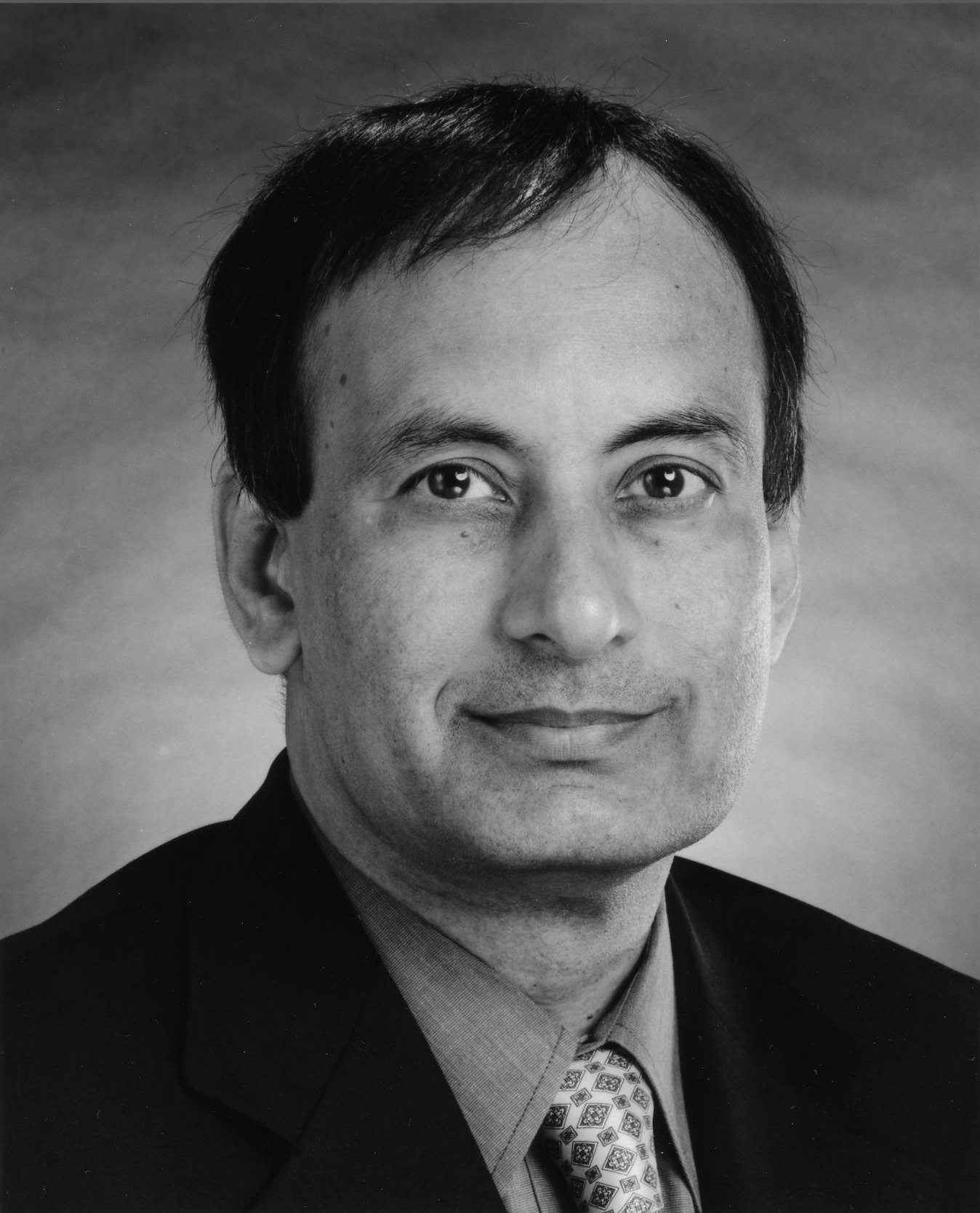
Pakistani columnist Husain Haqqani is a visiting scholar at the Carnegie Endowment for International Peace in Washington. He served as adviser to Prime Ministers Benazir Bhutto and Nawaz Sharif and as Pakistan's ambassador to Sri Lanka.
Former Visiting Scholar
Recent Work
Mr. Husain Haqqani, Ashley J. Tellis
Mr. Husain Haqqani
Carnegie does not take institutional positions on public policy issues; the views represented herein are those of the author(s) and do not necessarily reflect the views of Carnegie, its staff, or its trustees.

Canadian Prime Minister Mark Carney has twice inspired praise for standing up to U.S. President Donald Trump: at the 2026 World Economic Forum in Davos and on Canada-U.S. trade negotiations. Is Carney showing a third way better than the EU has in dealing with the Trump administration?

Rym Momtaz, ed.

The EU’s responses to two recent incidents expose the gulf between European perceptions and capabilities. Unless the union can bridge that gap, it will never become a real geostrategic power.
Rym Momtaz

European states control several Overseas Countries and Territories around the world that carry strategic, economic, and environmental weight. As great powers challenge the rules-based order, defending them is a geopolitical imperative for Europe.

Marc Pierini

As we close out another season of Strategic Europe, it is worth taking stock of the deep shifts underway.
Rym Momtaz
The EU had to compromise to adopt a twenty-first sanctions package against Russia, exposing growing cracks in the union’s resolve. Is this latest, weaker round worth it to keep pressure on Moscow?
Rym Momtaz, ed.