

Other
Anders Aslund
{
  "authors": [
    "Anders Aslund"
  ],
  "type": "legacyinthemedia",
  "centerAffiliationAll": "dc",
  "centers": [
    "Carnegie Endowment for International Peace"
  ],
  "collections": [],
  "englishNewsletterAll": "ctw",
  "nonEnglishNewsletterAll": "",
  "primaryCenter": "Carnegie Endowment for International Peace",
  "programAffiliation": "russia",
  "programs": [
    "Russia and Eurasia"
  ],
  "projects": [],
  "regions": [
    "Caucasus",
    "Russia",
    "Eastern Europe"
  ],
  "topics": [
    "Political Reform",
    "Democracy",
    "Economy",
    "Trade",
    "Foreign Policy"
  ]
}
REQUIRED IMAGE
Source: Weekly Standard
Rarely has a president, successful in his first term, collapsed so totally in his second term as Russia's Vladimir Putin did in 2004. Alberto Fujimori of Peru might offer the closest parallel, with Carlos Menem of Argentina another contender.
For four years, starting with his election in 2000, Putin seemed to have nothing but good fortune. Russia saw substantial and far-reaching reforms, including radical tax reform with a flat income tax of 13 percent, the legalization of private ownership of land, judicial reform, labor market reform, and pension reform. The economy boomed, growing 6.5 percent a year. Abroad, Putin pursued a realist policy, trying to be useful to others, like the United States, while safeguarding Russia's national interests.
Still, ominous signs were never altogether absent. Putin kept extending his political control, and he promoted a small group of fellow KGB officers from St. Petersburg far beyond their competence. Fortunately, their rising power was balanced by that of the big businessmen known as the oligarchs, leaving policy to be guided by a few reformers in key government positions, notably Minister of the Economy German Gref and Minister of Finance Alexei Kudrin. By playing the equally unpopular KGB and oligarchs off against each other, Putin successfully appealed to a broad Russian public, gaining an unprecedented approval rating.
Then in the past year everything changed. Putin's loss of stature has been defined by three signal events: the confiscation of the oil company Yukos, the state's failure to respond to the Beslan hostage drama in the Northern Caucasus
Putin's winning streak ended with the arrest of Mikhail Khodorkovsky, the principal owner of Yukos, on October 25, 2003. The key motives were to enlarge Putin's political control and grab assets. The arrest scared Russia's businessmen out of politics. All countervailing sources of power were eliminated or curbed. Suddenly, Putin was governing on behalf of himself and a narrow circle of KGB officers.
In hindsight, Putin's concentration of power appears both systematic and deliberate. First, he subdued the media. Then he took out the oligarchs, of whom Khodorkovsky was the third to be eliminated. Then, partly by manipulating the electoral process, he finagled the removal or marginalization of the admittedly corrupt regional governors. With the economy booming and the president's control of the bureaucracy and the media firm, his United Russia party won a two-thirds majority in the Russian State Duma in December 2003. Then in March 2004, Putin himself was reelected with over 70 percent of the votes. These elections were deemed free but not fair. Russia's repression may not be severe, but it is effective. Potential opposition figures are coopted or marginalized rather than arrested.
Putin's key weakness is an insatiable appetite for political control. He has even replaced his strong first-term chief of staff and prime minister with two individuals famous for their indecision. This leaves all decisions to the president, but he himself is not very decisive. As a result, his administration is all but paralyzed. In addition, all information is manipulated by the security services, and most feedback mechanisms have been dismantled.
On top of everything else, Putin has proven himself extremely stubborn. Once he has finally chosen a course of action, he will not change it even to correct a mistake. His failed policies on Chechnya and Yukos are cases in point. Indeed, all three big developments of the past year illustrate how dysfunctional Putin and his government have become.
The Yukos affair boils down to confiscation by means of arbitrary taxation at the behest of kangaroo courts. In one blow, Putin made a joke of both his radical tax reform and his enlightened judicial reform. He also threw out the successful Anglo-American economic strategy based on competing private resource companies that he had inherited from Boris Yeltsin. And, even as he indulged his desire to humiliate the independent-minded Khodorkovsky, his KGB men were striving to seize assets for themselves through state enterprises.
Naturally, Russia's business leaders are asking who is next, and the tax authorities and prosecutors have made abundant suggestions to keep them on their toes. Who wouldn't scale back his investment plans, faced with such a prospect? Russia's previously high production and investment forecasts are steadily being downgraded because of the ever more uncertain business conditions despite the commodity boom.
The Beslan hostage drama was a great human tragedy, but it also afforded the Putin regime many black marks. The hostage-takers reached the school because of the extraordinary corruption of the security services. Amazingly, the government was totally passive during the crisis and told the public nothing but lies. On the third day,
After the catastrophe, Putin did not sack any of the KGB appointees who had failed to act, refusing to hold them accountable. Meanwhile, his ill-advised policy on Chechnya continues unaltered and might destabilize a broader swath of the Caucasus.
Finally, late last year, Ukraine held its presidential election. From the outset, a showdown loomed between the pro-democratic candidate Viktor Yushchenko and the oligarchic ex-convict, Prime Minister Viktor Yanukovich. All opinion polls suggested a significant majority for Yushchenko in an honest election.
In his most spectacular failure to date, President Putin injected himself into this campaign, twice going to Ukraine to stump personally for Yanukovich. Russian businesses were compelled to put up some $300 million for the Yanukovich campaign, according to allegations from the Yushchenko camp. Putin congratulated Yanukovich on his victory despite palpable fraud. In the Ukraine matter, Putin showed himself ill-informed, antidemocratic, anti-Western, and ineffective.
It should come as no surprise that Yukos, Beslan, and Ukraine were hardly freak accidents. Instead, they were the fruit of Putin's extreme centralization of decisionmaking, his systematic use of disinformation, and his abolition of all corrective mechanisms, compounded by great personal stubbornness.
Like Mikhail Gorbachev in 1989, Putin has drained all power out of the formal institutions of government. His legitimacy resides only in his popularity, which will inevitably crumble after he has alienated most elites and paralyzed his government. The Putin regime has too narrow a base and is too ineffective to last. Although it is hard to predict how fast it will collapse or what will replace it, the regime is likely to unravel sooner than anybody now dares to suggest.
Putin's weakness is purely political and does not affect the economy much. But regime change can occur in the midst of an economic boom, as we have just seen in Ukraine. The problem is that the current regime is not viable, and its inherent shortcomings are aggravated with each turn of events.
This analysis of the weakness of the Putin regime has serious implications for U.S. policy toward Russia. First, realistically, the regime will probably end rather soon. Second, especially on the security side, with so poorly informed and ineffective a leader, Russia can perform few services useful to the United States. Third, Putin showed himself in Ukraine to be both antidemocratic and anti-American, leaving little common ground with the United States. Fourth, Putin has demonstrated a rare inability to learn from his mistakes. The only good news is that Russia is too weak to be a threat.
Ironically, Putin is forcing U.S. policy toward Russia to come full circle, back to where it was in the late Soviet period. Once again, the United States must manage the decline of a mildly authoritarian regime armed with nuclear weapons. It should be possible to do this without causing any great harm, but we should harbor no illusion that this colossus with feet of clay will stand up and fight with us in the war on terror.
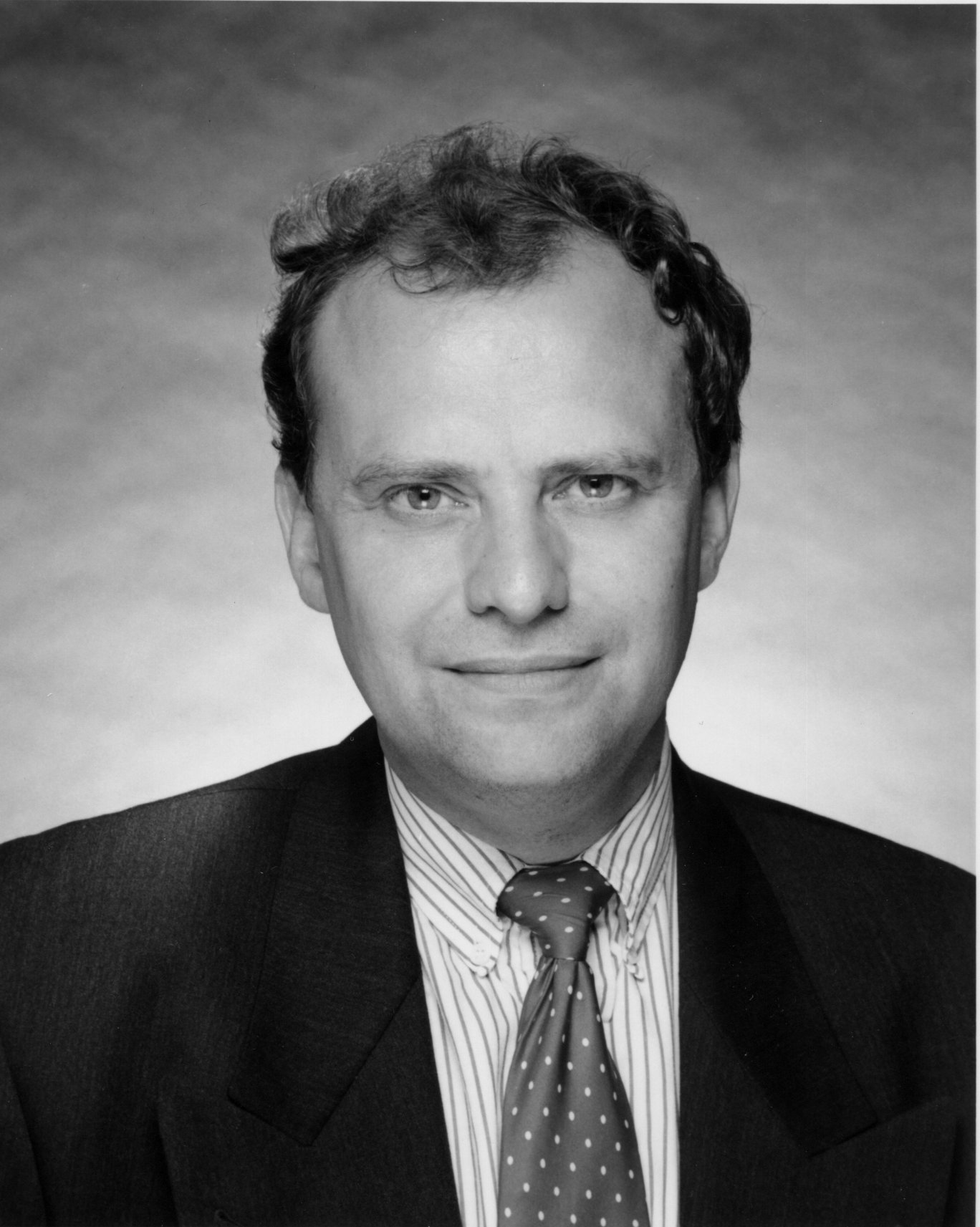
Anders Åslund is director of the Russian and European Program at the Carnegie Endowment for International Peace.
Former Senior Associate, Director, Russian and Eurasian Program
Recent Work
Anders Aslund
Anders Aslund
Carnegie does not take institutional positions on public policy issues; the views represented herein are those of the author(s) and do not necessarily reflect the views of Carnegie, its staff, or its trustees.

With its public finances in shambles, the far right polling at 35 percent ahead of the 2027 presidential election, and a growing protest movement, is France’s crisis a threat to the EU’s geopolitical awakening?

Rym Momtaz, ed.

Ahead of a tough winter for Ukraine, Donald Trump’s swing back toward Russia bodes ill. But instead of panicking, Kyiv’s European allies are focusing on action.
Rym Momtaz

Funding Ukraine remains a priority for European leaders. As Russia’s war of aggression heads into another winter, two feasible options to mobilize support for Kyiv should be fast-tracked.


Vladyslav Rashkovan, Gregory P. Wilson

While the EU and European governments are embracing the much-lauded middle-power moment, this entails three difficult conundrums.

Richard Youngs

Europe is facing rising populism internally as well as external pressures from Russia, China, Turkey, and the United States.

Dimitar Bechev