

Commentary
Maria Lipman
{
  "authors": [
    "Maria Lipman"
  ],
  "type": "legacyinthemedia",
  "centerAffiliationAll": "",
  "centers": [
    "Carnegie Endowment for International Peace",
    "Carnegie Russia Eurasia Center"
  ],
  "collections": [],
  "englishNewsletterAll": "",
  "nonEnglishNewsletterAll": "",
  "primaryCenter": "Carnegie Russia Eurasia Center",
  "programAffiliation": "",
  "programs": [],
  "projects": [],
  "regions": [
    "Caucasus",
    "Russia"
  ],
  "topics": [
    "Political Reform",
    "Democracy",
    "Economy"
  ]
}
Source: Getty
In Russia the state has been tightening control over media ever since president Putin came to power. National television was by far the most important target, but rather than harassing journalists and editors, the Kremlin opted for controlling the owners - a method that has proved to be fairly effective in furthering the Kremlin needs.
Source: Washington Post Blog

After its fourth time on air, however, the show was shut. The invited guests had boldly spoken about government officials interfering with jury courts and orchestrating rulings to serve the Kremlin interests. The closure of the show was taken fully for granted and didn't make much buzz. In fact if the show had gone on with the same hosts, then this would be something to talk about.
In Russia the state has been tightening control over media ever since president Putin came to power. National television was by far the most important target, but rather than harassing journalists and editors, the Kremlin opted for controlling the owners - a method that has proved to be fairly effective in furthering the Kremlin needs. The government campaign against the biggest privately owned media group was launched back in 2000 within days of Putin's inauguration. One year later, by a combination of business litigations and intimidation techniques used against the owner, media tycoon Vladimir Gusinsky, and his associates, the group, and most importantly, its crown jewel, the country's best television channel NTV, was taken over by the giant natural gas monopoly Gazprom whose ties to the Kremlin are so close that the two are basically inseparable. (I used to work for the same media group as deputy editor of its newsweekly magazine. As soon as the new ownership structure was in place, all our staff of about 80 people was fired in one day, and a whole new staff was brought in. The magazine continued to publish under the same name, but it was no longer a newsmagazine. Gradually, it evolved as a something of a family reading weekly. The new editors never informed the reader of what had happened or why.)
By mid-2003 all three national TV channels with political and news coverage were under tight Kremlin control. By mid-2004 the last live talk shows as well as those with uncensored political satire were taken off the air and some of the recalcitrant journalists were forced to go. Today political and news coverage on national TV is thoroughly filtered, measured and orchestrated so that nothing unexpected or unpleasant for the Kremlin may appear on the screen. National networks reach almost 100 percent of the Russian households, and to many this is the only source of information about national politics, policy-making and developments elsewhere on the vast Russian territory. Control over television helps the Kremlin shape public attitude and opinion on politically sensitive issues. According to a recent estimate, the lion's share of TV political coverage is given to the broad range of government incumbents and only a few percent, to their isolated opponents. The coverage of the president is one-hundred percent positive; that of his government, aides, and loyalists is almost invariably positive too.
Control over television is conducted by a well-coordinated team of loyal TV managers and their informal supervisors in the Kremlin. Their collaboration is not about the Kremlin dictating the agenda and forcing TV professional to boost this and downplay that. Highly professional, talented and sophisticated top managers of national channels are willing partners in the effort to create a picture of Russia that suits the interests of the top decision-makers in the Kremlin. They know how to censor their channels no less than their Kremlin minders do. Television reporters, too, have learned the rules of loyal coverage. These days it is inconceivable for somebody to break the unspoken limits. It is fairly common, however, for TV reporters to censor themselves even before - and sometimes more strictly - than their managers would.
In the most striking, but not unique example of blatant control over television, in the fall of 2004 the Kremlin radically limited the coverage of Beslan tragedy in which over 330 people, most of them children were killed in a monstrous terrorist attack in a school in Northern Ossetia. After the security operation was over, television coverage was under tight lid: there was no footage of survivors or victims' relatives, no interviews with independent terrorism experts, no public discussions on any of the national channels. The president and his government didn't face any political consequences of the tragedy, even in spite of significant and solid evidence that the horrible number of deaths resulted from incompetent, and ill-organized security operation whose commanders were concerned about avoiding responsibility, rather than rescuing hostages' lives. But this evidence did not surface on television screens.
One can still easily find abundant information about Beslan tragedy in print press, online publications and on the radio. Their audiences may be incomparable to that of national television, but the remaining media pursuing independent editorial policy offer a broad variety of news and reportage, analysis and opinion that shape a picture of Russia dramatically different from that of Russia on the TV screen. Some of this information may be enough to cause huge political fallout in a country with real political opposition and at least some degree of public political activism, but in Russia it remains fully irrelevant. The Kremlin simply ignores it.
The decline of mainstream print media is lamented all over the world, in any country television has a bigger audience. Yet, in Russia the difference between TV and print media audiences is truly dramatic. While national TV networks reach almost all of Russia's 140 million people, Kommersant, our best mainstream daily has a circulation of about 100 thousand distributed mainly in Moscow. Radical separation of television from the independent radio or print voices is another know-how of the Kremlin. Television never picks up newspaper stories that are in conflict with the televised picture; print reporters who offer a conflicting reportage never get invited on TV. The limited world of free expression makes about as little influence on policy-making as samizdat (secretly distributed texts that the Communist police state deemed anti-Soviet) did in the Soviet days.
But even though they may be irrelevant, recently the Kremlin has increasingly expanded control over print media as well. The arranged change of ownership that worked so well for television is now used to ensure that high-quality dailies are in reliable hands. In late summer Kommersant was sold to a businessman with close ties to Gazprom. With the help of the new fully loyal owner, the Kremlin will likely replace the editor-in-chief, and then shape the editorial policy the way it sees fit.
Russian business is properly intimidated so every tycoon readily fulfills what the Kremlin desires. And just as businessmen are not a cohesive group that would stand up to defend its interests, all other professional or social groups in the Russian society are atomized, distrustful and unwilling to come together for a cause. Journalists are no exception. They don't share a corporate spirit and for very rare exceptions would not defend a colleague who fell out of favor with the authorities.
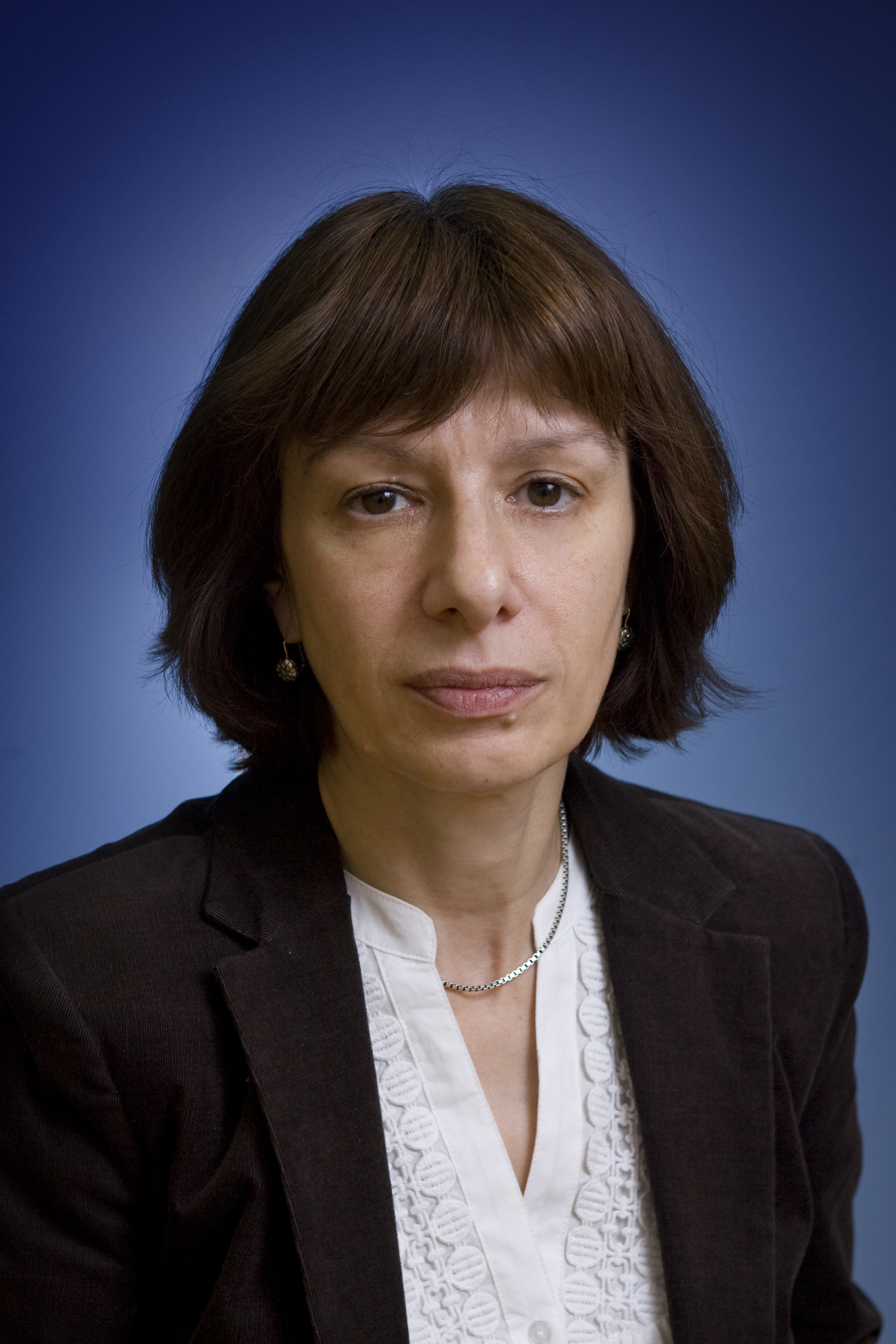
Former Scholar in Residence, Society and Regions Program, Editor in Chief, Pro et Contra, Moscow Center
Lipman was the editor in chief of the Pro et Contra journal, published by the Carnegie Moscow Center. She was also the expert of the Carnegie Moscow Center’s Society and Regions Program.
Recent Work
Maria Lipman
Maria Lipman
Carnegie does not take institutional positions on public policy issues; the views represented herein are those of the author(s) and do not necessarily reflect the views of Carnegie, its staff, or its trustees.

A summer of escalation in the Black Sea has hurt Ukraine economically and is exacerbating world food security. A truce is needed—as is a broader reframing of Europe’s Ukraine strategy.

Thomas de Waal

European Commission President Ursula von der Leyen is about to give her annual address on the state of the EU. Here’s what she won’t—but should—say.

Rym Momtaz

Radical-right parties are expected to do well in upcoming elections in four of the EU's biggest member states. If successful, they could prevent the union from addressing key challenges ahead.

Stefan Lehne

An overwhelming victory by a far-right-wing party in a small state in eastern Germany will have major repercussions for Chancellor Friedrich Merz’s coalition.

Judy Dempsey

The EU’s responses to two recent incidents expose the gulf between European perceptions and capabilities. Unless the union can bridge that gap, it will never become a real geostrategic power.
Rym Momtaz