

Paper
Paul Salem
{
  "authors": [
    "Paul Salem"
  ],
  "type": "legacyinthemedia",
  "centerAffiliationAll": "dc",
  "centers": [
    "Carnegie Endowment for International Peace",
    "Malcolm H. Kerr Carnegie Middle East Center"
  ],
  "collections": [],
  "englishNewsletterAll": "democracy",
  "nonEnglishNewsletterAll": "",
  "primaryCenter": "Malcolm H. Kerr Carnegie Middle East Center",
  "programAffiliation": "DCG",
  "programs": [
    "Democracy, Conflict, and Governance",
    "Middle East"
  ],
  "projects": [],
  "regions": [
    "Middle East",
    "Iran",
    "Lebanon",
    "Syria"
  ],
  "topics": [
    "Political Reform",
    "Democracy",
    "Security"
  ]
}
Source: Getty
The assassination of Lebanese industry minister Pierre Gemayel necessitates a balanced policy of moving ahead with the United Nations special tribunal on assassinations in Lebanon while also reducing conflict and instability through constructive and multilateral dialogue.
Source: Financial Times

In Lebanon, the killing has revived the fear fomented by the string of assassinations in 2005. It has also reduced by one the narrow margin that the anti-Syrian “March 14 movement” retains in the government and parliament. If two more ministers leave or are removed, the government will fall. Politically, it reinforced the popularity of the March 14 coalition and appeared to deal a blow to Hizbollah’s main ally in the Christian camp, Michel Aoun. Hizbollah itself seemed unaffected, condemning the murder, but only postponing its planned anti-government demonstrations for the duration of the period of mourning.
The government has approved the establishment of the UN special tribunal into the assassinations of former prime minister Rafiq Hariri and other Lebanese leaders, including the recently slain Gemayel. While there is official consensus among all parties in Lebanon over the need to establish the tribunal, much tension has accompanied attempts to get it approved by parliament – with the opposition calling the government’s actions unconstitutional.
At the international level, the murder disrupts the momentum in London and Washington for a fundamental change of approach in the Middle East. Regardless of who actually perpetrated it, much public commentary has laid the blame at the doorstep of Damascus. Syria has condemned the killing, denies any responsibility and protests that the act, carried out on the day that the UN Security Council was meeting to finalise the tribunal agreement, could not have been timed more effectively to hurt its interests. Nevertheless, the assassination revived international wariness of the Syrian regime and helped rush the tribunal agreement through the Security Council.
Iran, on the other hand, might not have been similarly affected. Although Hizbollah, Iran’s main ally in Lebanon, had been threatening to stage demonstrations and bring down the government, it has not yet done so. Hizbollah and its allies in the Amal movement simply withdrew from the government and satisfied themselves with fiery rhetoric, as the government met and approved the special tribunal agreement. Although some escalation is still likely to occur, it would seem Tehran and Damascus might have differed on the handling of the tribunal, with Damascus urging a more vigorous Hizbollah campaign to stop it and Tehran unwilling to take the international blame for having its allies block it.
Despite the latest events, the logic of reaching out to Tehran and Damascus still holds. The two are major forces in the region and there is much to be gained from robust and responsible dialogue between them and the international community. With the removal of Saddam Hussein and the Taliban, Iran has made gains in the region, helped by the rise in oil prices. Iran will be an important participant in the future of Iraq and in the stability or otherwise of the Middle East. Despite sharp differences over its nuclear programme, Iran shares with other countries an interest in a stable Iraq. It seeks assurances that it will not be attacked or overthrown, that it will not be considered a pariah state and that its role in the region will be recognised. In exchange, it should be open to co-operation in Iraq, security in the gulf, as well as co-operation in stabilising Lebanon.
Damascus is in a much more precarious position. It does not have the oil resources or the ideological reach of Iran; it was pushed out of Lebanon last year and it might be implicated in the UN assassination investigation. It also has much to fear from a disintegrating Iraq. It seeks assurances that the US is not out to topple the regime and that the UN investigation will not be used as a cover for regime change. By sending his foreign minister to Iraq and opening an embassy in Baghdad, President Bashar al-Assad signalled his willingness to work with the Iraqi government to help stabilise the country. He has also repeated his interest in re-opening talks on the Golan Heights.
Samuel Johnson said that nothing concentrated the mind more than a hanging. The assassination of Pierre Gemayel is a wake-up call that if the international community does not act quickly to manage the recent conflicts and crises that have erupted in Lebanon and the region, the violence will escalate. British prime minister Tony Blair was right to recommend the reintroduction of diplomacy and dialogue into the corrosive brew of unilateral pre-emptive militarism. The killing in Lebanon reminds us all that there are dangerous and violent elements at play. But there is no alternative to engaging governments and encouraging states to become partners rather than pariahs in the international community, thus having a stake in playing by its rules.
The writer is the director of the Carnegie Middle East Centre in Beirut
Copyright The Financial Times Limited 2006
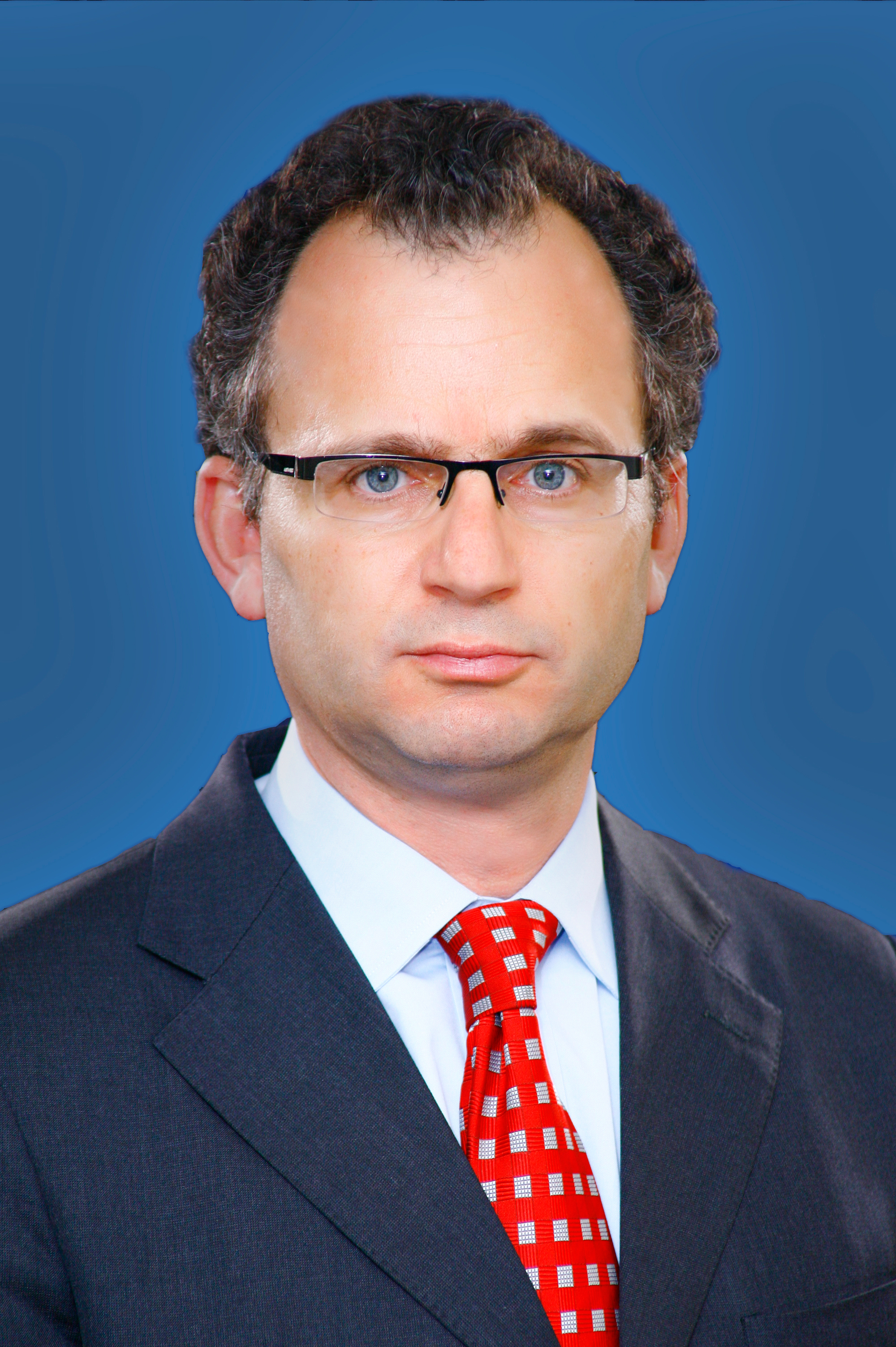
Senior Fellow at the Middle East Institute
Paul Salem is a senior fellow at the Middle East Institute.
Recent Work
Paul Salem
Paul Salem
Carnegie does not take institutional positions on public policy issues; the views represented herein are those of the author(s) and do not necessarily reflect the views of Carnegie, its staff, or its trustees.

Before the next wave of EU enlargement takes place, the union needs to grapple with thorny questions of how power is distributed among its members.


Emil Sondaj Hansen, Ditte Brasso Sørensen

The new U.S.–Denmark–Greenland agreement will help Washington exert political, economic, and financial dominance under the guise of security. Yet, it acknowledged Copenhagen’s and Nuuk’s sovereignty on the island.

Marc Pierini

A summer of escalation in the Black Sea has hurt Ukraine economically and is exacerbating world food security. A truce is needed—as is a broader reframing of Europe’s Ukraine strategy.

Thomas de Waal

Are Germany’s economic, industrial, and political struggles becoming a liability for the EU’s ability to rise to the geopolitical moment?

Rym Momtaz, ed.

Radical-right parties are expected to do well in upcoming elections in four of the EU's biggest member states. If successful, they could prevent the union from addressing key challenges ahead.

Stefan Lehne