

Commentary
Maria Lipman
{
  "authors": [
    "Maria Lipman"
  ],
  "type": "legacyinthemedia",
  "centerAffiliationAll": "",
  "centers": [
    "Carnegie Endowment for International Peace",
    "Carnegie Russia Eurasia Center"
  ],
  "collections": [],
  "englishNewsletterAll": "",
  "nonEnglishNewsletterAll": "",
  "primaryCenter": "Carnegie Russia Eurasia Center",
  "programAffiliation": "",
  "programs": [],
  "projects": [],
  "regions": [
    "Caucasus",
    "Russia"
  ],
  "topics": [
    "Political Reform",
    "Economy"
  ]
}
Source: Getty
Source: Washington Post

Such extravagant political performances may be typical at, say, a Greenpeace protest but not over something that has in fact become increasingly common: a government encroachment on voting rights.
Russia is undergoing yet another round of election-rule tightening -- as usual, a product of the country's rubber-stamp legislature. The protesters see it as marking the "virtual elimination of the system of free elections" in Russia, as they said in their statement. Over the past two years, election rules have been repeatedly refashioned and readjusted so that no undesired forces or figures can slip through the process.
Meanwhile, the Kremlin has managed to obstruct the financing of unwelcome political projects. Russian businessmen, while afraid to sponsor autonomous political activity, have given generously to pro-Kremlin political groups, movements and initiatives. With the best and biggest companies increasingly coming under the Kremlin's control, pro-Kremlin political forces are assured of virtually unlimited budgets. In addition, political loyalists can draw on what's called the "administrative resource" -- a network of administrators at various levels who are eager to do the regime's bidding.
In such a political environment, election results are preordained. There is a flatness about campaigns -- a lack of enthusiasm and emotion. Which is the way the Kremlin likes it.
One of the innovations of the new election bill is a ban on creating a "negative image" of political opponents. This is one way of depriving a campaign of any meaning whatsoever, as just challenging the policies of the incumbent authorities can now be interpreted as a violation of the law.
So while there is always a constituency that dutifully turns out on Election Day to vote "as the bosses say," a great many others will choose to stay home, since they assume their vote will make no difference.
Of course, a low turnout might call into question the legitimacy of the representative branch, but apparently the Kremlin thinks it can live with this image problem. Another provision of the new bill eliminates the minimum percentage turnout requirement for an election to be valid. The ruling elite thus largely reduces its power base to the core of Soviet-style voters who accept a no-choice vote -- while alienating the more advanced and entrepreneurial elements of the population.
Essentially, the protesters hanging on the ropes with their banner over the Moscow River can do nothing about all this. A boycott of elections -- proposed in their statement as the "only real means of political struggle left in the opposition's arsenal" -- will make no sense if there is no minimum-turnout requirement. The authority of the Kremlin, on the other hand, is unconstrained.
And thus the encroachment on political rights will continue. One recent initiative has been to abolish mayoral elections. With gubernatorial elections already replaced by Kremlin appointments, this is a logical next step in the dismantling of representative democracy.
A common argument has it that President Vladimir Putin may have cracked down on freedoms and democracy and recentralized power in the Kremlin, but at least he has ensured order and stability. In fact, Putin may have "stabilized" public politics, but there's no more law or order about his regime than there was in Boris Yeltsin's "chaotic" Russia.
The political scene has been fully cleared of genuine competition, and the executive and legislative branches filled with loyalists who need not worry about public accountability. As a result, the members of this greedy bureaucracy have become a privileged circle in which they seek to amass power, which in Russia is closely linked to property and wealth. In the process, they force those with less clout to sell their lucrative properties, as happened not long ago with a Urals titanium factory. If the owner doesn't accept the deal, he can expect the tax police to "discover" huge instances of evasion, the environmental agency to reveal improper use of his lands or the prosecutor's office to begin proceedings against him. All these government agencies would be working on behalf of the powerful buyer. This is hardly law and order.
Meanwhile, the regime's loyalists are themselves engaged in a fierce struggle, especially as the crucial 2007-08 elections draw near. All are wondering what the power shifts that Putin has in mind will mean for them personally. Thus, disputes among them grow ever more intense and vicious, creating an atmosphere of rampant corruption and crime. Court rulings are commonly twisted as a result of bribery or pressure from the executive. Contract killings are used to settle scores with rivals and adversaries.
Aside from the recent high-profile assassinations, there have been the killings, in a period of less than three months, of three bankers, one of them deputy chairman of the central bank. All were slain by contract murderers. A contender for the mayoralty in a Far Eastern town was killed at the height of the election campaign. A pro-Moscow Chechen commander was shot by a group of Chechen law enforcers in broad daylight in the middle of Moscow -- in front of passersby and a group of Moscow militiamen who, according to newspaper reports, watched from across the street. None of the perpetrators was arrested.
Real competitive politics, if they were ever allowed, might be a threat to the ruling elite. Fierce infighting within the regime is a threat to the entire nation and its future.
Masha Lipman, editor of the Carnegie Moscow Center's Pro et Contra journal, writes a monthly column for The Post.
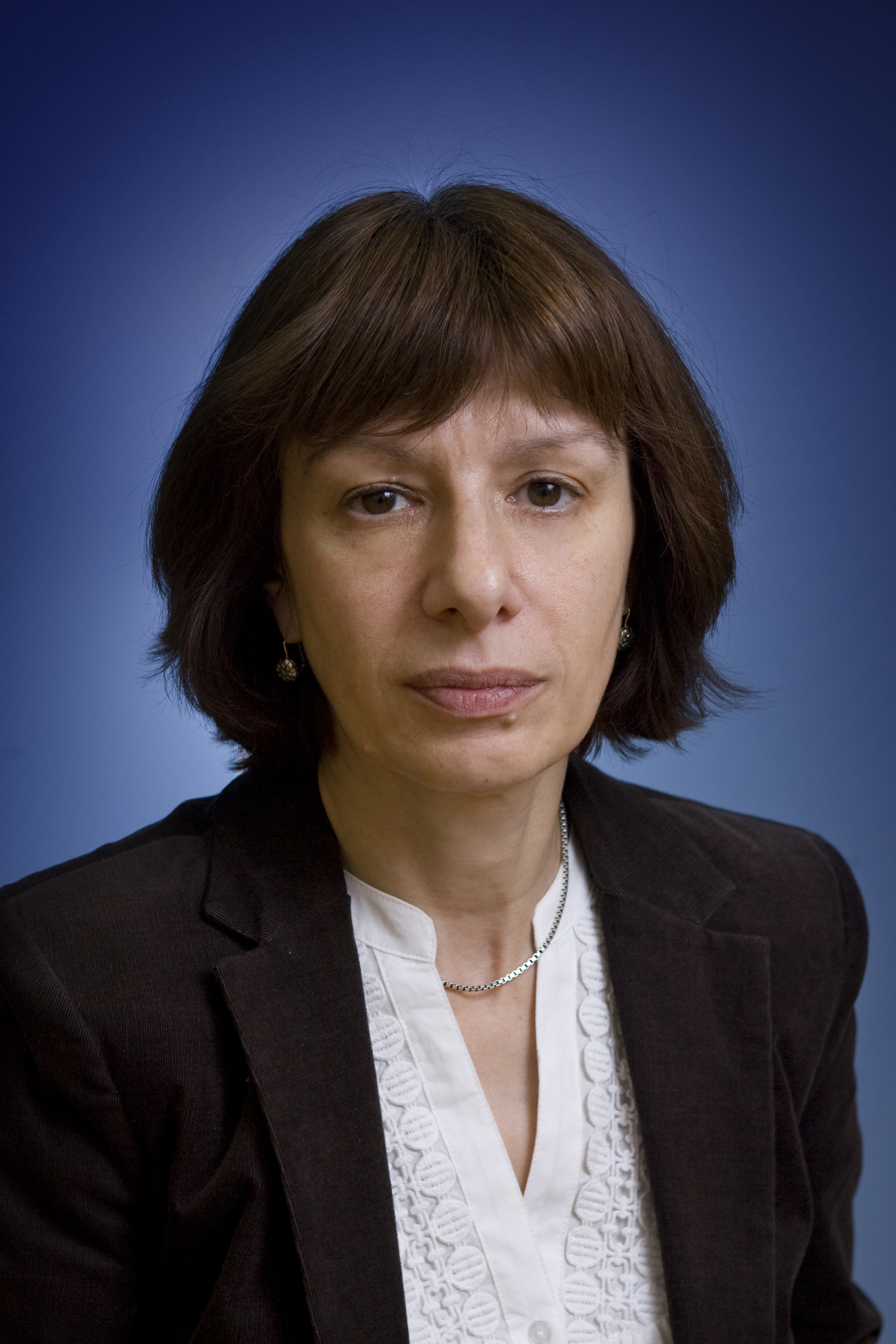
Former Scholar in Residence, Society and Regions Program, Editor in Chief, Pro et Contra, Moscow Center
Lipman was the editor in chief of the Pro et Contra journal, published by the Carnegie Moscow Center. She was also the expert of the Carnegie Moscow Center’s Society and Regions Program.
Recent Work
Maria Lipman
Maria Lipman
Carnegie does not take institutional positions on public policy issues; the views represented herein are those of the author(s) and do not necessarily reflect the views of Carnegie, its staff, or its trustees.

Montenegro and Albania are frontrunners for EU enlargement in the Western Balkans, but they can’t just sit back and wait. To meet their 2030 accession ambitions, they must make a strong positive case.


Dimitar Bechev, Iliriana Gjoni

The U.S.-sponsored TRIPP deal is driving the Armenia-Azerbaijan peace process forward. But foreign and domestic hurdles remain before connectivity and economic interdependence can open up the South Caucasus.



Thomas de Waal, Areg Kochinyan, Zaur Shiriyev
The war in Ukraine is costing Russia its leverage overseas. Across the South Caucasus and Middle East, this presents an opportunity for Europe to pick up the pieces and claim its own sphere of influence.

William Dixon, Maksym Beznosiuk

Amid increased polarization and the influence of disinformation, radical-right parties are once again gaining traction across Europe. With landmark elections on the horizon in several countries, are the EU’s geostrategic vision and fundamental values under existential threat?

Catherine Fieschi, Cas Mudde

Economic growth is at the heart of a dilemma between planetary and international security.

Olivia Lazard