

Commentary
Sufyan Alissa
{
  "authors": [
    "Sufyan Alissa"
  ],
  "type": "legacyinthemedia",
  "centerAffiliationAll": "dc",
  "centers": [
    "Carnegie Endowment for International Peace",
    "Malcolm H. Kerr Carnegie Middle East Center"
  ],
  "collections": [],
  "englishNewsletterAll": "democracy",
  "nonEnglishNewsletterAll": "",
  "primaryCenter": "Malcolm H. Kerr Carnegie Middle East Center",
  "programAffiliation": "DCG",
  "programs": [
    "Democracy, Conflict, and Governance",
    "Middle East"
  ],
  "projects": [],
  "regions": [
    "Middle East"
  ],
  "topics": [
    "Political Reform",
    "Democracy",
    "Economy"
  ]
}
Source: Getty
Source: Dar Al-Hayat

In Lebanon, for example, the public debt hit $42 billion in 2006 (185% of the GDP in the same year). In Egypt, the public debt reached about 110% of the GDP in 2006. Perhaps the most important reasons for debt accumulation are the high volume of public spending in these countries, especially in the non-productive areas; the high prices of imported materials, such as fuels; the low tax revenues, because of the small-sized levies due to the weakness of economic activity and the decline in tariffs; the absence of effective mechanisms for collecting taxes, and tax evasion by many citizens and businessmen due to the absence of confidence in the economic programs and their governments' policies.
Decision-makers in the Arab countries often avoid talking about the rampant corruption of the public sector and senior politicians. This corruption has led to the waste of public money, and has remarkably contributed to the accumulation of debt in these countries. Several Arab countries have topped the Transparency International's list of corruption-riddled countries. It is no coincidence that several countries that are classified as suffering from a high level of corruption are also suffering from a high level of public debt.
The efforts aimed at reducing the public debt and providing the cash needed to pay off the debts of these countries revolve around three possibilities:
The first is related to the increase in government revenues. It is known that the volume of government revenues is linked to the collection of taxes and customs. Arab countries are suffering from a clear imbalance in this context due to the lack of frameworks and effective mechanisms for collecting taxes and customs, the absence of trust in Arab governments and their programs, in line with the principle of 'no taxation without representation'; in addition to the weakness of economic activity in a number of Arab economies. Several Arab countries have resorted to changing tax and customs laws and applying more effective criteria for the collection of taxes.
The second possibility is linked to rationalizing government expenditure: some Arab countries have resorted to reducing the level of subsidies for the citizen's essential needs, such as bread and fuel. They have also denationalized some public sector institutions to reduce the government payroll and improve the public sector performance. According to a number of studies, the public sector in Arab countries is still suffering from weak management and limited effectiveness. These policies have drawn a wave of protests from the areas that have been affected by these policies.
The third possibility pertains to international aid: over the past years, international financial assistance has helped a number of Arab States, such as Jordan and Egypt, to cover a great part of government expenditures. This money was used to put off the process of comprehensive economic reform, instead of using them to reduce the side effects that could accompany the economic transformation resulting from short- and medium-term reforms.
Data shows that the volume of international assistance for many Arab States has taken a downward turn in recent years, and there is no guarantee that it will continue to flow in, in the future. This assistance is linked to political interests that are changing according to the atmosphere in the region.
The Arab experience in the management of the public debt indicates that we need a radical solution to the issue of the public debt. This solution requires a comprehensive reform program that addresses all the economic problems, especially those related to the political and institutional arrangements in the Arab countries.
It is high time for the comprehensive economic reform to become a top national priority so that economic reform can be transformed from an issue that worries the technocrats into one that is the center of national focus. This can only be achieved through joint action between Arab governments, businessmen, and civil society by agreeing on common principles and devising urgent plans of action to implement comprehensive economic reform programs.
* Mr. Sufyan Alissa is a Senior Associate at the Carnegie Middle East Center
Former Associate, Middle East Center
Recent Work
Sufyan Alissa
Carnegie does not take institutional positions on public policy issues; the views represented herein are those of the author(s) and do not necessarily reflect the views of Carnegie, its staff, or its trustees.

Radical-right parties are expected to do well in upcoming elections in four of the EU's biggest member states. If successful, they could prevent the union from addressing key challenges ahead.

Stefan Lehne
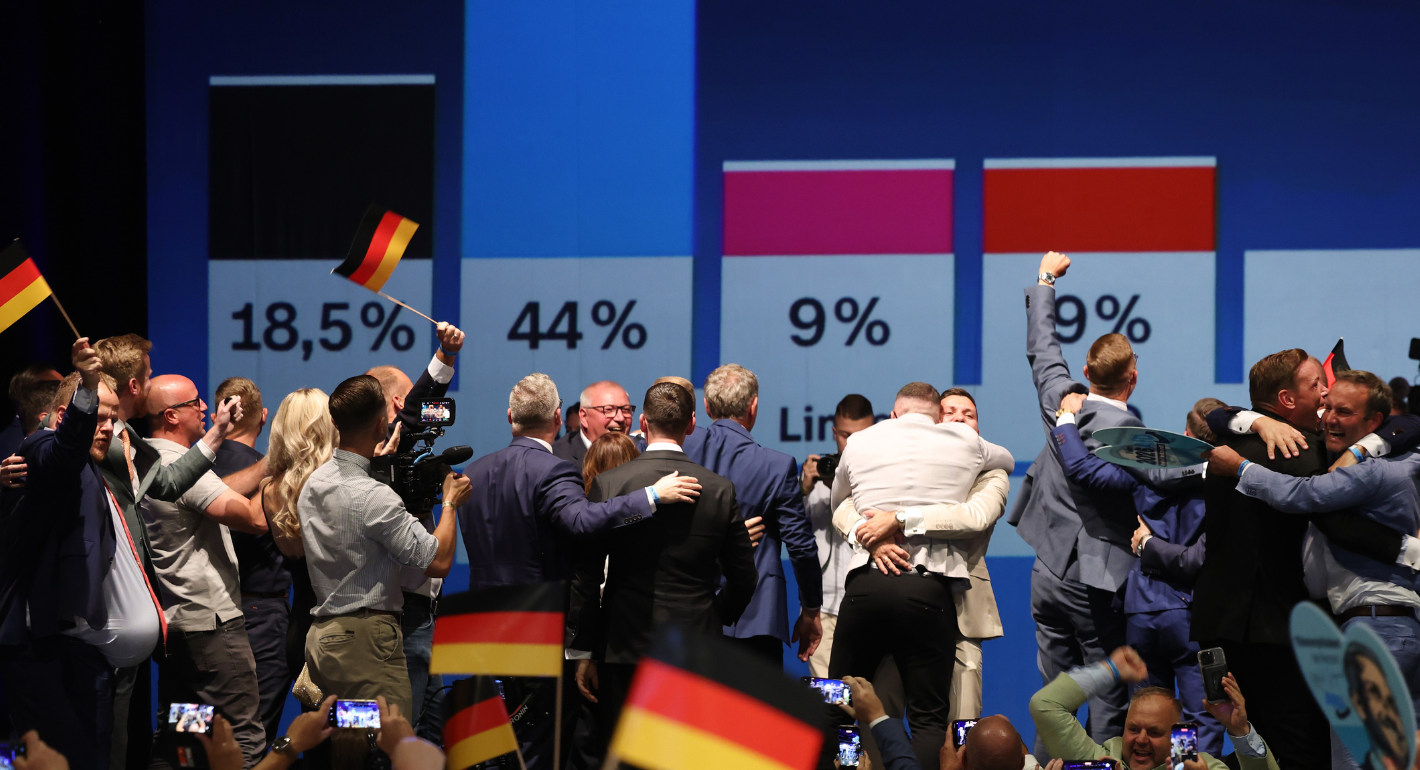
An overwhelming victory by a far-right-wing party in a small state in eastern Germany will have major repercussions for Chancellor Friedrich Merz’s coalition.

Judy Dempsey

In supporting Europe’s far-right, MAGA and Russia both want the same thing: a weaker EU. Europe must defend itself without abandoning the openness these forces exploit.

Armida van Rij

The hybrid warfare landscape is evolving rapidly, leaving policymakers without clear strategies. To better inform their work in addressing emerging challenges, governments must dig deeper into the underlying dynamics at play.


Raluca Csernatoni, Alicia Wanless

As the EU confronts profound challenges, several leaders have called for fundamental reform to the union’s model—but only modest, superficial changes have resulted. What if Europe really could be reimagined from zero today: What should such a redesigned European order look like?

Richard Youngs, ed.