

Paper
Paul Salem
{
  "authors": [
    "Paul Salem"
  ],
  "type": "legacyinthemedia",
  "centerAffiliationAll": "dc",
  "centers": [
    "Carnegie Endowment for International Peace",
    "Malcolm H. Kerr Carnegie Middle East Center"
  ],
  "collections": [],
  "englishNewsletterAll": "menaTransitions",
  "nonEnglishNewsletterAll": "",
  "primaryCenter": "Malcolm H. Kerr Carnegie Middle East Center",
  "programAffiliation": "MEP",
  "programs": [
    "Middle East"
  ],
  "projects": [],
  "regions": [
    "Middle East",
    "Iran",
    "Israel",
    "Lebanon",
    "Syria"
  ],
  "topics": [
    "Political Reform",
    "Security"
  ]
}
Source: Getty
Clouds of war hover over Lebanon. The country is adrift without a president and with a contested government as well as a Parliament whose doors have been closed since late 2006. Tensions between rival groups spill over regularly into street clashes amid news that they are arming and training.
Source: The Daily Star

Is there a safe passage through this morass? Domestically, the steps that we Lebanese should take are clear. Open-ended bargaining should end in favor of a constitutionally sound approach. This begins by electing a president - and luckily there is a consensus candidate - enabling the president to fulfill his function as empowered patron of the political negotiation process. This process should lead to the formation of a government - especially one of national unity that includes all major groups and that can rebuild, under the president's aegis, Lebanon's shattered internal unity. This would help shield the country from the gathering regional storms.
Among this government's first goals would be to attend to Lebanon's defense and security framework. First it must strengthen the army. It is scandalous that after four years in which the Lebanese Army has kept the peace under very difficult conditions and won a critical battle against the Fatah al-Islam terrorist group, and at a time when the army is tasked with bolstering the sovereignty and independence of the state, it has received very little in terms of regional and international support. While Hizbullah has fully rearmed and while international fleets sail up and down the Lebanese coast, the Lebanese Army has received little more than partial logistical support and used Humvees to accomplish its gargantuan tasks.
Furthermore, with Hizbullah inside the new government, the government must develop a "national defense strategy" that incorporates Hizbullah's proven force and fighting capacity into the strengthened national army. This can come in the form of a border defense force or other such arrangements that exist in other countries. Ultimate war and peace decision-making, however, must be in the hands of the state, and ultimate command over military means must be in the hands of the army. The state and reconstructed army, however, must provide very credible answers to the recurring threat of Israeli attacks against the South and must include a realistic mechanism to finally control the Lebanese-Syrian border.
On the political front, the new government's most urgent task is to adopt an electoral law. The current Parliament's term ends in June 2009 and the way things are going today we are likely to arrive at that date without having been able to hold elections, thus entering into a period of even more complete institutional bankruptcy than today. To hold the elections we must draft an electoral law by the fall of 2008 at the latest. The government should at long last open and read the proposed draft law prepared by the government-appointed National Election Commission in June 2006, which I participated in drafting. That should be the starting point for debating electoral reform, not backroom deals by political bosses.
That law proposes lowering the voting age, creating an independent electoral management body, enabling expatriate voting, strictly controlling the abuse of money in campaigns, strictly controlling the abuse of private television stations, preventing vote-rigging, introducing measures to protect voting secrecy and to combat vote buying, and boosting women's representation. These measures would have a revolutionary effect on politics in Lebanon - measures that most political bosses from both camps today would probably not favor.
The law also introduces proportional representation, which would allow diverse groups and parties to enter Parliament so that each community is not represented merely by its communal bosses. Elections are the basis of any republic; and a truly reformed electoral law is the most important step to help rebuild our ruined political culture.
At the regional level, there is continuing need for international attention. Israel must be pressured to avert an onslaught on Gaza, which risks once again drawing Lebanon and other players into conflict. Iran, Syria and Hizbullah must be dissuaded from overreacting to Mughniyeh's assassination. Pressure must continue on Syria to reverse its policies in Lebanon - both with the aim of ending the threat of assassination against anti-Syrian politicians and pushing Damascus to compel its Lebanese allies to rejoin the constitutional process. Syria must be convinced of a two-state solution: Syria and Lebanon, sovereign states, living side by side.
As for the Hariri tribunal, its creation should be advanced quickly. The institution has hung over Lebanon and Syria for three years, and it is time that the truth comes out, that justice be done, and that Syria and Lebanon deal with the serious political repercussions that might follow from its conclusions. Only after facing those truths and overcoming them can the two countries look forward to a post-tribunal relationship.
Paul Salem is director of the Carnegie Middle East Center in Beirut. He wrote this commentary for THE DAILY STAR.
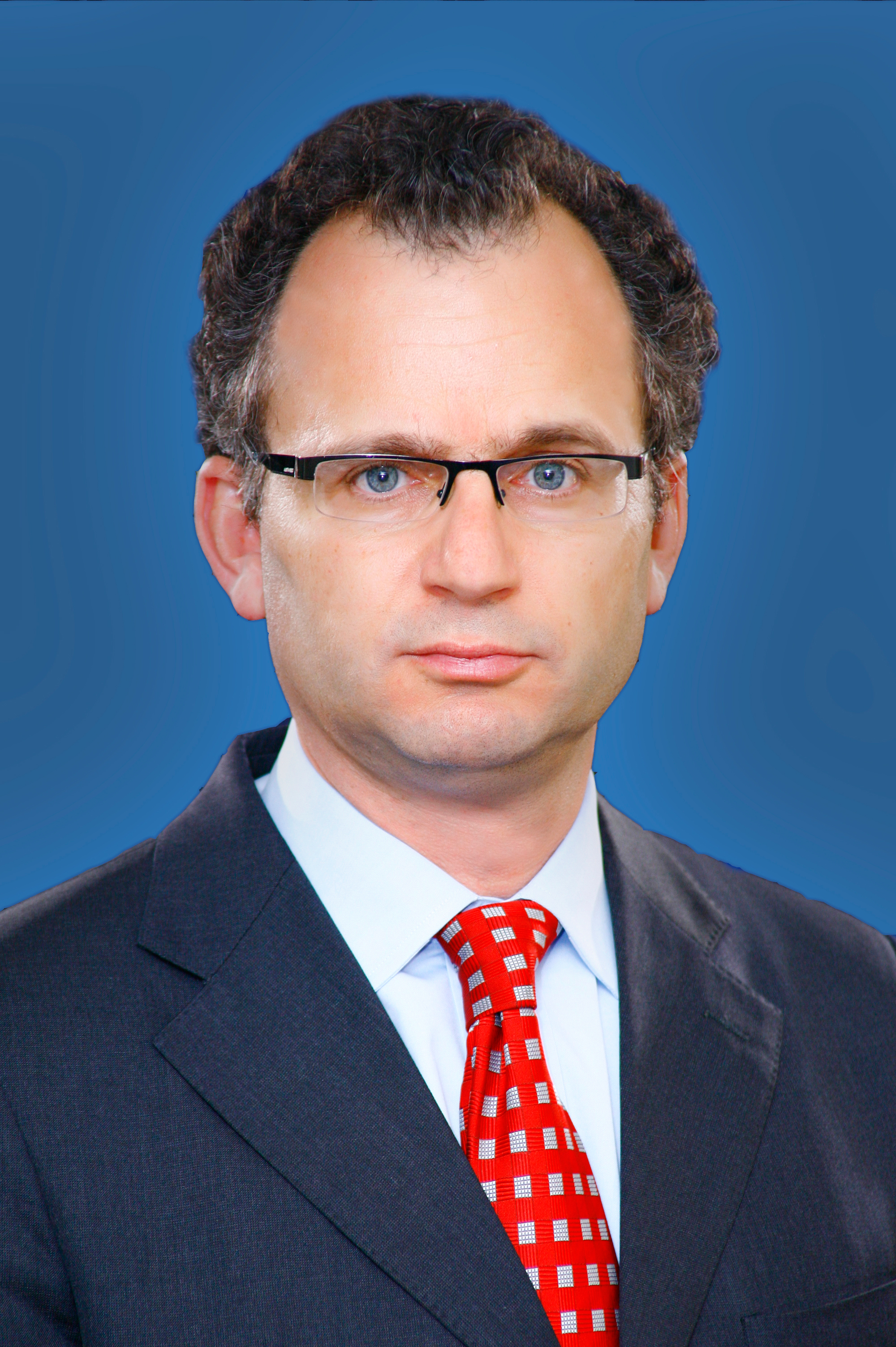
Senior Fellow at the Middle East Institute
Paul Salem is a senior fellow at the Middle East Institute.
Recent Work
Paul Salem
Paul Salem
Carnegie does not take institutional positions on public policy issues; the views represented herein are those of the author(s) and do not necessarily reflect the views of Carnegie, its staff, or its trustees.

Before the next wave of EU enlargement takes place, the union needs to grapple with thorny questions of how power is distributed among its members.


Emil Sondaj Hansen, Ditte Brasso Sørensen

The new U.S.–Denmark–Greenland agreement will help Washington exert political, economic, and financial dominance under the guise of security. Yet, it acknowledged Copenhagen’s and Nuuk’s sovereignty on the island.

Marc Pierini

A summer of escalation in the Black Sea has hurt Ukraine economically and is exacerbating world food security. A truce is needed—as is a broader reframing of Europe’s Ukraine strategy.

Thomas de Waal

Are Germany’s economic, industrial, and political struggles becoming a liability for the EU’s ability to rise to the geopolitical moment?

Rym Momtaz, ed.

European states control several Overseas Countries and Territories around the world that carry strategic, economic, and environmental weight. As great powers challenge the rules-based order, defending them is a geopolitical imperative for Europe.
Marc Pierini