

Commentary
Maria Lipman
{
  "authors": [
    "Maria Lipman"
  ],
  "type": "legacyinthemedia",
  "centerAffiliationAll": "",
  "centers": [
    "Carnegie Endowment for International Peace",
    "Carnegie Russia Eurasia Center"
  ],
  "collections": [],
  "englishNewsletterAll": "",
  "nonEnglishNewsletterAll": "",
  "primaryCenter": "Carnegie Russia Eurasia Center",
  "programAffiliation": "",
  "programs": [],
  "projects": [],
  "regions": [
    "Caucasus",
    "Russia"
  ],
  "topics": [
    "Political Reform",
    "Economy"
  ]
}
Source: Getty
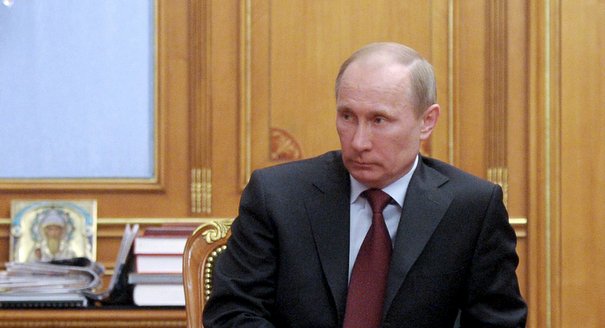
Due to the current economic crisis, Vladimir Putin is facing, for the first time since his rise to power, the prospect of real political instability. Although Putin has depended on a ‘vertical’ type of government, the logic of this crisis demands flexibility, effective feedback, and broad dialogue with the nation.
Source: The Washington Post

The current crisis is global, and there is no sure way to forecast its length or depth. Such uncertainty would be disturbing in any country but is especially alarming here. For years, Putin steadily eliminated all political threats to his power, and by the end of his second term as president he enjoyed absolute authority. Now that authority is being challenged by forces beyond his control.
Putin was blessed with rising energy prices that enabled him to build his oil-greased authoritarianism. He delivered generously to the nation, and the people readily withdrew from politics and rewarded him with high approval ratings. Likewise, the Russian elite stayed loyal, since the abundant oil revenue produced lucrative opportunities and comfortable lifestyles. In this environment, any remaining political opponents were easy to marginalize; only in very rare cases did Putin resort to repression.
The price of oil is now about a quarter of what it was only a few months ago, and economic problems are building within Russia. Investors are gone; the stock market barely exists. After nine years of surpluses, Russia will have a budget deficit in 2009, and the solid economic growth of recent years may give way to a contraction. An increasing number of enterprises are shifting to two- or three-day workweeks, sending their employees on unpaid vacations or laying them off. Unemployment, which had been very low in recent years, is rising, and the country lacks an adequate social infrastructure to help those who are losing their jobs. The situation is especially grave in the numerous company towns where new jobs are almost impossible to find. Meanwhile, geographic mobility is strongly limited by Russia's underdeveloped housing market.
It is commonly believed that we haven't yet seen the worst. Economists expect Russia to be hit much harder in February and March.
The country's best nongovernmental pollster, the Levada Center, reports that the public mood has darkened significantly. The percentages of those who think the country is moving in the right direction vs. the wrong direction has shifted from 61 percent vs. 24 percent in September to 43 percent vs. 40 percent in December, it found. People feel insecure.
A major protest took place last month in the Russian Far East. Thousands rallied against a government decision to raise tariffs on imported cars, a measure intended to protect the domestic automobile industry, whose cars are of notoriously low quality. Higher tariffs will have a grave effect on a region where the vast majority of residents drive used vehicles imported from Japan and where many depend on semi-legal sales of Japanese vehicles to Russian regions farther west. The protesters angrily demanded that the decision be revoked. Some even carried signs demanding the resignation of Putin and his Cabinet.
Russia last experienced large socioeconomic protests in 2005, when pensioners rallied against a reform plan that threatened their entitlements. Putin's government responded by freezing the reform and pouring money into social programs. Today, with revenue so dramatically diminished, Russia can hardly avoid painful measures. The leadership got tough with the tariff protest: Special police brought in from central Russia beat demonstrators and even some journalists; many people were detained. Seeking to keep unrest from spreading, national TV channels -- the media with the largest audience -- simply did not cover the situation.
Despite public concerns raised by the crisis, Putin's approval rating remains high: 83 percent, down slightly from 88 percent in September. Putin's popularity is the very foundation of Russia's regime, in which government institutions have been emasculated and power is concentrated in the hands of the top leader. This unique advantage placed him above all others among the political elite. But if the economic crisis erodes this broad support, the elite's loyalty may also be shaken. There's enough reason for discontent as it is, such as the nontransparent, and probably corrupt, distribution of anti-crisis funds or the suspicion that top government officials are using the crisis to redistribute assets in favor of cronies.
The looming economic troubles pose a dilemma for Russian leaders. Putin believes in "vertical" governance built on secretiveness, subordination and control. This system keeps decision making confined to the innermost circle and is deeply resistant to sharing authority. Such a rigid system of governance is inherently inefficient. But to Putin, a firm grip on power has always been a priority, and oil prices surpassing $140 a barrel made up for the poor quality of governance. Today, though, such inefficiency is unaffordable. The logic of Putin's governance pushes for tighter controls while the logic of the crisis demands flexibility, effective feedback with business and others in the elite, and broad dialogue with the nation.
As Yegor Gaidar, Russia's first post-communist prime minister, and a brilliant economist, has noted, a crackdown may be successful in the short run, but "in the long run this policy can only pave the way to new turmoil."
This article first appeared in the Washington Post.
Former Scholar in Residence, Society and Regions Program, Editor in Chief, Pro et Contra, Moscow Center
Lipman was the editor in chief of the Pro et Contra journal, published by the Carnegie Moscow Center. She was also the expert of the Carnegie Moscow Center’s Society and Regions Program.
Recent Work
Maria Lipman
Maria Lipman
Carnegie does not take institutional positions on public policy issues; the views represented herein are those of the author(s) and do not necessarily reflect the views of Carnegie, its staff, or its trustees.

The EU can impose sanctions but struggles to enforce them without the United States. With Washington increasingly disinterested in backing European interests, the bloc must now fend for itself.


Nicu Popescu, Tiago Antunes

Russia is testing the waters of NATO’s mutual defense clause. What do strikes in Romanian territorial waters mean for the alliance’s posture toward Moscow?

Dimitar Bechev

With its public finances in shambles, the far right polling at 35 percent ahead of the 2027 presidential election, and a growing protest movement, is France’s crisis a threat to the EU’s geopolitical awakening?

Rym Momtaz, ed.

Europe is facing rising populism internally as well as external pressures from Russia, China, Turkey, and the United States.
Dimitar Bechev

A notable degree of participative democracy has firmly arrived in Europe. But to have more far-reaching impact, democratic deliberation needs to move into a radically new phase.

Richard Youngs