• Research
  • Strategic Europe
  • About
  • Experts
Carnegie Europe logoCarnegie lettermark logo
EUUkraine
  • Donate
{
  "authors": [
    "Sven Behrendt"
  ],
  "type": "legacyinthemedia",
  "centerAffiliationAll": "dc",
  "centers": [
    "Carnegie Endowment for International Peace",
    "Malcolm H. Kerr Carnegie Middle East Center"
  ],
  "collections": [],
  "englishNewsletterAll": "menaTransitions",
  "nonEnglishNewsletterAll": "",
  "primaryCenter": "Malcolm H. Kerr Carnegie Middle East Center",
  "programAffiliation": "MEP",
  "programs": [
    "Middle East"
  ],
  "projects": [],
  "regions": [
    "Qatar",
    "Western Europe",
    "Germany"
  ],
  "topics": [
    "Economy"
  ]
}
REQUIRED IMAGE

REQUIRED IMAGE

In The Media
Malcolm H. Kerr Carnegie Middle East Center

Why Qatar's Investment in Porsche Matters

Policy makers who only 18 months ago identified Arab foreign investment as a major threat to national security and economic competitiveness are now actively reaching out to them.

Link Copied
By Sven Behrendt
Published on Jul 24, 2009

Source: CNN's Marketplace Middle East July 24

The Supervisory Board of Porsche, the German car manufacturer, announced on July 23 that a new management team will finalize negotiations with Qatar Holding LLC (QH) on a capital investment estimated to be between 7-10 billion USD. If Porsche is integrated into its partner Volkswagen, Qatar would be the third largest shareholder in the company with 17%.
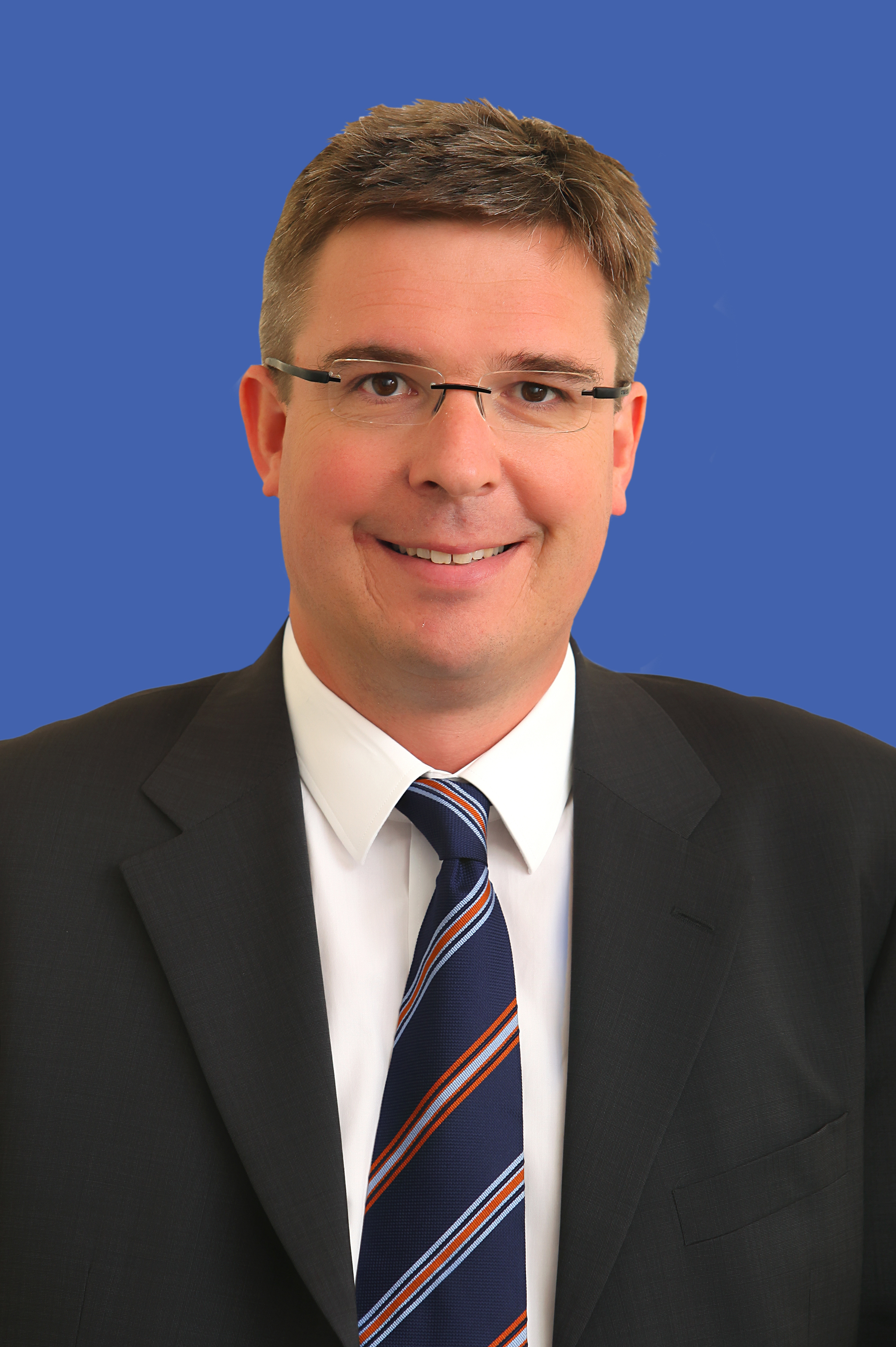
Sven Behrendt answers a number of questions regarding the deal.

Question: What can we say about the scale of Qatar's potential investment in Porsche?

Behrendt: If we are to assume that Qatar really steps up to the plate and invests anything between 7-10 billion USD into Porsche it could become an important stakeholder in the German automotive industry, and thereby a relevant player in the global automotive industry.

For the time being Qatar has mainly invested in British compaines like J Sainsbury, Barclays, or the London Stock Exchange. It is also a major shareholder of Credit Suisse, the Swiss financial institution. With the investment into a German car manufacturer, it would further raise its profile as an investor to be reckoned with on the global scene.

Question: What does the investment mean in terms of the ability of SWFs, particularly those from the Arab world, to play a bigger role in the global economy?

Behrendt: The size of the investment could be remarkable in a number of ways.

First, to my knowledge, if the numbers turn out to be valid, Qatar’s investment in Porsche could become one of the single biggest equity acquisitions of an Arab sovereign investor in a foreign company. The other case in which an Arab SWF has placed such a large investment is the Abu Dhabi Investment Authority’s (ADIA) investment in Citigroup for 7.5 billion USD some 18 months ago.

Second, Qatar could single-handedly double the total equity holdings of Arab sovereign investors in Germany. We can assume that Arab SWFs currently have around 10 billion USD invested in German companies. The next largest investments were made by Aabar Investments PJSC for 2.7 billion USD in Daimler some months ago, and a 1.8 billion USD investment by the Dubai International Financial Center in Deutsche Bank in 2007.

Third, it would be a fairly sizable investment for Qatar Investment Authority (QIA), the holding company of QH. It is estimated that the value of QIA’s assets amounts to something around 50-60 billion USD. To expose up to 20% of its portfolio to one single equity investment is quite risky. We must assume that Qatar expects more from this investment than only financial returns.

Question: What about the politics of the deal?

Behrendt: Qatar has been very courageous in engaging in conversations with Porsche, and subsequently Volkswagen. Qatar has basically entered the heartland of German industry, which is the key driver of the German economy. One can imagine that any outside investor will have to be very agile to maneuver through the politics and interests of various German stakeholders.

But overall, in the end it appears that these kinds of investments should have a stabilizing effect on the political relations between the West and the Arab world. If we see more cross-border investments like these, I would assume that this can translate into more robust relations. Some commentators have specifically argued that Qatar's investment will also strengthen ties between the Emirates and Germany. This is far cry from the suspicion and criticism that Arab SWFs attracted in Europe and elsewhere only 12 months ago.

Question: We have recently seen a number of initiatives by Western political leaders to attract the interest of Arab SWFs in their economies? What do you make of that?

Behrendt: Qatar's talks with Porsche attracted the attention of German policy makers, and there have been further political talks on issues regarding the involvement of Volkswagen in the deal.
 
There have been a number of visits by policy makers from the U.S. and Europe to the Arab Gulf region. U.S. Treasury Secretary Tim Geithner has just returned from a trip to the Gulf where he assured investors about the stability of the U.S. Dollar. But we have also seen France taking a much more active position. French President Nicolas Sarkozy just visited the region as well and his administration is reportedly working on identifying investors, including from the Gulf, to participate in a capital increase in Areva, the French energy company. Italy is looking south, towards Libya, which has become a substantial foreign investor with a great deal of potential.

So, we can witness a very interesting phenomenon: Policy makers who only 18 months ago identified SWFs from the Arab region and elsewhere as a major threat to national security and economic competitiveness, are now actively reaching out to them. Back then they argued that political considerations may not drive the investment decisions of Arab sovereign investors; today, they use their political influence to attract them.

About the Author

Sven Behrendt

Former Visiting Scholar, Middle East Center

Behrendt is an expert in global issues, international negotiations, conflict resolution, and corporate strategy. He previously served at the World Economic Forum in various management positions.

    Recent Work

  • Paper
    Sovereign Wealth Funds and the Santiago Principles: Where Do They Stand?

      Sven Behrendt

  • Article
    Sovereign Wealth Funds: The Governance Challenge

      Sven Behrendt

Sven Behrendt
Former Visiting Scholar, Middle East Center
Sven Behrendt
EconomyQatarWestern EuropeGermany

Carnegie does not take institutional positions on public policy issues; the views represented herein are those of the author(s) and do not necessarily reflect the views of Carnegie, its staff, or its trustees.
More Work from Carnegie Europe

  • Article
    Rewiring the South Caucasus: TRIPP and the New Geopolitics of Connectivity

    The U.S.-sponsored TRIPP deal is driving the Armenia-Azerbaijan peace process forward. But foreign and domestic hurdles remain before connectivity and economic interdependence can open up the South Caucasus.

      • Areg Kochinyan

      Thomas de Waal, Areg Kochinyan, Zaur Shiriyev

  • Commentary
    Strategic Europe
    Is France Shifting Rightward?

    The far right failed to win big in France’s municipal elections. But that’s not good news for the country’s left wing, which remained disunited while the broader right consolidated its momentum ahead of the 2027 presidential race.

      Catherine Fieschi

  • Commentary
    Is the Radical-Right Threat Existential or Overstated?

    Amid increased polarization and the influence of disinformation, radical-right parties are once again gaining traction across Europe. With landmark elections on the horizon in several countries, are the EU’s geostrategic vision and fundamental values under existential threat?

      Catherine Fieschi, Cas Mudde

  • Research
    Planetary vs International Security: Economic Growth at the Crossroads

    Economic growth is at the heart of a dilemma between planetary and international security.

      Olivia Lazard

  • Commentary
    Strategic Europe
    Europe and the Arab Gulf Must Come Together

    The war in Iran proves the United States is now a destabilizing actor for Europe and the Arab Gulf. From protect their economies and energy supplies to safeguarding their territorial integrity, both regions have much to gain from forming a new kind of partnership together.

      • Rym Momtaz

      Rym Momtaz

Get more news and analysis from
Carnegie Europe
Carnegie Europe logo, white
Rue du Congrès, 151000 Brussels, Belgium
  • Research
  • Strategic Europe
  • About
  • Experts
  • Projects
  • Events
  • Contact
  • Careers
  • Privacy
  • For Media
  • Gender Equality Plan
Get more news and analysis from
Carnegie Europe
© 2026 Carnegie Endowment for International Peace. All rights reserved.