

Paper
Paul Salem
{
  "authors": [
    "Paul Salem"
  ],
  "type": "legacyinthemedia",
  "centerAffiliationAll": "dc",
  "centers": [
    "Carnegie Endowment for International Peace",
    "Malcolm H. Kerr Carnegie Middle East Center"
  ],
  "collections": [],
  "englishNewsletterAll": "menaTransitions",
  "nonEnglishNewsletterAll": "",
  "primaryCenter": "Malcolm H. Kerr Carnegie Middle East Center",
  "programAffiliation": "MEP",
  "programs": [
    "Middle East"
  ],
  "projects": [],
  "regions": [
    "North America",
    "United States",
    "Iraq"
  ],
  "topics": [
    "Political Reform",
    "Foreign Policy"
  ]
}
Source: Getty
Iraq faces a combination of security, political and economic challenges. While most Iraqis want security, good governance, and development, the politics of Iraq seem to be dragging the country down the familiar path of internal division and political paralysis. Steps need to be taken, both regionally and internationally, to address the problems threatening Iraq’s future.
Source: Al Hayat

While Iraq is likely to survive these challenges, the political leadership in Iraq needs to approach the upcoming elections in January 2010 and the government that will emanate from them with a broader vision of the key obstacles that need to be overcome. Iraq’s neighbors—namely Syria, Saudi Arabia, Iran, and Turkey—also need to achieve a much broader understanding regarding their interests in promoting the sovereignty, stability and prosperity of an independent Iraq. And while the US is withdrawing its forces through 2011, the Obama administration must maintain a high level of development aid and diplomatic engagement, to help Iraq make the transition from occupation to sovereignty, from devastation to development, and from internal division toward greater accommodation.
The security situation is likely to remain poor, although a dramatic breakdown is unlikely. An upsurge in bombings was to be expected as American forces withdrew from cities and as Iraqi forces learned how to manage security threats by themselves. Iraq’s security forces have come a long way but they will not be able to impose full security in the immediate future. Beyond the obvious threat of al-Qaeda and similar groups, more serious tensions might emerge over the very incomplete integration of more mainstream Sunni groups, such as the Sons of Iraq and al-Sahwa movement, into the armed forces. Arab-Kurdish relations could also lead to security breakdowns if the issues of Kirkuk and resource allocation are not handled wisely.
Iraq’s neighbors should help Iraq minimize these security risks rather than considering Iraq an arena for their rivalries. The recent tension between Iraq and Syria over the August 19 bombings is a worrying trend. And the failure of the Neighbors of Iraq meetings to produce any tangible results should not be a reason not to try again. For the Obama administration, while it reduces its troop numbers in Iraq, it should maintain or increase its military training and aid to help the Iraqi armed forces secure its borders and impose internal order. Iraq’s friends and the UN should help the Iraqis maintain internal discussions and make steady progress toward resolving key outstanding issues relating to security, internal administration and boundaries, governance and resource distribution. Progress along these lines will greatly ease security tensions.
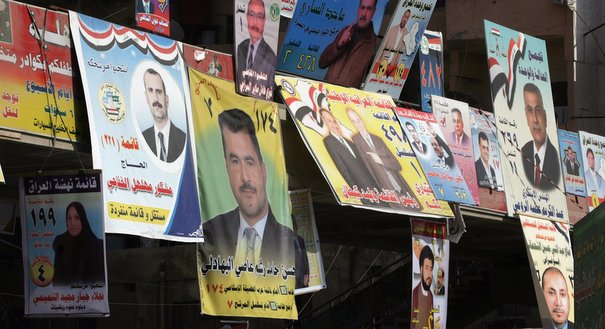
At the political level, there is room for both optimism and concern. It is heartening to see a major Middle Eastern country, formerly under the grip of rigid dictatorship, prepare for a real election. And despite myriad problems and tensions, it does not appear that any form of dictatorship will reestablish itself in Iraq soon. On the other hand, while Iraq’s challenges mount, the performance of its political leaders and parties lags far behind. Like Lebanon, Iraq’s politics has slid into the trap of sectarianism and communalism; and like many other Arab countries, its institutions are weak, ravaged by corruption and nepotism. And its politicians appear more skilled at political bickering than policy debate; more interested in pandering to communal fears than promoting national cohesion.
Nevertheless, there are some encouraging trends. The high level meetings between Maliki and Kurdish leaders only a few weeks ago are important. And the move to announce new broad coalitions to contest the upcoming parliamentary elections are healthy signs of political life. The fear however, is that the January elections, while laudable as a democratic milestone, will create a fragmented parliament and a government that is too weak and divided to address major issues.
Meanwhile the economy continues to founder. Once a significant agricultural and industrial producer, years of sanctions, poor management and war have devastated the economy. Now Iraq is almost exclusively dependent on oil exports and commodity imports. While there is significant investment and growth in the northern Kurdish regions, the same cannot be said of the rest of the country. There, security problems continue to hinder infrastructure development and investment. If oil revenues remain low through next year, Iraq could be facing a new set of fiscal and economic problems. Encouraging economic growth in Iraq should be a high priority for Iraq’s neighbors and friends. This should be expressed in terms of providing increased aid, but more importantly in encouraging investment and joint projects.
At the regional level, the picture is not encouraging. The hard line faction in Iran is consolidating its hold and is looking forward to increasing its influence in Iraq as the Americans withdraw. This will only aggravate tensions with other regional players, and is likely to aggravate internal Iraqi tensions as well. And the recent collapse in Iraqi-Syrian relations reverses a positive trend in which Syria appeared to be playing a much more constructive role in Iraq. As for Saudi Arabia, while it has not played a markedly negative role, it has also not taken the lead in rebuilding strong Arab-Iraqi relations at the security, political and economic levels.
At the international diplomatic level, while the US administration is focused on reviving the Arab-Israeli peace process, Iraq and its neighbors need equal diplomatic attention. Addressing the Arab-Israeli conflict certainly will have positive repercussions for Iraq, but the problems of Iraq and its neighbors need their own Madrid Conference if Iraq is successfully to make the transition from occupation to sovereignty. The Obama administration is well placed to call for such an initiative; the UN is the right institution to host it.
Senior Fellow at the Middle East Institute
Paul Salem is a senior fellow at the Middle East Institute.
Recent Work
Paul Salem
Paul Salem
Carnegie does not take institutional positions on public policy issues; the views represented herein are those of the author(s) and do not necessarily reflect the views of Carnegie, its staff, or its trustees.

Are Germany’s economic, industrial, and political struggles becoming a liability for the EU’s ability to rise to the geopolitical moment?

Rym Momtaz, ed.

European Commission President Ursula von der Leyen is about to give her annual address on the state of the EU. Here’s what she won’t—but should—say.
Rym Momtaz

Radical-right parties are expected to do well in upcoming elections in four of the EU's biggest member states. If successful, they could prevent the union from addressing key challenges ahead.

Stefan Lehne

The aftermath of the Ceuta crisis shows Europe has drawn the wrong lessons. Rather than doubling down on failed migration policies, the EU needs to address the underlying roots of such episodes.

Richard Youngs

Canadian Prime Minister Mark Carney has twice inspired praise for standing up to U.S. President Donald Trump: at the 2026 World Economic Forum in Davos and on Canada-U.S. trade negotiations. Is Carney showing a third way better than the EU has in dealing with the Trump administration?
Rym Momtaz, ed.