

Q&A
Mark Medish
{
  "authors": [
    "Mark Medish"
  ],
  "type": "legacyinthemedia",
  "centerAffiliationAll": "dc",
  "centers": [
    "Carnegie Endowment for International Peace",
    "Carnegie Russia Eurasia Center"
  ],
  "collections": [],
  "englishNewsletterAll": "ctw",
  "nonEnglishNewsletterAll": "",
  "primaryCenter": "Carnegie Endowment for International Peace",
  "programAffiliation": "russia",
  "programs": [
    "Russia and Eurasia"
  ],
  "projects": [],
  "regions": [
    "Caucasus",
    "Russia",
    "Eastern Europe",
    "Western Europe"
  ],
  "topics": [
    "Political Reform",
    "Security",
    "Foreign Policy"
  ]
}
Source: Getty
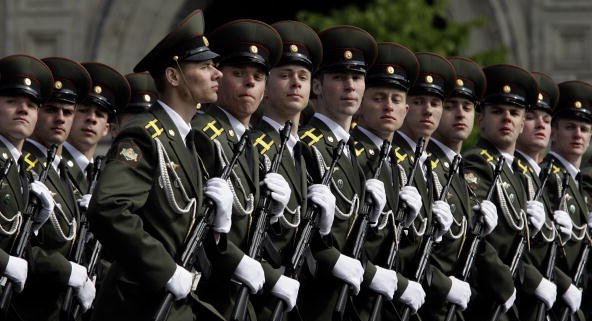
Tensions over Europe’s troubled past have increased with the approach of the 70th anniversary of the start of WWII. Prime Minister Putin’s upcoming visit to Poland can help turn a new page in history.
Source: the New York Times

As the Polish prime minister, Donald Tusk, observed, the Russian prime minister’s presence in Gdansk “would be a breakthrough in our evaluation and reevaluation of historical events.”
Seventy years ago, as Nazi Germany was invading Poland, W.H. Auden famously wrote of being “uncertain and afraid as the clever hopes expire of a low dishonest decade.”
Europe’s descent into madness had been a long saga of balancing and double-crossing between the great powers — democracies and dictatorships alike.
One of the many “low dishonest” points on the path to war was the Nazi-Soviet Non-Aggression Pact signed in Moscow on the night of Aug. 23, 1939, by Hitler’s foreign minister, Joachim von Ribberntrop, and Stalin’s foreign minister, Vyacheslav Molotov. Nonaggression pacts were the common currency of foreign policy in those years. Poland even had one with Nazi Germany, signed in January 1934.
The Moscow deal sealed Poland's fate by securing Soviet neutrality. Having reduced the risk of a two-front war, Hitler launched his blitzkrieg on Poland a week later, setting in motion the bloody horrors of the following six years in Europe.
The secret protocols of the Molotov-Ribbentrop deal came to light from the Nazi archives only after the war. It turned out that Hitler and Stalin had agreed to carve up Eastern Europe into spheres of influence. The land grab was evidently a necessary inducement to secure Stalin’s neutrality.
The Soviet-German deal came after the failure of many months of Soviet talks with Britain and France. The Western leaders were evidently more wary of alliance with Stalin than of gambling on Hitler’s intentions in the East.
During the 22-month Nazi-Soviet honeymoon, Poland was partitioned for the fourth time in its history. Stalin also grabbed the Baltics, Bessarabia and Bukovina and fought a disastrous war against Finland. Also at this time, the Nazis laid the foundations for the Holocaust, and Stalin’s NKVD committed crimes such as the massacre of Polish officers in the Katyn forest.
The deal ended in the early hours of June 22, 1941, when Hitler double-crossed his ally and invaded the USSR, quickly capturing all the lands assigned to Stalin. There is an apt saying in Russian about honor among thieves: “the thief stole a hat from a thief.”
In July of this year, the annual parliamentary meeting of the Organization for Security and Cooperation in Europe adopted a resolution, proposed by a Lithuanian delegate, making Aug. 23 a day of remembrance for victims of both Stalinism and Nazism. Russian commentators promptly denounced the resolution as another “anti-Russian rewriting of history.”
They did so despite the fact that the Soviet Union officially acknowledged the secret protocols in 1989, thanks largely to the last Soviet leader, Mikhail Gorbachev.
More recently, Soviet nostalgists have been irked by the moving of a Red Army memorial in Tallinn, Estonia in 2007 and by Ukrainian President Viktor Yushchenko’s various favorable remarks about the Ukrainian Insurgent Army, which cooperated with the Nazis against Soviet forces.
In May Russian Presdient President Dmitri Medvedev announced the creation of a “Commission Against Efforts to Falsify History to Harm Russian Interests.” The reference to “falsifiers” directly echoes Stalinist terminology. The Russian parliament also began to consider a law that would make it a crime “to belittle the Soviet victory” in World War II.
The speaker of Russia’s upper house, Sergei Mironov, has been careful to explain that the proposed law focuses on “the results” of the war. He may remember what the Soviet dissident historian A.M. Nekrich wrote in 1965: “To tell of the last day of the war is a more rewarding task than to tell of the first day. The war, the greatest of tragedies, not only had a brilliant ending but a difficult beginning as well.”
The best defense of the pact is probably that Stalin always knew the danger Hitler posed and was simply playing for time. Playing for time would have been a credible strategy — indeed, all the great powers were doing it. Yet Stalin was apparently genuinely surprised by the “Barbarossa” attack. It is likely he ignored numerous intelligence warnings precisely because he thought the deal would last.
Two wrongs do not make a right, but it is worth recalling that the Western democracies had already made their own peace with the devil at the Munich conference in September 1938 — a deal denounced by the Soviets as a diabolical capitalist plot. This led to the dismemberment of Czechoslovakia — including at the hands of Poland — in another “low dishonest” milestone.
As Churchill observed, “The terrible words have for the time being been pronounced against the Western democracies: ‘Thou art weighed in the balance and found wanting.’”
According to the late Polish philosopher Leszek Kolakowski, “we learn history not in order to know how to behave or how to succeed, but to know who we are.”
Understanding history — who we are — requires study and reflection. Still, grand political gestures can be important for the cause of truth and reconciliation. Whatever else can be said about the Nazi-Soviet anniversary, Mr. Putin’s visit to Gdansk on Sept. 1 could help turn a new page.
Former Visiting Scholar
Medish served in the Clinton administration as special assistant to the President and senior director for Russian, Ukrainian, and Eurasian Affairs on the National Security Council from 2000 to 2001.
Recent Work
Carnegie does not take institutional positions on public policy issues; the views represented herein are those of the author(s) and do not necessarily reflect the views of Carnegie, its staff, or its trustees.

Are Germany’s economic, industrial, and political struggles becoming a liability for the EU’s ability to rise to the geopolitical moment?

Rym Momtaz, ed.

European Commission President Ursula von der Leyen is about to give her annual address on the state of the EU. Here’s what she won’t—but should—say.
Rym Momtaz

The aftermath of the Ceuta crisis shows Europe has drawn the wrong lessons. Rather than doubling down on failed migration policies, the EU needs to address the underlying roots of such episodes.

Richard Youngs

Canadian Prime Minister Mark Carney has twice inspired praise for standing up to U.S. President Donald Trump: at the 2026 World Economic Forum in Davos and on Canada-U.S. trade negotiations. Is Carney showing a third way better than the EU has in dealing with the Trump administration?
Rym Momtaz, ed.

The EU’s responses to two recent incidents expose the gulf between European perceptions and capabilities. Unless the union can bridge that gap, it will never become a real geostrategic power.
Rym Momtaz