

In The Media
Martha Brill Olcott
{
  "authors": [
    "Martha Brill Olcott"
  ],
  "type": "legacyinthemedia",
  "centerAffiliationAll": "dc",
  "centers": [
    "Carnegie Endowment for International Peace",
    "Carnegie Russia Eurasia Center"
  ],
  "collections": [],
  "englishNewsletterAll": "ctw",
  "nonEnglishNewsletterAll": "",
  "primaryCenter": "Carnegie Endowment for International Peace",
  "programAffiliation": "russia",
  "programs": [
    "Russia and Eurasia"
  ],
  "projects": [
    "Eurasia in Transition"
  ],
  "regions": [
    "North America",
    "United States",
    "South Asia",
    "Afghanistan",
    "Pakistan",
    "Central Asia",
    "Kazakhstan",
    "Kyrgyz Republic",
    "Tajikistan",
    "Turkmenistan",
    "Uzbekistan"
  ],
  "topics": [
    "Political Reform",
    "Democracy",
    "Economy",
    "Security",
    "Military",
    "Foreign Policy"
  ]
}
Source: Getty
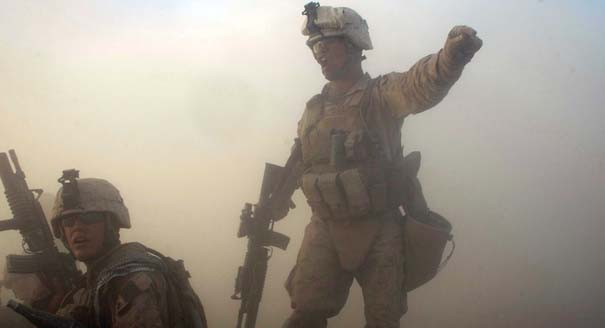
While the U.S.-led NATO operations in Afghanistan have resulted in somewhat enhanced security capacity for Central Asian countries, their long-term security challenges seem to be increasing, given the current situation in Afghanistan and the growing instability of Pakistan.
Source: Norwegian Peacebuilding Centre Policy Brief

While the US-led NATO operations in Afghanistan have resulted in somewhat enhanced security capacity in the Central Asian countries, most projects designed to strengthen the regional economy remain on the drawing board. In fact, the long-term security challenges faced by the Central Asian states seem to be increasing, given the current situation in Afghanistan and the growing instability of Pakistan.
As public pressure mounts in the US and in Europe to wind down their military involvement in Afghanistan, and to find other ways to protect their populations from the risks posed by al-Qaeda, Central Asian elites are left pondering how best to protect their own populations, in view of the limited regional, multilateral or bilateral assistance on offer.
Nato withdrawal would be very damaging for the Central Asian states and would greatly exacerbate the deteriorating economic and security conditions in some of these countries. Aid from the West is badly needed; however, in the past Western funding for projects in Central Asia has often fallen short. Given the financial climate, the current emphasis on smaller bilateral exchanges and cross-border production of electricity should be encouraged.
Former Senior Associate, Russia and Eurasia Program and, Co-director, al-Farabi Carnegie Program on Central Asia
Olcott is professor emerita at Colgate University, having taught political science there from 1974 to 2002. Prior to her work at the endowment, Olcott served as a special consultant to former secretary of state Lawrence Eagleburger.
Recent Work
Martha Brill Olcott
Martha Brill Olcott
Carnegie does not take institutional positions on public policy issues; the views represented herein are those of the author(s) and do not necessarily reflect the views of Carnegie, its staff, or its trustees.

A summer of escalation in the Black Sea has hurt Ukraine economically and is exacerbating world food security. A truce is needed—as is a broader reframing of Europe’s Ukraine strategy.

Thomas de Waal

Are Germany’s economic, industrial, and political struggles becoming a liability for the EU’s ability to rise to the geopolitical moment?

Rym Momtaz, ed.

European Commission President Ursula von der Leyen is about to give her annual address on the state of the EU. Here’s what she won’t—but should—say.
Rym Momtaz

Radical-right parties are expected to do well in upcoming elections in four of the EU's biggest member states. If successful, they could prevent the union from addressing key challenges ahead.

Stefan Lehne

The aftermath of the Ceuta crisis shows Europe has drawn the wrong lessons. Rather than doubling down on failed migration policies, the EU needs to address the underlying roots of such episodes.

Richard Youngs