

Commentary
Maria Lipman
{
  "authors": [
    "Maria Lipman"
  ],
  "type": "legacyinthemedia",
  "centerAffiliationAll": "",
  "centers": [
    "Carnegie Endowment for International Peace",
    "Carnegie Europe",
    "Carnegie Russia Eurasia Center"
  ],
  "collections": [],
  "englishNewsletterAll": "",
  "nonEnglishNewsletterAll": "",
  "primaryCenter": "Carnegie Russia Eurasia Center",
  "programAffiliation": "",
  "programs": [],
  "projects": [],
  "regions": [
    "Caucasus",
    "Russia"
  ],
  "topics": [
    "Political Reform",
    "Security",
    "Domestic Politics"
  ]
}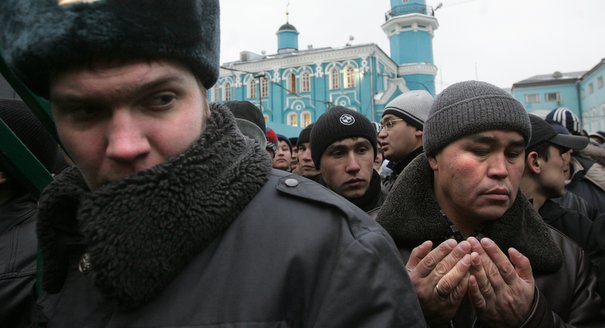
Source: Getty
Terrorist threats in Russia require a long-term, consistent strategy. But Russia's system of heavy-handed and unaccountable governance precludes strategic thinking.
Source: The Washington Post

But while the challenge of terrorism cries for long-term, consistent strategy, Russia's system of heavy-handed and unaccountable governance precludes strategic thinking.
In the early 1990s, after the collapse of the Soviet Union, Boris Yeltsin's government responded to armed secessionists in Chechnya by waging a full-scale war. Russia's armed forces were undertrained and undersupplied; horrific atrocities ensued on both sides. The 1996 peace agreement was evidence of Russia's humiliating weakness: A former superpower failed to subdue its own tiny region.
"Peace" in Chechnya entailed frequent kidnappings for ransom, hostage-taking and terrorist attacks. In 1999, a Chechen force invaded the neighboring province of Dagestan, about the same time explosions of apartment buildings in three Russian cities famously took the lives of roughly 300 people.
When Vladimir Putin became president in 2000, his solution was a new war. With it came more atrocities, deeper brutalization and, in Russia at large, growing xenophobia against "those from the Caucasus." This time federal forces defeated the Chechen fighters, but terrorist attacks continued through 2004. The most horrific of these was the seizure of Beslan school where more than 330 hostages, over half of them children, were killed that September.
By the mid-2000s, secession was no longer the issue in Chechnya, but a new problem was building: Militant Islam was on the rise all over the North Caucasus. In the early '90s Islam had still been weak in this traditionally Muslim territory; adults had secular Soviet educations, and the attraction of Russian culture was still strong. But the new generation growing up in the Chechnya devastated by the Russian army, and in neighboring provinces such as Dagestan and Ingushetia, were increasingly influenced by Islamic culture and Islam, not infrequently its radical strains. Clandestine extremist groups called for jihad across the territory of Russia. Training centers for suicide bombers reportedly operate in the North Caucasus.
The Kremlin shifted tactics a few years ago, installing pro-Moscow leaders in these Muslim provinces and reducing the federal government's mission to allocating funds and occasional anti-terrorist operations. It turned a blind eye to subversive attacks, explosions, and assassinations of area police and local administrators, which have become routine in Ingushetia and Dagestan. The central government also ignored the brutal practices local leaders used against Islamic radicals and other criminal or extremist groups. As long as violence was contained within the North Caucasus, the thinking went, the bulk of Russia remained relatively safe. But last week's attacks underscore just how flawed and shortsighted this policy is.
Today, the rise of radical Islam in the North Caucasus is inevitable, especially with such forces active in many parts of the world. Russia's only strategic option is a long-term and multi-pronged government commitment to the problem. It is critical that the Russian government and the nation treat the people of the North Caucasus as their fellow countrymen -- no easy task given that today they are seen as a suspect culture or simply unwanted intruders. Other urgent needs are to improve security in Russia at large as well as to increase the efficiency of anti-terrorism practices. But these missions will be next to impossible in a country where the violent behavior of police officers makes them a threat to the people, rather than a force from which citizens can draw protection.
Strains of official rhetoric echo the language of 1999: After the infamous blasts of Moscow apartment buildings, Putin pledged to wipe out terrorists in outhouses. Now he vows "to drag them out of the sewer and into broad daylight." But large-scale use of force is not an option. As happened in the '90s, it is bound to start another vicious circle of punitive measures and extremists' efforts to exact revenge.
Reasonable calls have also been heard. President Dmitry Medvedev spoke last week about the need to create in the North Caucasus "the right kind of modern environment for education, for doing business, for overcoming cronyism . . . and, of course, for confronting corruption." But corruption plagues more than the North Caucasus; it's the texture of the Russian system of governance, which is built on political monopoly and unaccountability. Unless Russia makes systemic reforms, good intentions will not translate into stronger policies.
Former Scholar in Residence, Society and Regions Program, Editor in Chief, Pro et Contra, Moscow Center
Lipman was the editor in chief of the Pro et Contra journal, published by the Carnegie Moscow Center. She was also the expert of the Carnegie Moscow Center’s Society and Regions Program.
Recent Work
Maria Lipman
Maria Lipman
Carnegie does not take institutional positions on public policy issues; the views represented herein are those of the author(s) and do not necessarily reflect the views of Carnegie, its staff, or its trustees.

The domestic impacts of how long it is taking to end the war in Ukraine have pushed the French electorate to the political extremes and compromised the country’s diplomatic capacity.

Rym Momtaz

Before the next wave of EU enlargement takes place, the union needs to grapple with thorny questions of how power is distributed among its members.


Emil Sondaj Hansen, Ditte Brasso Sørensen

The new U.S.–Denmark–Greenland agreement will help Washington exert political, economic, and financial dominance under the guise of security. Yet, it acknowledged Copenhagen’s and Nuuk’s sovereignty on the island.

Marc Pierini

A summer of escalation in the Black Sea has hurt Ukraine economically and is exacerbating world food security. A truce is needed—as is a broader reframing of Europe’s Ukraine strategy.

Thomas de Waal

Are Germany’s economic, industrial, and political struggles becoming a liability for the EU’s ability to rise to the geopolitical moment?
Rym Momtaz, ed.