

Commentary
While Russia is not ready to sue for peace on Europe’s terms, it could still either seek a ceasefire in Ukraine or try escalation. Brussels needs to prepare for both and prioritize that preparation over normative discussions.
Kadri Liik
{
  "authors": [],
  "type": "legacyinthemedia",
  "centerAffiliationAll": "dc",
  "centers": [
    "Carnegie Endowment for International Peace"
  ],
  "collections": [],
  "englishNewsletterAll": "ctw",
  "nonEnglishNewsletterAll": "",
  "primaryCenter": "Carnegie Endowment for International Peace",
  "programAffiliation": "SAP",
  "programs": [
    "South Asia"
  ],
  "projects": [],
  "regions": [
    "South Asia",
    "Pakistan"
  ],
  "topics": [
    "Political Reform",
    "Security",
    "Foreign Policy"
  ]
}
Source: Getty
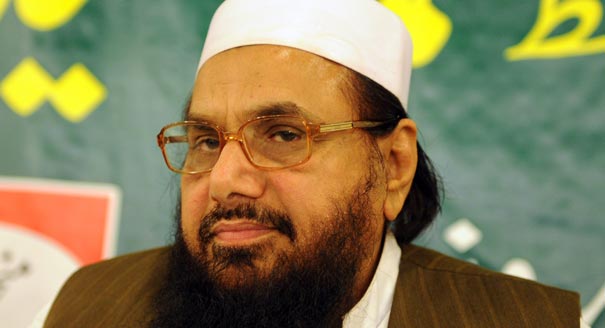
While the Pakistani terrorist organization Lashkar-e-Taiba is not currently in a position to replace al-Qaeda, it will continue to pose a large and growing international threat.
Source: Times of India

Like al-Qaida, it is a pan-Islamist outfit and its militants have fought on multiple fronts, including Bosnia-Herzegovina, Tajikistan, and Chechnya during the 1990s, as well as Iraq, Afghanistan, and possibly even Somalia during the past decade. However, Lashkar is heavily influenced by regional dynamics.
Liberating Indian-administered Kashmir was never intended to be the apotheosis of Lashkar's jihad, but the group's leadership continues to prioritise India as its main enemy. This is a function of doctrinal precepts (the group's leaders view the present India-Pakistan rivalry as the latest chapter in a Hindu-Muslim struggle) and strategic calculation (Lashkar benefited from significant state support in return for prioritising the fight against India). Lashkar's leaders do not want to jeopardise the group's position in Pakistan, lest they lose control over its vast social welfare infrastructure or sacrifice their own freedom of movement.
Thus, even as Lashkar spreads its tentacles further beyond South Asia and undertakes or contributes to bold attacks against Western interests, the group's leaders deny such activities. The net result is to rob Lashkar of legitimacy in the eyes of some jihadists, who respect the sacrifices al-Qaida leaders have made and the forthright manner in which they challenge the United States as well as its many allies. As a result, Lashkar is unlikely to be able to inspire jihadists globally or attract affiliates in the same way as al-Qaida.
In its current incarnation, Lashkar may not be the one to replace al-Qaida. But, if one were to ask whether Lashkar poses a growing global threat, the answer is yes. As with other jihadist groups, it has absorbed elements of al-Qaida's global jihadist ideology. Lashkar was always dedicated to liberating occupied Muslim lands, but since 9/11 it has contributed to out-of-area terrorist operations against US and Western interests.
This is in addition to its continued focus on executing or assisting attacks in India, which has been the main recipient of most Lashkar violence. There is no indication that Lashkar's leaders have removed India from the top of their target list or that they intend for the group's growing involvement in the global jihad to come at the expense of war against its historic enemy.
However, according to some of Lashkar's own leaders, in recent years an increasing number of members have become motivated more by anti-Americanism than by the fight against India, and are pushing to internationalise the group's jihad even more. This ideological hybridisation and the motivation to "go global" have important ramifications vis-a-vis the nature of the Lashkar threat.
First, the group's trainers have a particular cache and are considered to be among the most tactically adept in Pakistan. As such, they can provide instruction in areas such as small-unit commando tactics, reconnaissance, counter-intelligence, and the construction and use of explosive devices. The group has a history of training local as well as foreign jihadists - including Indians and Westerners - and, as it has deepened collaboration with other outfits in Pakistan, cross-training has increased. In other words, the opportunities for Lashkar trainers to imbue their knowledge are growing. Second, the group's aboveground infrastructure in Pakistan continues to provide a jumping-off point for recruits seeking training, either with it or with other militant outfits. Third, it is among the richest jihadist organisations and so is well positioned to provide financial support for terrorist attacks abroad. Lashkar has a history of funding operations against India, and is believed to have done so for attacks against Western targets too.
Outside of Pakistan, Lashkar has been building its transnational networks in South Asia, Europe, North America and the Asia-Pacific region since the 1990s, and its connections to the Persian Gulf stretch back even further. Historically, the group used these networks to support its regional operations, particularly attacks against India, but this has not always been the case, and there are instances of Lashkar operatives contributing to attempted attacks in Western and Arabian countries, as well as in Australia. In addition, Lashkar has instructed militants from around the world; some of who likely remained in touch with their former training providers. Finally, by dispatching small numbers of fighters to various foreign fronts, Lashkar has forged relationships with various other jihadist outfits and networks. As a result, it is able to provide logistical support, funding, and assistance coordinating operations on an international scale. This type of support may not make headlines, but it contributes to the global nature of the jihadist threat today.
Because of its ability to act as a global jihadist facilitator, Lashkar need not launch unilateral attacks to do damage, though it could if it chose to do so. Working as part of a consortium enables Lashkar to pose a threat while also providing it cover, since shared responsibility makes it easier for the group to conceal its fingerprints. However, while the leadership's reluctance to claim the spotlight is partly what enables Lashkar to continue functioning, it has also placed a strain on the group's cohesion.
There is significant cause for concern that a new generation of militants - moulded by the experience of fighting alongside other outfits against Coalition forces in Afghanistan and in some cases against the state in Pakistan - is less conservative. These men may be pushing Lashkar to internationalise further. Those factions within the group who do not believe their leaders are going far enough can utilise its domestic infrastructure, as well as transnational capabilities, to pursue their own operations. Enhanced organisational integration with other outfits heightens the opportunities for freelancing, with former Lashkar members who left the group because they viewed the leadership as too conservative acting as an important bridge in this regard.
Thus, one must consider the capability of current and former members both to steer the organisation in an increasingly internationalist direction as well as to leverage its infrastructure for these purposes, whether or not the leadership approves. The more sprawling Lashkar's operations become, the more difficult they might be to control. Meanwhile, so long as the group remains in existence the threat to India remains. All of which means the world will need to keep a close eye on Lashkar, no matter what becomes of al-Qaida after bin Laden's death.
Carnegie does not take institutional positions on public policy issues; the views represented herein are those of the author(s) and do not necessarily reflect the views of Carnegie, its staff, or its trustees.
While Russia is not ready to sue for peace on Europe’s terms, it could still either seek a ceasefire in Ukraine or try escalation. Brussels needs to prepare for both and prioritize that preparation over normative discussions.
Kadri Liik

Autonomous AI agents are increasingly prevalent in cyberspace. The EU needs a real-time monitoring strategy, to invest in AI defenses, and to reduce its strategic dependence on U.S. frontier models.

Raluca Csernatoni, Patryk Pawlak
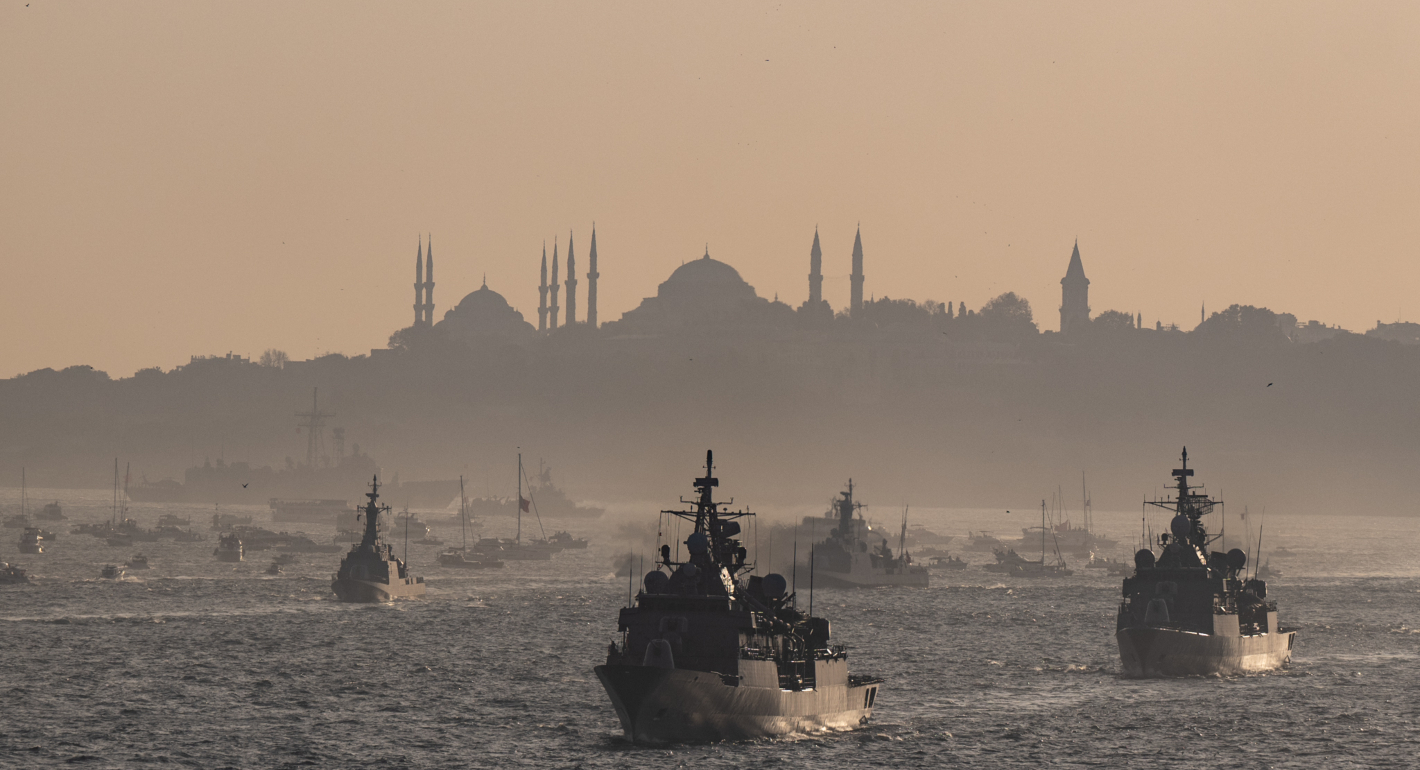
For ninety years, Turkey has been positioned as the principal gatekeeper of Black Sea security. As a result, European and NATO efforts to support Ukraine will require closer engagement with Ankara.

Thomas de Waal

Western Europe’s dual-use infrastructure melted down during its latest heat wave. If a predicted hot weather event can take the continent by surprise, what chance does it have to withstand unexpected geopolitical crises?

Rym Momtaz

There is an elephant in the room when it comes to the EU’s upcoming security strategy: Donald Trump. Unless European leaders acknowledge the depth of the transatlantic crisis, true autonomy will remain out of reach.

Stefan Lehne