

Research
- +10
Rosa Balfour, Frances Z. Brown, Yasmine Farouk, …
{
  "authors": [
    "Moisés Naím"
  ],
  "type": "legacyinthemedia",
  "centerAffiliationAll": "",
  "centers": [
    "Carnegie Endowment for International Peace"
  ],
  "collections": [],
  "englishNewsletterAll": "",
  "nonEnglishNewsletterAll": "",
  "primaryCenter": "Carnegie Endowment for International Peace",
  "programAffiliation": "",
  "programs": [],
  "projects": [],
  "regions": [
    "North America",
    "United States",
    "Middle East",
    "Iraq",
    "Yemen",
    "South Asia",
    "Afghanistan",
    "Pakistan"
  ],
  "topics": [
    "Security",
    "Military",
    "Foreign Policy"
  ]
}
Source: Getty
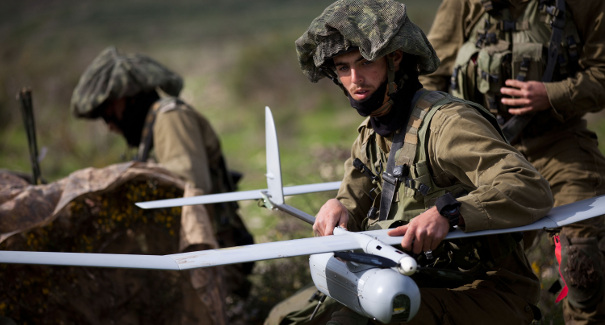
Drones have drastically altered the course of war. The bad news is that terrorists are inevitably going to take an interest in this technology. Just as inevitably, they will try to combine it with IEDs.
Source: El País

In World War II, some three percent of American deaths were caused by anti-personnel mines. In Vietnam, the figure grew to nine percent. In Iraq, it soared to 65 percent (in 2005), and a Marine general estimated that 80 percent of his troops’ casualties in Afghanistan were caused by IEDs. The Pentagon has spent $1.7 billion on neutralizing, via electronic spammers, these homemade bombs whose components cost no more than a few dollars.
Another innovation that has drastically altered the course of war are drones. These unmanned aircraft can be remotely piloted and are able to fly at great heights for long hours. The drones that operate in Pakistan, Afghanistan and Yemen, for example, are piloted from Nevada. These planes can carry sophisticated video cameras and some are armed with precision guided missiles. It is just like a play-station game, but with real consequences. Thus, American pilots direct drone attacks on Al Qaeda hideouts along the Afghan-Pakistan frontier, or kill leaders like Anwar al-Awlaki, whose truck was hit in Yemen by a missile fired from an unmanned plane. The Predator type, which is about 24 feet long and weighs just over a ton, have been used against the Islamic militias in Somalia. With the Global Hawk, the biggest of the drones, the Pentagon stealthily monitors the nuclear activities of North Korea. The smallest drones can be carried in a backpack, and in Afghanistan the soldiers are able to launch them from wherever they are, and thus gain the ability to see images of enemy positions "beyond the horizon or behind the next mountain ahead. In the last decade, the American fleet of drones has gone from 50 to over 7,000, spread over various bases in Turkey, the Seychelles, Ethiopia, Djibouti and the Arabian peninsula.The United States is not, of course, the only country that is equipping its armed forces with drones. Many other countries have them, though few are as technically sophisticated as the American ones.
Another historical constant is that, once a technology has spread among the armed forces of the world, its civilian applications are never far behind. Many new companies now sell remote-control planes and helicopters with capacities far superior to those hitherto known. And the demand for their flying products is huge. From radio and television stations that want them to capture images of road conditions and other news from the air, to real estate agents who want to show their clients a bird’s-eye view of the properties; ecologists and zoologists who want to observe natural landscapes or wild animals; ranchers who want to watch their herds; security companies who use them for vigilance, and so on.
The bad news is that terrorists are inevitably going to take an interest in this technology. Just as inevitably, they will try to combine it with IEDs. And this is how terrorists’ explosives can travel from the ground to the air, from Afghanistan to Manhattan, or from a dusty, remote road to a stadium full of people.
Obviously this is a disturbing idea. It is unpleasant even to think about. But to put it out of our mind will not put it out of the minds of those who would like to use new technologies for their murderous ends. No problem has ever been solved by ignoring it, and this looming threat will require a lot of smart thinking and even smarter action.

Distinguished Fellow
Moisés Naím is a distinguished fellow at the Carnegie Endowment for International Peace, a best-selling author, and an internationally syndicated columnist.
Recent Work



Rosa Balfour, Frances Z. Brown, Yasmine Farouk, …
Moisés Naím
Carnegie does not take institutional positions on public policy issues; the views represented herein are those of the author(s) and do not necessarily reflect the views of Carnegie, its staff, or its trustees.

The aftermath of the Ceuta crisis shows Europe has drawn the wrong lessons. Rather than doubling down on failed migration policies, the EU needs to address the underlying roots of such episodes.

Richard Youngs

Canadian Prime Minister Mark Carney has twice inspired praise for standing up to U.S. President Donald Trump: at the 2026 World Economic Forum in Davos and on Canada-U.S. trade negotiations. Is Carney showing a third way better than the EU has in dealing with the Trump administration?

Rym Momtaz, ed.

The EU’s responses to two recent incidents expose the gulf between European perceptions and capabilities. Unless the union can bridge that gap, it will never become a real geostrategic power.
Rym Momtaz

European states control several Overseas Countries and Territories around the world that carry strategic, economic, and environmental weight. As great powers challenge the rules-based order, defending them is a geopolitical imperative for Europe.

Marc Pierini

In supporting Europe’s far-right, MAGA and Russia both want the same thing: a weaker EU. Europe must defend itself without abandoning the openness these forces exploit.

Armida van Rij