

Commentary
Judy Dempsey
{
  "authors": [
    "Judy Dempsey"
  ],
  "type": "legacyinthemedia",
  "centerAffiliationAll": "",
  "centers": [
    "Carnegie Endowment for International Peace",
    "Carnegie Europe",
    "Carnegie Russia Eurasia Center"
  ],
  "collections": [],
  "englishNewsletterAll": "",
  "nonEnglishNewsletterAll": "",
  "primaryCenter": "Carnegie Europe",
  "programAffiliation": "",
  "programs": [],
  "projects": [],
  "regions": [
    "Russia",
    "Europe"
  ],
  "topics": [
    "Foreign Policy",
    "Economy"
  ]
}
Source: Getty
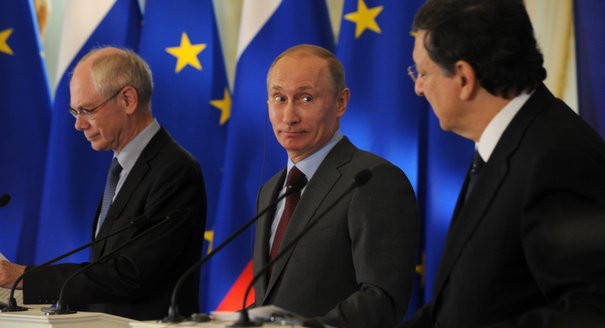
As Gazprom and a European Union commission go head to head over the Russian gas giant's aggressive moves in Eastern Europe, Russia may miss an opportunity to help itself.
Source: New York Times

The Commission and Russia’s Gazprom are now at loggerheads, as I explain in my latest Letter from Europe. At issue is how Gazprom, Russia’s state-owned energy company, allegedly abused its powerful position in Eastern and Central Europe by blocking competition.
The decision by DG Competition, as the Directorate General for Competition is known, to go after Gazprom is important for what is says about the Commission and what it means for Russia.The Competition Commission is fiercely committed to fair competition. Remember how it challenged Microsoft. It also challenged Europe’s most powerful energy companies, especially in France and Germany over how they had sewn up the energy sector.
At one stage, say energy experts, DG Competition had such damning evidence of the big German energy companies abusing their market position that it proposed to make the reports public unless the companies changed their ways. The threat worked. Germany now has a competitive and open energy sector.
Gazprom is one of the last remaining energy companies on DG Competition’s list. While the company held a tight grip over the energy sector throughout most of Eastern Europe, in Western Europe, where it has subsidiaries, Gazprom has had to play by the rules in an increasingly competitive sector.
What these antitrust proceedings against Gazprom mean for Russia is another matter. Mr. Putin, so far, is standing firm.
But if — and this is a big if — Russia is serious about modernization, surely the Commission’s proceedings are a push in the right direction. After all, say analysts, modernization is not just about upgrading the country’s infrastructure. It is also about the rule of law, transparency and competition.
“It’s just so hard to tell if this case could be a tool for modernization,” said Szymon Kardas, a Russian expert at the Center for Eastern Studies in Warsaw. “There is already a debate amongst the Russia elites about how modernization would affect the Kremlin’s control over strategic sectors, such as energy.”
All the more reason to keep track of DG Competition’s proceedings against Gazprom.

Nonresident Senior Fellow, Carnegie Europe
Judy Dempsey is a nonresident senior fellow at Carnegie Europe
Recent Work
Judy Dempsey
Judy Dempsey
Carnegie does not take institutional positions on public policy issues; the views represented herein are those of the author(s) and do not necessarily reflect the views of Carnegie, its staff, or its trustees.

As we close out another season of Strategic Europe, it is worth taking stock of the deep shifts underway.

Rym Momtaz

The hybrid warfare landscape is evolving rapidly, leaving policymakers without clear strategies. To better inform their work in addressing emerging challenges, governments must dig deeper into the underlying dynamics at play.


Raluca Csernatoni, Alicia Wanless
The EU had to compromise to adopt a twenty-first sanctions package against Russia, exposing growing cracks in the union’s resolve. Is this latest, weaker round worth it to keep pressure on Moscow?
Rym Momtaz, ed.

Trump is distracted and Ukraine wants Europe to step up. The continent’s leaders must find their voice and assert it in talks with Russia.

Alissa de Carbonnel

Mounting economic strain and battlefield losses will not necessarily make the Kremlin less dangerous. They could instead push Moscow toward a more aggressive hybrid campaign designed to test NATO’s Eastern flank, exploit allied hesitation, and fracture European resolve.

Maksym Beznosiuk