

Commentary
Western Europe’s dual-use infrastructure melted down during its latest heat wave. If a predicted hot weather event can take the continent by surprise, what chance does it have to withstand unexpected geopolitical crises?
Rym Momtaz
{
  "authors": [
    "Deborah Gordon",
    "Shin-pei Tsay"
  ],
  "type": "legacyinthemedia",
  "centerAffiliationAll": "dc",
  "centers": [
    "Carnegie Endowment for International Peace"
  ],
  "collections": [],
  "englishNewsletterAll": "ctw",
  "nonEnglishNewsletterAll": "",
  "primaryCenter": "Carnegie Endowment for International Peace",
  "programAffiliation": "SCP",
  "programs": [
    "Sustainability, Climate, and Geopolitics"
  ],
  "projects": [
    "Carnegie Oil Initiative"
  ],
  "regions": [
    "North America"
  ],
  "topics": [
    "Climate Change"
  ]
}
Source: Getty
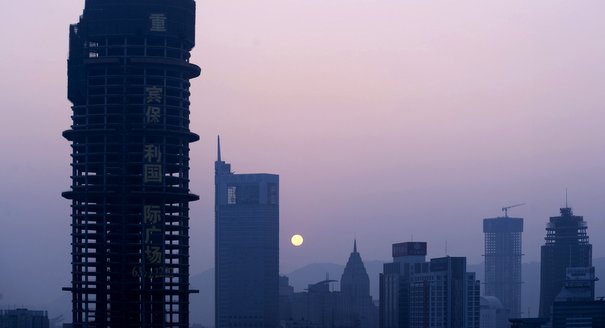
Global urbanization is inextricably linked with energy consumption. Smarter urban planning and transportation can reduce energy consumption and lower the demand for carbon intensive unconventional oils.
Source: Huffington Post
The evolution of two megatrends -- urbanization and unconventional oils -- will go a long way toward determining the climate future facing the world.
From Manila to Mexico City, and Shanghai to Sao Paulo, cities are booming as the world's citizens chase economic opportunities. Urbanization on its current course is leading to massively increased car ownership and use, in turn driving oil consumption. Without effective governance devoted to guiding the development of cities this will continue. Alternatively, there could be an opening for the expansion of cities to be designed in ways that reduce dependence on cars, and thereby significantly reducing future carbon emissions.
In parallel, accessible global oil supplies are expanding dramatically. After decades of mounting concerns over resource scarcity, new oils are surfacing. It turns out there are trillions upon trillions of barrels of unconventional oils around the globe. Varying from light tight oils produced through hydraulic fracturing to extra-heavy ancient oil sand bitumens, to solid immature kerogen, there are enough hydrocarbons to fuel the world for centuries.Urbanization and unconventional oils are demanding massive investments that can fundamentally change lives. Infrastructure commissioned and built today to accommodate these two megatrends will lock in resource utilization and climate patterns for generations to come.
A traffic-snarled, gridlocked city is hostile and uninviting -- economic activity cannot thrive if it takes hours to traverse the city. Moreover, a car-centered urbanization pattern multiplied over millions of unnecessary trips drives oil development. The likely result is exploitation of all available oil resources, making it hard to pick and choose so that the new oils with the most damaging climate impacts remain in the ground.
Over half of humanity now resides in cities. In 2012, 26 urban areas worldwide qualified as megacities with populations over 10 million according to Demographia. The United Nations projects this number will swell to 37 urban areas by 2025. With continued relocation, the United Nations foresees the world's urban population rising to 67 percent by 2050. The design of new and expanding metropolises will determine how people move around, their oil demands, their carbon footprints, and their quality of life.
Concomitant with urbanization, the successful quest for unconventional oils could yield abundant fuel supplies, fostering car ownership, and a massive increase in oil consumption. Travelling this road would be very costly, both environmentally and economically.
But is it in fact possible to couple these interconnected megatrends to protect both the climate and collective wellbeing?From mass transit options to street design to parking provisions, the shape of cities and their transportation systems will help determine oil consumption patterns for billions of people worldwide. Thoroughfares that offer safe, comfortable walking spaces, separate bicycles from cars, and provide easy access to mass transit can reduce household car travel by up to 57 percent. When neighborhoods are compact instead of sprawling, energy consumption can be cut by as much as 62 percent. Devoting valuable space to parking is another urban pitfall that fosters oil use. Regulations often require parking allocations for new development despite the fact that this locks up some 200 square feet for a single car that is on average actually utilized about 10 percent of the time.
Smart urbanization dovetails perfectly with prudent oil development. New oils require rethinking resource investments. Decisions are no longer being driven over fears of oil shortages as they were beginning in the 1970s. But new choices must be confronted about the 160 types of global oils. At the same time sustainable development of cities can relieve the pressure through reducing demand. Whatever happens, the urban infrastructure investments made today will influence global oil demand over the next century.
Governance, particularly at a local and national level, has a crucial role to play in determining outcomes. Public policies that establish effective mechanisms for pricing carbon can go a long way toward influencing the megatrends of cities and oils so that their trajectory actually has a stabilizing effect on the climate. A carbon tax in some form is essential to refocus massive infrastructure investments that otherwise stand to lock in further motorization and the related unbridled development of new oil resources. Advancing efficient urban form and low-carbon transportation infrastructure -- such as slating mixed-use development in a transit-rich area instead of building parking garages -- requires new local practices and regulatory policies.
Immense opportunities and challenges lie ahead for urban growth, which in turn will inform the world's future energy path. As seven billion citizens aspire to improve their way of life, smart cities and strategic oil decisions are critical to ensuring a path to a secure climate future.
This article was originally published in the Huffington Post.

Former Director and Senior Fellow, Energy and Climate Program
Gordon was director of Carnegie’s Energy and Climate Program, where her research focuses on oil and climate change issues in North America and globally.

Former Nonresident Associate, Energy and Climate Program
Shin-pei Tsay was a nonresident associate in the Energy and Climate Program at the Carnegie Endowment for International Peace.
Carnegie does not take institutional positions on public policy issues; the views represented herein are those of the author(s) and do not necessarily reflect the views of Carnegie, its staff, or its trustees.

Western Europe’s dual-use infrastructure melted down during its latest heat wave. If a predicted hot weather event can take the continent by surprise, what chance does it have to withstand unexpected geopolitical crises?

Rym Momtaz

Europe’s industrial supply chains leave it vulnerable to global shocks. The EU needs a pragmatic green industrial strategy that balances durable partnerships and bolsters homegrown clean tech without sacrificing low-carbon ambition.


Milo McBride, Pauline Gerard

The EU’s new migration policy is not suited to today’s realities. With climate change increasingly becoming a driver of displacement, Europe needs to rethink its deterrence-focused approach.

Shana Tabak
The U.S.-Iran war has crossed a dangerous threshold: water infrastructure in the Gulf is now a target. Ecological statecraft is no longer peripheral to security, it's part of its foundations.


Olivia Lazard, Ali Bin Shahid
The closure of the Strait of Hormuz has triggered a global energy crisis, but Europe is stuck in reaction mode. Without more strategic foresight, the EU will remain dependent on fossil fuels and will never be truly secure.
Milo McBride, Pauline Gerard