

Commentary
The EU can impose sanctions but struggles to enforce them without the United States. With Washington increasingly disinterested in backing European interests, the bloc must now fend for itself.
Nicu Popescu, Tiago Antunes
{
  "authors": [
    "Paul Haenle",
    "James F. F. Jeffrey"
  ],
  "type": "legacyinthemedia",
  "centerAffiliationAll": "",
  "centers": [
    "Carnegie Endowment for International Peace",
    "Carnegie China"
  ],
  "collections": [
    "China and the Developing World",
    "U.S.-China Relations",
    "China’s Foreign Relations"
  ],
  "englishNewsletterAll": "",
  "nonEnglishNewsletterAll": "",
  "primaryCenter": "Carnegie China",
  "programAffiliation": "",
  "programs": [],
  "projects": [],
  "regions": [
    "North America",
    "United States",
    "Middle East",
    "East Asia",
    "China",
    "Iran",
    "Israel"
  ],
  "topics": [
    "Security",
    "Foreign Policy",
    "Arms Control",
    "Political Reform",
    "Nuclear Policy"
  ]
}
Source: Getty
In California, Xi and Obama should give priority to the Middle East. The dramatic war-and-peace immediacy of Iran and Syria is clear, but cooperation could help deepen the trust, understanding, and diplomatic interoperability needed to tackle East Asian security issues.
Source: Washington Institute

Over the past week, the authors held extensive discussions with senior Chinese officials and foreign policy analysts in Beijing and Shanghai under the auspices of the Carnegie-Tsinghua Center for Global Policy. These consultations indicated that China is eager for more cooperation with the United States on the Middle East. If grounded in realistic expectations, such cooperation could yield real results; if too ambitious or theoretical, however, it will yield only disappointment. The key to success is for Beijing and Washington to understand each other's interests.
Mainstream Chinese interests are in fact similar to America's. Both are threatened by Iran's quest for nuclear weapons capability, the prospect of greater spillover from Syria, the turbulence caused by two years of Arab uprisings, and the perception of sharp retrenchment in Washington's posture toward the region. The Chinese are increasingly aware of the mess in which the Middle East finds itself. They understand the impact these problems have on China's trade and, especially, energy supply -- more than half of Chinese oil imports come from Arab states or Iran. They are also concerned about Washington taking too precipitous or broad a stand-down in the region. In light of these factors, many in Beijing are now asking, "What can we do?"To help answer that question, Washington can draw on a history of growing Chinese engagement in the region. This includes expanded U.S.-Chinese dialogue on Middle East issues, culminating in the State Department's undersecretary for political affairs visiting Beijing for consultations in August 2012.
Economic and military considerations are part of the equation. China's overall economic activity in the region has been limited, but the impact of its energy ventures should not be overlooked. For example, Chinese state oil companies play a very active role in petroleum exploration and production in northern and southern Iraq. These activities represent a significant investment by Beijing and, therefore, a political opening for Washington. On the military front, China has contributed troops to various UN missions in the Middle East, beginning with UNIKOM on the Iraqi border in the 1990s, and later in Sudan and southern Lebanon. The latter is Beijing's largest overseas deployment ever -- a battalion-sized contribution to the UN Interim Force in Lebanon.
But China's track record in the diplomatic arena has been the most significant aspect of its regional involvement, for better and for worse. Beijing has played a positive, if quiet, role in the P5+1 nuclear talks with Iran and in passing sanctions resolutions at the Security Council. Its repeated blocking of Syria resolutions, however, has been a negative for Washington.
A word of caution is necessary in any effort to combine Chinese capabilities with U.S. and international stabilization efforts in the Middle East. Like other global powers, China will be tempted to assert its place at the table based solely on its size, economic stature, and interests, instead of showing a real willingness to put forward concrete ideas and engage in the hard work required to make progress on difficult issues. And Washington will be tempted to favor its need for freedom of action in the security sphere above all else, which could lead it to treat China as it so often treats the EU -- that is, paying lip service to equal billing while expecting other parties to assume burdensome U.S.-choreographed roles. To avoid those temptations, Washington should focus on specific, realistic areas of cooperation.
Iran. On the most critical regional issue, China can help the United States put down a serious endgame proposal in the P5+1 talks along the lines recently proposed by Dennis Ross and David Makovsky in the Washington Post. Such a proposal should acknowledge Iran's right to a civilian nuclear program and offer to lift sanctions -- in some cases immediately -- if Tehran agrees to abide by the deal's requirements on enrichment, verification, and other matters. In terms of history and interests, China would be far better placed than other P5+1 states to persuade Iran that it should accept the offer. But such risky Chinese engagement is possible only if President Obama can convince President Xi that Washington's goal is resolution of the Iranian nuclear threat, not disguised regime change. He must also make clear that absent an agreement, the United States will carry out its prevention policy through military action if necessary -- a scenario that would pose far greater risks to a massive oil importer like China than any diplomatic exposure with the Iranians. An Israeli strike would probably spur a strong Chinese rhetorical response, but as long as such action does not produce a regional conflict that threatens oil supplies, Beijing would limit itself to words and, most likely, UN condemnation.
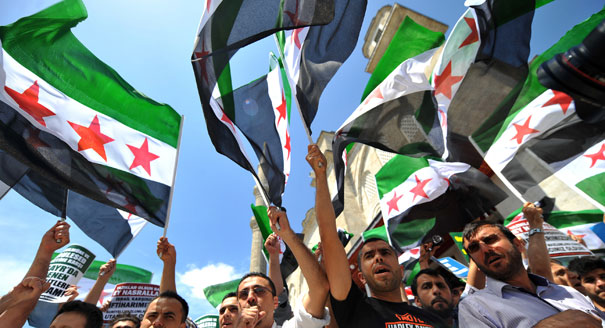
Syria and its neighbors. The United States cannot expect China to decouple itself from Russia or abandon its own principle of noninterference overnight. And similar to Moscow, Beijing remains disappointed about NATO's regime change goals following passage of the Security Council's 2011 resolution on Libya, which China opted not to block. Yet given the risk of Syria's war igniting regional conflict, Washington should encourage Beijing to leverage its influence with Damascus and Moscow, pressing both toward serious compromise and concessions. This includes calling for Russian restraint on weapons deliveries to the Assad regime, an unhindered UN investigation of chemical weapons use, a Security Council delegation to assess the refugee situation in Jordan, and Hezbollah's removal from Syria.
The war is also exacerbating instability next door in Iraq, threatening the country's projected potential to provide 45 percent of all new crude production worldwide this decade -- perhaps a vital factor in China's economic growth. Beijing is already active in the Iraqi oil sector; cooperation with the United States to keep Iraq stable and united would yield immense dividends to all three countries.
Peace process. Washington could also encourage China to support Secretary of State John Kerry's renewed focus on the Israeli-Palestinian impasse, albeit only at the margins. Given its historical bond of trust with the Palestinians and strengthening relationship with Israel, China could help build trust between the parties. Beijing's hosting of President Mahmoud Abbas and Prime Minister Binyamin Netanyahu last month offered a glimpse of the beneficial part it could play.
China's potential new roles in the Middle East security dynamic are not far reaching, with the possible exception of the Iranian nuclear question. If handled properly, however, greater Chinese involvement could complement both U.S. initiatives and Beijing's extensive regional trade relations. Moreover, by increasing trust and interoperability with the United States, such engagement could pave the way for eventual progress on the most sensitive and contentious bilateral issues beyond the Middle East.
James F. Jeffrey is the Philip Solondz distinguished visiting fellow at The Washington Institute.
This article was originally published by the Washington Institute for Near East Policy.

Former Maurice R. Greenberg Director’s Chair, Carnegie China
Paul Haenle held the Maurice R. Greenberg Director’s Chair at the Carnegie Endowment for International Peace and is a visiting senior research fellow at the East Asian Institute, National University of Singapore. He served as the White House China director on the National Security Council staffs of former presidents George W. Bush and Barack Obama.
James F. F. Jeffrey
Ambassador James F. Jeffrey joined the Wilson Center in December 2020 as Chair of the Middle East Program. Ambassador Jeffrey served as the Secretary’s Special Representative for Syria Engagement and the Special Envoy to the Global Coalition to Defeat ISIS until November 8, 2020. He is a senior American diplomat with experience in political, security, and energy issues in the Middle East, Turkey, Germany, and the Balkans.
Carnegie does not take institutional positions on public policy issues; the views represented herein are those of the author(s) and do not necessarily reflect the views of Carnegie, its staff, or its trustees.

The EU can impose sanctions but struggles to enforce them without the United States. With Washington increasingly disinterested in backing European interests, the bloc must now fend for itself.


Nicu Popescu, Tiago Antunes

Russia is testing the waters of NATO’s mutual defense clause. What do strikes in Romanian territorial waters mean for the alliance’s posture toward Moscow?

Dimitar Bechev

With its public finances in shambles, the far right polling at 35 percent ahead of the 2027 presidential election, and a growing protest movement, is France’s crisis a threat to the EU’s geopolitical awakening?

Rym Momtaz, ed.

Ahead of a tough winter for Ukraine, Donald Trump’s swing back toward Russia bodes ill. But instead of panicking, Kyiv’s European allies are focusing on action.
Rym Momtaz

Funding Ukraine remains a priority for European leaders. As Russia’s war of aggression heads into another winter, two feasible options to mobilize support for Kyiv should be fast-tracked.


Vladyslav Rashkovan, Gregory P. Wilson