

Paper
Christopher S. Chivvis, Rohan Mukherjee, Milan Vaishnav
{
  "authors": [
    "Milan Vaishnav"
  ],
  "type": "legacyinthemedia",
  "centerAffiliationAll": "dc",
  "centers": [
    "Carnegie Endowment for International Peace"
  ],
  "collections": [],
  "englishNewsletterAll": "ctw",
  "nonEnglishNewsletterAll": "",
  "primaryCenter": "Carnegie Endowment for International Peace",
  "programAffiliation": "SAP",
  "programs": [
    "South Asia"
  ],
  "projects": [],
  "regions": [
    "South Asia",
    "India"
  ],
  "topics": [
    "Political Reform",
    "Democracy",
    "Economy",
    "Security",
    "Foreign Policy"
  ]
}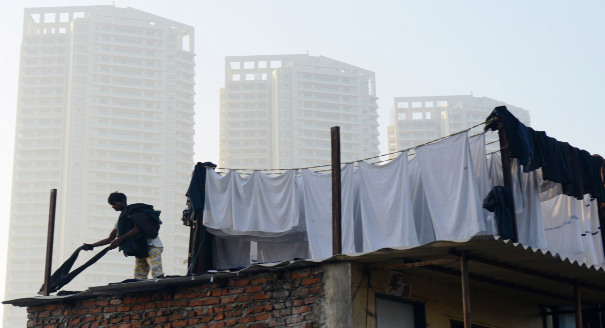
Source: Getty
In their important new account of a pivotal period in Indian history, Sumit Ganguly and Rahul Mukherji sometimes overemphasize the changes that have taken place, overlooking sources of stagnation in Indian politics.
Source: Studies in Indian Politics
Sumit Ganguly and Rahul Mukherji manage, in the few pages and structure dictated by a series format (theirs is the latest entry in the broader Cambridge University Press series, ‘The World Since 1980’), to provide dilettantes and Indian scholars alike with a self-assured assessment of a pivotal period in Indian history.
Ganguly and Mukherji organize their volume around four ‘revolutions’—foreign policy, economic development, social-political mobilization and anti-secularism—that capture the fundamental changes that have transformed the Indian landscape over three decades. One disadvantage to building a framework around ‘revolutions’, is that the authors’ analysis often privileges the notion of change over continuity, when the nuanced realities at the heart of India often lie in the space between.
Beginning with foreign policy, Ganguly and Mukherji argue that India has eschewed an autarkic foreign economic policy, a warm relationship with the Soviet Union and a strategy of ‘nonalignment’ in favour of global economic integration and a closer relationship with the United States. India’s postindependence foreign policy was ‘quaint at best and hypocritical at worst’ (p. 18) until the Cold War’s end instigated a ‘tectonic shift’, in which the Soviet economic model and the Indo-Soviet alliance were rendered obsolete. The analysis overestimates the extent of India’s ‘revolution’ in foreign policy, with the authors writing that the Cold War ‘rendered the concept of nonalignment meaningless and swept away whatever vestiges had remained of India’s notion of a foreign policy’ (p. 15). This ignores continued calls for ‘strategic autonomy’ by the Indian government, reflected in the ‘Nonalignment 2.0’ document released by some of India’s most influential public intellectuals in February 2012.The ‘revolution’ in economic development saw India not only pave the way for greater trade with the outside world and open its markets to foreign investment, but also undertake major structural reforms designed to minimize (if not eliminate entirely) the cumbersome ‘license raj’ policies stifling private entrepreneurship. There is a debate among scholars about when exactly India shifted to a high growth path. Ganguly and Mukherji put it in the mid-1980s, and highlight the critical ideational changes and policy reforms underlying the shift from ‘state-driven economic reliance to regulated private-sector promotion and competitiveness’ (p. 104). Since this book was written, the Indian economy has significantly cooled, with the government projecting the growth rate to hover around 5.7 per cent in fiscal year 2012–2013—a far cry from the near double digit growth India had become accustomed to. The sweeping reforms Ganguly and Mukherji document were no doubt transformational but as has become abundantly clear, they have not enabled India to fully shake off the shackles of the past. Once again, the drivers of change clash with powerful forces of continuity. Important sectors of the economy—real estate/construction; mining; defence; and the allocation of telecommunications spectrum—remain under intense regulatory scrutiny. Thus, politicians (and the bureaucrats they control) are able to skilfully barter favourable regulatory dispensation in exchange for staggering economic rents—institutionalizing a crony capitalist economy that resulted in high-profile corruption scandals, economic uncertainty, and the much ballyhooed ‘policy paralysis’.
The political-social ‘revolution’ happened when the ‘Congress era’—which was breaking down well before 1980 at the state level—fully collapsed, clearing the way for non-Congress rule at the centre and a proliferation of regional political formations. The breakdown of the Congress system was part and parcel of India what Jaffrelot calls the ‘silent revolution’, or the awakening of the heretofore backward classes and lower castes. As the authors explain, ‘The Congress Party’s losses turned out to be the regional parties’ gains’ (7). Also benefiting from Congress’ demise was the BJP, which the authors characterize as a ‘parochial and antisecular’ political party (132). While regional parties have certainly grown in prominence as the Congress has declined, continued state-level fragmentation has not had exclusively detrimental effects on the Congress party’s fortunes: the vote share of the Congress Party from 1996 to 2009 at the all-India level has hardly changed. Furthermore, the number of seats Congress was able to capture in parliament fluctuated wildly due to the combination of party system fragmentation and India’s winner-take-all electoral system. Despite powerful winds of change, the two true national parties—Congress and the BJP—continue to occupy two-thirds of India’s chief ministerial posts.
Finally, and interestingly, the authors highlight a fourth transformation: the rise of anti-secular forces in Indian political society, culminating with (though not restricted to) the BJP’s rise to national power in 1998 on the basis of its Hindutva appeal. In their analysis of the rise of the BJP and its subsequent electoral fortunes, the authors can hardly contain their disdain for the party’s ‘Hindu chauvinist’ proclivities. Yet, the authors should be careful not to speak of the BJP as a monolith. The BJP in Bihar, which serves a junior alliance partner to Nitish Kumar’s Janata Dal (United), has had to tame its pro-Hindu ideology lest it upset the alliance’s ‘caste and communal equation’. Meanwhile Gujarat’s BJP Chief Minister Narendra Modi has proudly displayed his anti-secular credentials. Ideology aside, the BJP’s fractured leadership has led to the emergence of powerful state-level party leaders who quite often stray from the party’s diktats—in contrast to the top-down, dynastic Congress party apparatus.
In their final chapter, Ganguly and Mukherji comment on the challenges (and opportunities) the future has in store for India’s democratic project. In particular, the authors seize on the mismatch between the success of participatory democracy and entrepreneurial dynamism on the one hand, and the state’s institutional shortcomings on the other. The results of this mismatch are disturbing: the rise of Maoist violence, endemic corruption in the implementation and administration of public policy, and persistent failures of social service delivery and human development. The authors place their hopes with three possible change agents: the Supreme Court, the Election Commission and legislative reforms such as the Right to Information (RTI) Act. While each has its merits, all are showing signs of strain that cast doubt on the proposition that they will be able to effectively resist the inertia of India’s past. Supreme Court activism has been essential for improving accountability yet it has been so successful it has produced an over-burdened apex court and a lopsided judiciary. The Election Commission quite rightly deserves praise for its admirable dedication to conducting free and fair elections but it has struggled to contain the rise of ‘money and muscle’ in Indian politics. As the authors point out, the Election Commission places stringent limits on election expenditures yet politicians and parties continue to brazenly flout the rules without repercussion. The RTI too has been an invaluable tool for civil society to hold the government’s feet to the fire—yet there is a disturbing trend of violence against would-be whistleblowers that could cast a chill on its future use.
One hopes that when the successor volume to India Since 1980 is written three decades from now, that book’s authors will be able to include a chapter on India’s institutional ‘revolution’. Short of that, the progress on other fronts documented so well by Ganguly and Mukherji will be in peril.
This article originally appeared in Studies in Indian Politics.

Director and Senior Fellow, South Asia Program
Milan Vaishnav is a senior fellow and director of the South Asia Program and the host of the Grand Tamasha podcast at the Carnegie Endowment for International Peace. His primary research focus is the political economy of India, and he examines issues such as corruption and governance, state capacity, federalism, and electoral behavior. He also conducts research on the Indian diaspora.
Recent Work


Christopher S. Chivvis, Rohan Mukherjee, Milan Vaishnav



Sophia Besch, Eric Ciaramella, Steve Feldstein, …
Carnegie does not take institutional positions on public policy issues; the views represented herein are those of the author(s) and do not necessarily reflect the views of Carnegie, its staff, or its trustees.

As we close out another season of Strategic Europe, it is worth taking stock of the deep shifts underway.

Rym Momtaz

The hybrid warfare landscape is evolving rapidly, leaving policymakers without clear strategies. To better inform their work in addressing emerging challenges, governments must dig deeper into the underlying dynamics at play.


Raluca Csernatoni, Alicia Wanless
The EU had to compromise to adopt a twenty-first sanctions package against Russia, exposing growing cracks in the union’s resolve. Is this latest, weaker round worth it to keep pressure on Moscow?
Rym Momtaz, ed.

Trump is distracted and Ukraine wants Europe to step up. The continent’s leaders must find their voice and assert it in talks with Russia.

Alissa de Carbonnel

Mounting economic strain and battlefield losses will not necessarily make the Kremlin less dangerous. They could instead push Moscow toward a more aggressive hybrid campaign designed to test NATO’s Eastern flank, exploit allied hesitation, and fracture European resolve.

Maksym Beznosiuk