

Article
Marc Pierini
{
  "authors": [
    "Marc Pierini"
  ],
  "type": "legacyinthemedia",
  "centerAffiliationAll": "",
  "centers": [
    "Carnegie Endowment for International Peace",
    "Carnegie Europe",
    "Malcolm H. Kerr Carnegie Middle East Center"
  ],
  "collections": [
    "Turkey’s Transformation"
  ],
  "englishNewsletterAll": "",
  "nonEnglishNewsletterAll": "",
  "primaryCenter": "Carnegie Europe",
  "programAffiliation": "",
  "programs": [],
  "projects": [],
  "regions": [
    "Middle East",
    "Europe",
    "Türkiye"
  ],
  "topics": [
    "Political Reform",
    "Democracy",
    "Civil Society"
  ]
}
Source: Getty
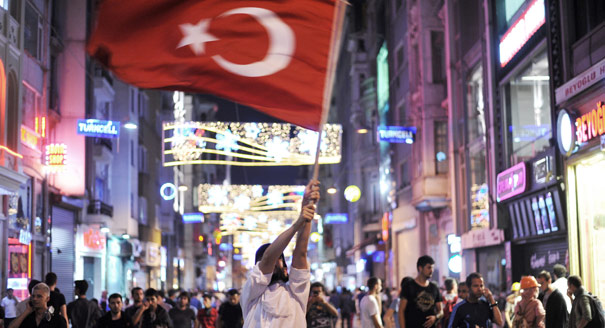
After the Gezi protests, freedom of cultural expression and coexistence of different lifestyles became the centerpiece of Turkey’s political debate and image abroad.
Source: Hurriyet Daily News
Last January I published a report entitled “Press Freedom in Turkey.” It depicted a grim situation, which only got worse afterwards. Soon after, I started research into the issues of freedom of cultural expression and coexistence of different lifestyles, the results of which are being published today.
Given that the country enjoys free elections and represents a very diverse society, these three subjects taken together are, in my view, key ingredients for Turkey’s democracy, social harmony and international standing. This is also the central theme of my book (in French) “Where is Turkey heading?” published last February.
Until the end of May, such assertions would at best have been considered naive or scholarly, or perhaps only mildly relevant. After the Gezi protests, however, they have, together with urban transformation, become the centerpiece of Turkey’s political debate and image abroad.The government was initially dismissive of the protests, then met them with severe repression, and finally settled for a polarizing discourse while criticizing key external partners. Seen from Brussels (and from Washington as well), this has two meanings.
First, the protests and their aftermath mark the end of the AKP’s “easy years”: nothing can be taken for granted anymore and the governing party is somewhat split, at least on form and style. Yes indeed, the ballot boxes may not defeat the AKP anytime soon, yet the magic of an unprecedented decade of success has been broken.
Second, there is now a sharp contrast between Turkey’s strong alliance with the West in economic and military terms and a definite unease in the relationship with Brussels, Berlin or Washington. The words uttered in the heat of the Gezi protests (and after) against the European Parliament (one of three institutional pillars of the EU Turkey says it wants to join), against the German federal chancellor (Turkey’s largest economic partner), and the United States (after White House criticisms of Turkey’s statements on Israel) are bound to leave traces, if not scars.
In addition, conspiracy theories of a defunct era, however convenient they may appear in domestic electoral terms, constitute a major embarrassment on the international stage and have started worrying investors and bankers (let alone their queries about inconsistencies in the monetary policy).
Similarly, majoritarian theories have created doubts about the direction of Turkey’s democracy. Even though a member of the Council of Europe and NATO and a candidate to the European Union, Turkey has recently departed from one of the basic tenets of Western democracy, i.e., that democracy is more than the ballot box.
What does this mean for Western observers of Turkey? Simply that there is now a definite split between the governing party’s line for the upcoming elections (polarizing discourse, populist moves, risky economic policies) and the country’s international interests and alliances. The course which the government has chosen to pursue in tactical political terms is largely incompatible with its ambitions on the external front. Two antagonistic logics are at work, which AKP politicians will have an increasingly difficult time explaining to interlocutors in Brussels, Berlin, D.C. and elsewhere.
Naturally, in today’s world, all politics are local and Turkey is no exception: winning the next election is the politicians’ ultimate objective. However, in a country with such a diverse society and such momentous ambitions inside and outside, consistency remains the hallmark of credibility.
How will the lessons from the Gezi protests be drawn? How much of a tolerant and inclusive attitude will be displayed to non-conservative segments of society? This remains an entirely open question at this stage. Much will depend on the answers to be given by the governing party.
This article was originally published in the Hurriyet Daily News.

Senior Fellow, Carnegie Europe
Marc Pierini is a senior fellow at Carnegie Europe, where his research focuses on developments in the Middle East and Turkey from a European perspective.
Recent Work
Marc Pierini
Marc Pierini
Carnegie does not take institutional positions on public policy issues; the views represented herein are those of the author(s) and do not necessarily reflect the views of Carnegie, its staff, or its trustees.

Are Germany’s economic, industrial, and political struggles becoming a liability for the EU’s ability to rise to the geopolitical moment?

Rym Momtaz, ed.

European Commission President Ursula von der Leyen is about to give her annual address on the state of the EU. Here’s what she won’t—but should—say.
Rym Momtaz

Radical-right parties are expected to do well in upcoming elections in four of the EU's biggest member states. If successful, they could prevent the union from addressing key challenges ahead.

Stefan Lehne

The aftermath of the Ceuta crisis shows Europe has drawn the wrong lessons. Rather than doubling down on failed migration policies, the EU needs to address the underlying roots of such episodes.

Richard Youngs

An overwhelming victory by a far-right-wing party in a small state in eastern Germany will have major repercussions for Chancellor Friedrich Merz’s coalition.

Judy Dempsey