

• Research
  • Strategic Europe
  • About
  • Experts
Carnegie Europe logoCarnegie lettermark logo
EUUkraine
  • Donate
{
  "authors": [
    "Alexey Arbatov"
  ],
  "type": "legacyinthemedia",
  "centerAffiliationAll": "",
  "centers": [
    "Carnegie Endowment for International Peace",
    "Carnegie Russia Eurasia Center"
  ],
  "collections": [],
  "englishNewsletterAll": "",
  "nonEnglishNewsletterAll": "",
  "primaryCenter": "Carnegie Russia Eurasia Center",
  "programAffiliation": "",
  "programs": [],
  "projects": [],
  "regions": [
    "North America",
    "United States",
    "Russia"
  ],
  "topics": [
    "Security",
    "Military",
    "Foreign Policy"
  ]
}

Source: Getty

In The Media
Carnegie Russia Eurasia Center

New Global Strike Systems Create Serious Problems for Russia

The current confidence-building and arms limitation measures are less effective for resolving the problems caused by the conventional prompt global strike systems being developed by the United States.

Link Copied
By Alexey Arbatov
Published on Oct 24, 2013

Source: YABLOKO

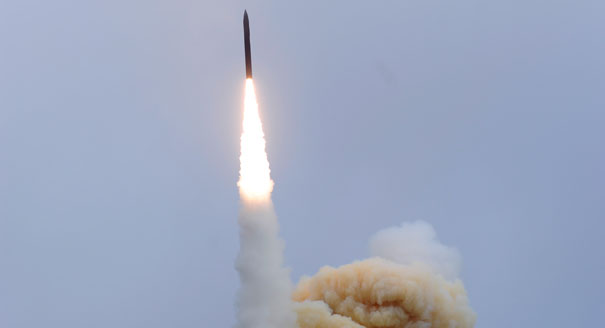
On Tuesday, October 22, senior associate at the Carnegie Endowment’s Nuclear Policy Program James M. Acton met with Russian journalists and military experts to discuss the conventional prompt global strike systems (CPGS), which the United States has been working on for more than a decade now. The participants discussed the potential risks that these new systems’ deployment could create. One of the participants in the discussion was chair of the Carnegie Moscow Center’s Nonproliferation Program Alexei Arbatov.

The new global strike systems create problems for Russia. What are the causes of Russia’s concerns?

The U.S. boost-glide systems are creating the threat of an essentially sudden strike. Satellites might detect the launch of a ballistic booster, but Russian radars would then detect the vehicle just before it strikes the target. In this context, it is not so important whether the warhead is nuclear or conventional. In any case, Russian specialists would act on the assumption that the vehicles are armed with nuclear warheads.

Today, as in the past, it is implied that a massive launch of ballistic missiles by one side would invoke the possibility of a launch-on-warning by the other side. It is not so important in the current context just how realistic this concept actually is. What matters is that it works as a deterrent. But if boost-glide vehicles are launched, radars would confirm satellite signals too late for a launch-on-warning. The other option would be to start a launch-on-warning based on the satellite signal, but this would create a tremendous risk of triggering nuclear war upon a false alarm. This represents the first danger if the new systems are deployed in large numbers (many hundreds of units).

The second problem is what response Russia should make in the event of a mass disarming strike against it with precision-guided conventional weapons. Delivery vehicle speed is not so important here, although delivery vehicles operating at subsonic speeds are easier to intercept by an air defense system. Would nuclear weapons be used for a retaliatory strike? This is the biggest strategic issue worrying Russian analysts at present. After all, it is logical to respond to a nuclear attack with a nuclear strike. This is the logic deterrence rests on. But in the new situation, a serious dilemma arises: does one decide to respond to a conventional strike, not having such a great collateral damage, with a nuclear retaliation, and then have the aggressor launch a devastating nuclear strike using with the remaining nuclear forces? Or is it more appropriate not to retaliate and to loose one’s nuclear forces that would be destroyed by the adversary’s conventional strike?

The current confidence-building and arms limitation measures are becoming no longer effective as a means to resolve these problems through a system of agreements. One needs to develop new ones. Rather than wringing hands and lamenting “We are being surrounded,” Russian and U.S. specialists who want to maintain strategic stability need to concentrate now on coming up with these new measures.

This article originally appeared in Russian on the YABLOKO site.

About the Author

Alexey Arbatov

Alexey Arbatov is the head of the Center for International Security at the Primakov National Research Institute of World Economy and International Relations.

Alexey Arbatov

Alexey Arbatov is the head of the Center for International Security at the Primakov National Research Institute of World Economy and International Relations.

Alexey Arbatov
SecurityMilitaryForeign PolicyNorth AmericaUnited StatesRussia

Carnegie does not take institutional positions on public policy issues; the views represented herein are those of the author(s) and do not necessarily reflect the views of Carnegie, its staff, or its trustees.

More Work from Carnegie Europe

  • Commentary
    Strategic Europe
    On NATO, Trump Should Embrace France Instead of Bashing It

    Donald Trump’s repudiation of NATO goes against the Make America Great Again vision of a U.S.-centered foreign policy. If the goal is to preserve the alliance by boosting Europe’s commitments, leaning into France’s vision is the most America First way forward.

      • Rym Momtaz

      Rym Momtaz

  • Commentary
    Europe Doesn’t Like War—for Good Reasons

    The wars in Ukraine and the Middle East are existential threats to Europe as a peace project. Leaders and citizens alike must reaffirm their solidarity to face up to today’s multifaceted challenges.

      Marc Pierini

  • Article
    Rewiring the South Caucasus: TRIPP and the New Geopolitics of Connectivity

    The U.S.-sponsored TRIPP deal is driving the Armenia-Azerbaijan peace process forward. But foreign and domestic hurdles remain before connectivity and economic interdependence can open up the South Caucasus.

      • Areg Kochinyan

      Thomas de Waal, Areg Kochinyan, Zaur Shiriyev

  • Commentary
    Strategic Europe
    Taking the Pulse: Is it NATO’s Job to Support Trump’s War of Choice?

    Donald Trump has demanded that European allies send ships to the Strait of Hormuz while his war of choice in Iran rages on. He has constantly berated NATO while the alliance’s secretary-general has emphatically supported him.

      • Rym Momtaz

      Rym Momtaz, ed.

  • Commentary
    Strategic Europe
    Time to Merge the Commission and EEAS

    The EU is structurally incapable of reacting to today’s foreign policy crises. The union must fold the EEAS into the European Commission and create a security council better prepared to take action on the global stage.

      Stefan Lehne

Get more news and analysis from
Carnegie Europe
Carnegie Europe logo, white
Rue du Congrès, 151000 Brussels, Belgium
  • Research
  • Strategic Europe
  • About
  • Experts
  • Projects
  • Events
  • Contact
  • Careers
  • Privacy
  • For Media
  • Gender Equality Plan
Get more news and analysis from
Carnegie Europe
© 2026 Carnegie Endowment for International Peace. All rights reserved.