

Research
- +10
Rosa Balfour, Frances Z. Brown, Yasmine Farouk, …
{
  "authors": [
    "Moisés Naím"
  ],
  "type": "legacyinthemedia",
  "centerAffiliationAll": "",
  "centers": [
    "Carnegie Endowment for International Peace",
    "Carnegie Europe"
  ],
  "collections": [
    "EU Integration and Enlargement"
  ],
  "englishNewsletterAll": "",
  "nonEnglishNewsletterAll": "",
  "primaryCenter": "Carnegie Endowment for International Peace",
  "programAffiliation": "",
  "programs": [],
  "projects": [],
  "regions": [
    "Eastern Europe",
    "Western Europe",
    "Europe",
    "North America"
  ],
  "topics": [
    "Political Reform",
    "Economy",
    "EU",
    "Civil Society"
  ]
}
Source: Getty
Europe needs to once again seduce the millions of Europeans who no longer believe that the project of building a more united continent will directly benefit them and their families.
Source: Atlantic
The collective mood of a nation mired in a prolonged economic recession shows many of the symptoms of clinical depression: despair, fatalism, an inability to make decisions, lack of motivation, and irritability. This is one of the impressions I got from a recent trip to Spain and Italy, two nations I know well and visit often. While both countries have recently made small strides on the path to recovery, I nevertheless came away with the strong sense that their economies are in recession and their societies are in depression. In the course of my travels, I also felt more than ever before that Europeans have fallen out of love with Europe—or, more precisely, with the idea of building a Europe-wide union.
Hopelessness and irascibility are present in spades in statements by politicians, activists, and opinion leaders, and in media reports on the mood of the “people in the street.” Pessimism is the default attitude, and there is a notable paucity of the kinds of exciting ideas and proposals that energize society. All of this is understandable. When a family suffers a major trauma, it is natural for its members to react by becoming more self-absorbed and withdrawing from the world. The same is true for countries.In both Italy and Spain—two of the hardest-hit economies in Europe—I found a tendency to turn inward and focus on events at home rather than developments abroad. My visit to Spain, for example, coincided with an incident in the Catalan Parliament in which a lawmaker took off his sandal and threatened Rodrigo Rato, the former head of the International Monetary Fund, who was testifying at a hearing about the large, bailed-out Spanish bank he had led, Bankia.
Pessimism is the default attitude, and there is a notable paucity of exciting ideas and proposals.
Naturally, the incident attracted a lot of media attention; almost everyone with whom I spoke in Spain mentioned it. What received significantly less press was the news that on that same day, in Beijing, Chinese officials had unveiled major economic reforms at the Communist Party’s Third Plenum. I noticed the same inward-looking attitude in Italy. For the past two decades, any visit to the country has been bound to coincide with some attention-grabbing news about Silvio Berlusconi and his relationship with power and, inevitably, women. This time was no different, with the buzz centering on the lead-up to the Italian Senate’s expulsion of the former Italian prime minister. And yet, if the decisions made at the Third Plenum help China avoid an abrupt economic slowdown that would harm the global economy—and prolong Italy and Spain's economic troubles—then what happened in Beijing will have a far greater impact on the lives of Italians and Spaniards than the theatrics of Catalonia’s sandal-toting legislator or the travails of Italy’s former prime minister. Despite these realities, I found that even well-informed elites in these countries are paying little attention to what is going on in China—or in the rest of the world, for that matter.
In fact, the “the rest of the world” increasingly seems to be a mere blip on the radar of many Spaniards and Italians. And, sadly, “the rest” now even includes Europe. Growing indifference to a European project that promised much and has fallen short of high initial expectations has been noticeable for some time now. And the region’s economic crisis, with its uncertain future and legacy of massive unemployment, has deepened disappointment and disinterest in the European Union. Granted, there is support for some of the more tangible features of the EU, like free trade and more open borders that facilitate the movement of people. But there is little backing for a more united Europe, and I could not find anyone during my trip who felt that deeper integration could spur the economic growth that crisis-stricken countries desperately need. On this subject, the opinions of Italians and Spaniards are consistent with those of their fellow Europeans. According to the Eurobarometer, a survey of 27 EU member countries, half of all citizens are pessimistic about the future of the European Union as an institution, and 69 percent express no confidence in it at all. Two-thirds feel as if their voice is meaningless in the decisions taken by the EU.
These responses are as serious as they are easy to understand. Many factors feed the gloom and doom about the EU. The continent’s five-year-old economic crisis has been deeply damaging, and the EU is widely perceived as being complicit in imposing the austerity policies that have created a strong social and political backlash. Moreover, European leaders are perceived as remote, bureaucratic, and opaque, not to mention lacking in charisma. To many, the European project now feels like a dull and irrelevant initiative at best—and a dangerous, intrusive, and expensive one at worst.
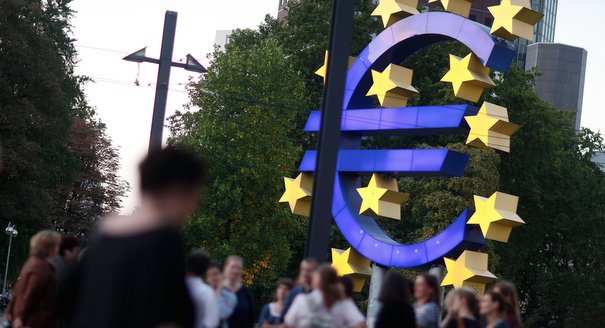
This can and must change. Europe needs to once again seduce the millions of Europeans who no longer believe that the project of building a more united continent will directly benefit them and their families. The problems that are undermining the European project are numerous and well-known. But perhaps the greatest threat to the union is that Europe has lost its luster among its own people. Just think how remote the “welcome parties” that greeted the euro’s introduction in 2002 in cities like Athens and Berlin feel today. The European project needs leaders who are able to persuade voters that a grand and vigorous Europe is possible. The best antidote to the region’s depression may very well be a strong dose of integration.

Distinguished Fellow
Moisés Naím is a distinguished fellow at the Carnegie Endowment for International Peace, a best-selling author, and an internationally syndicated columnist.
Recent Work



Rosa Balfour, Frances Z. Brown, Yasmine Farouk, …
Moisés Naím
Carnegie does not take institutional positions on public policy issues; the views represented herein are those of the author(s) and do not necessarily reflect the views of Carnegie, its staff, or its trustees.

The EU can impose sanctions but struggles to enforce them without the United States. With Washington increasingly disinterested in backing European interests, the bloc must now fend for itself.


Nicu Popescu, Tiago Antunes

Russia is testing the waters of NATO’s mutual defense clause. What do strikes in Romanian territorial waters mean for the alliance’s posture toward Moscow?

Dimitar Bechev

With its public finances in shambles, the far right polling at 35 percent ahead of the 2027 presidential election, and a growing protest movement, is France’s crisis a threat to the EU’s geopolitical awakening?

Rym Momtaz, ed.

Ahead of a tough winter for Ukraine, Donald Trump’s swing back toward Russia bodes ill. But instead of panicking, Kyiv’s European allies are focusing on action.
Rym Momtaz

Funding Ukraine remains a priority for European leaders. As Russia’s war of aggression heads into another winter, two feasible options to mobilize support for Kyiv should be fast-tracked.


Vladyslav Rashkovan, Gregory P. Wilson