

In The Media
Lilia Shevtsova
{
  "authors": [
    "Lilia Shevtsova"
  ],
  "type": "legacyinthemedia",
  "centerAffiliationAll": "",
  "centers": [
    "Carnegie Endowment for International Peace",
    "Carnegie Russia Eurasia Center"
  ],
  "collections": [],
  "englishNewsletterAll": "",
  "nonEnglishNewsletterAll": "",
  "primaryCenter": "Carnegie Russia Eurasia Center",
  "programAffiliation": "",
  "programs": [],
  "projects": [],
  "regions": [
    "Russia",
    "Eastern Europe",
    "Ukraine",
    "Western Europe"
  ],
  "topics": [
    "Political Reform",
    "Global Governance",
    "Foreign Policy"
  ]
}
Source: Getty
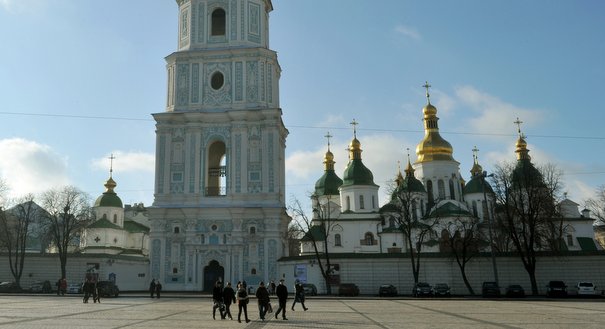
Ukraine’s trajectory in the coming months and years will serve as a test of Russia’s global role and how far the West is prepared to expand its influence.
Source: American Interest
Some events rise to the level of civilizational challenges, given just the right historical circumstances. Ukraine’s trajectory in the coming months and years will prove to be one such event, for the path it chooses will determine more than just its own fate. Its choice will serve as a test of Russia’s role, showing us whether Russia will continue to perceive itself as an empire ready and willing to bully any neighbor it can. Ukraine’s choice will also demonstrate to what extent Europe is committed to the values it espouses, and how far the West is prepared to expand its influence.Even without these civilizational consequences looming over its head, Ukraine has found choosing its civilizational path to be an agonizing ordeal. The Ukrainian elite—not the society as a whole—has presented the biggest problems in this regard. By coming out in great numbers to the Maidan (Independence Square) in 2004, Ukrainians proved that they were ready to defend one of the backbone principles of an open society: the peaceful transfer of power. But the Ukrainian elite (primarily its alleged reform segment) has shown itself to be feckless when it comes to guaranteeing the new rules of the game for the whole of society. ...
Read the full text of this article in the American Interest.
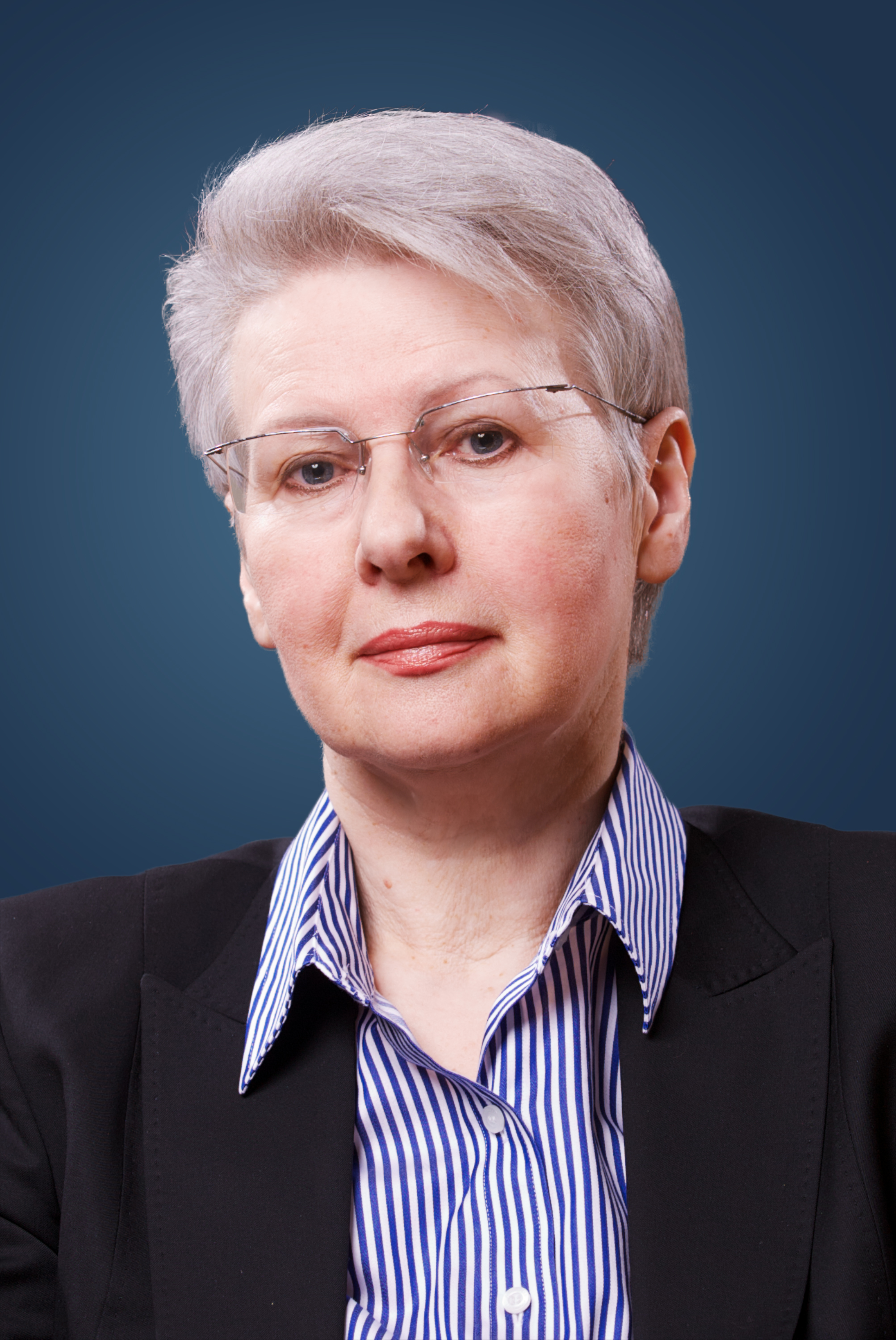
Former Senior Associate, Russian Domestic Politics and Political Institutions Program, Moscow Center
Shevtsova chaired the Russian Domestic Politics and Political Institutions Program at the Carnegie Moscow Center, dividing her time between Carnegie’s offices in Washington, DC, and Moscow. She had been with Carnegie since 1995.
Recent Work
Lilia Shevtsova
Lilia Shevtsova
Carnegie does not take institutional positions on public policy issues; the views represented herein are those of the author(s) and do not necessarily reflect the views of Carnegie, its staff, or its trustees.

As we close out another season of Strategic Europe, it is worth taking stock of the deep shifts underway.

Rym Momtaz

The hybrid warfare landscape is evolving rapidly, leaving policymakers without clear strategies. To better inform their work in addressing emerging challenges, governments must dig deeper into the underlying dynamics at play.


Raluca Csernatoni, Alicia Wanless
The EU had to compromise to adopt a twenty-first sanctions package against Russia, exposing growing cracks in the union’s resolve. Is this latest, weaker round worth it to keep pressure on Moscow?
Rym Momtaz, ed.

Trump is distracted and Ukraine wants Europe to step up. The continent’s leaders must find their voice and assert it in talks with Russia.

Alissa de Carbonnel

Mounting economic strain and battlefield losses will not necessarily make the Kremlin less dangerous. They could instead push Moscow toward a more aggressive hybrid campaign designed to test NATO’s Eastern flank, exploit allied hesitation, and fracture European resolve.

Maksym Beznosiuk