

Commentary
Alexey Malashenko
{
  "authors": [
    "Alexey Malashenko"
  ],
  "type": "commentary",
  "centerAffiliationAll": "",
  "centers": [
    "Carnegie Endowment for International Peace",
    "Carnegie Russia Eurasia Center"
  ],
  "collections": [],
  "englishNewsletterAll": "",
  "nonEnglishNewsletterAll": "",
  "primaryCenter": "Carnegie Russia Eurasia Center",
  "programAffiliation": "",
  "programs": [],
  "projects": [],
  "regions": [
    "Russia"
  ],
  "topics": [
    "Political Reform",
    "Democracy",
    "Civil Society"
  ]
}
Source: Getty
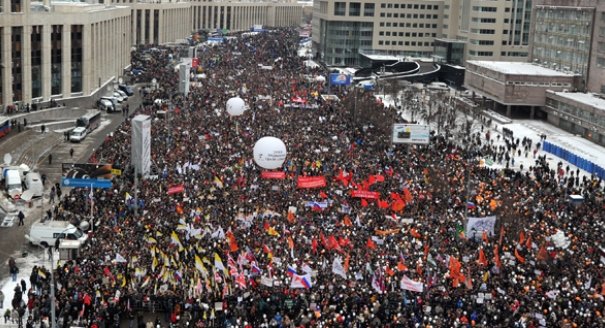
Two years after the Russian mass protests of 2011-2012, the democratic opposition has not been able to consolidate, while the Kremlin’s policy has become more repressive. Neither the society nor the authorities can definitively say whether such protests will be repeated.
What has changed two years after the Russian mass protests of 2011-2012? Some say there have been many changes; others say nothing has changed; there are also those saying that the situation has only gotten worse.
It is hard to take a cool-headed objective look at the difference between the current state of affairs and the time when the protests peaked. Yet… what do we have in front of our eyes now?
First, the hot winter and spring of 2011-2012 have not been forgotten. They are still being talked about, and it seems to me that more frequently they are being mentioned in the following context: “We were able to do it because we wanted it” and “We still have some spunk left.” An opposite view also exists, though. Some say, “nothing is going to change no matter what.”
However, something has changed, and this is my second point. Now we have Alexey Navalny, Yevgeny Roizman in Yekaterinburg, and some others. I will not argue with people who are not thrilled with Navalny and consider him the Kremlin’s secret ploy. His emergence is important in and of itself—it means the authorities were forced to change their tactics somehow.
Third, sadly, the opposition—not the Navalny kind, but the democratic one—has not been able to consolidate and produce its own young and brazen leader. This can actually be considered one of the reasons why the regime is still so firmly in the saddle. Was there a chance for consolidation? I think so. But our democrats are so used to the thought that “everyone dies alone” that they indeed ended up all but dying—politically. This is unfortunate, since it then appears that the regime still has no formidable adversary.
Fourth, the authorities got scared nonetheless. On the one hand, it is good when the authorities (any authorities) are afraid of the public. On the other hand, driven by fear, the government rushed to shore up its positions, which naturally led to another round of repressive measures. There are many examples of this; the most recent one is the dissolution of RIA Novosti and the Voice of Russia and the creation on their basis of an international news agency Russia Today tasked with explaining Russia’s domestic and foreign policy to the world. As the head of Presidential Administration Sergey Ivanov put it, Russia is “firmly defending its national interests. It's not easy to explain this to the world, but it can and must be done.” One may easily guess how these interests are to be explained.
Fifth, the Kremlin’s domestic policies are significantly affected by its foreign policy (and, naturally, vice versa). Moscow’s ambitions in the post-Soviet space and its confrontation with the West call for more and more arguments that “enemies” and “foreign agents” are operating in Russia. This thesis has long become the federal TV channels’ favorite. And it will become even more common now.
Besides, Moscow is frightened by the second Ukrainian Maidan. For one, this can foil the Kremlin’s plan to draw Ukraine to its side; but also they it vividly reminds of the protests that took place in Moscow two years ago. Of course, the scale is different—half a million Ukrainians are not eighty thousand Muscovites, but it still makes the Kremlin feel uneasy.
Finally, two years later, neither the society nor the regime can definitively say whether what happened two years ago will be repeated. And if it is repeated, what will the scope be? This is the sixth observation, which in fact suggests the greatest intrigue.
Former Scholar in Residence, Religion, Society, and Security Program
Malashenko is a former chair of the Carnegie Moscow Center’s Religion, Society, and Security Program.
Recent Work
Alexey Malashenko
Alexey Malashenko
Carnegie does not take institutional positions on public policy issues; the views represented herein are those of the author(s) and do not necessarily reflect the views of Carnegie, its staff, or its trustees.

European Commission President Ursula von der Leyen is about to give her annual address on the state of the EU. Here’s what she won’t—but should—say.

Rym Momtaz

Radical-right parties are expected to do well in upcoming elections in four of the EU's biggest member states. If successful, they could prevent the union from addressing key challenges ahead.

Stefan Lehne
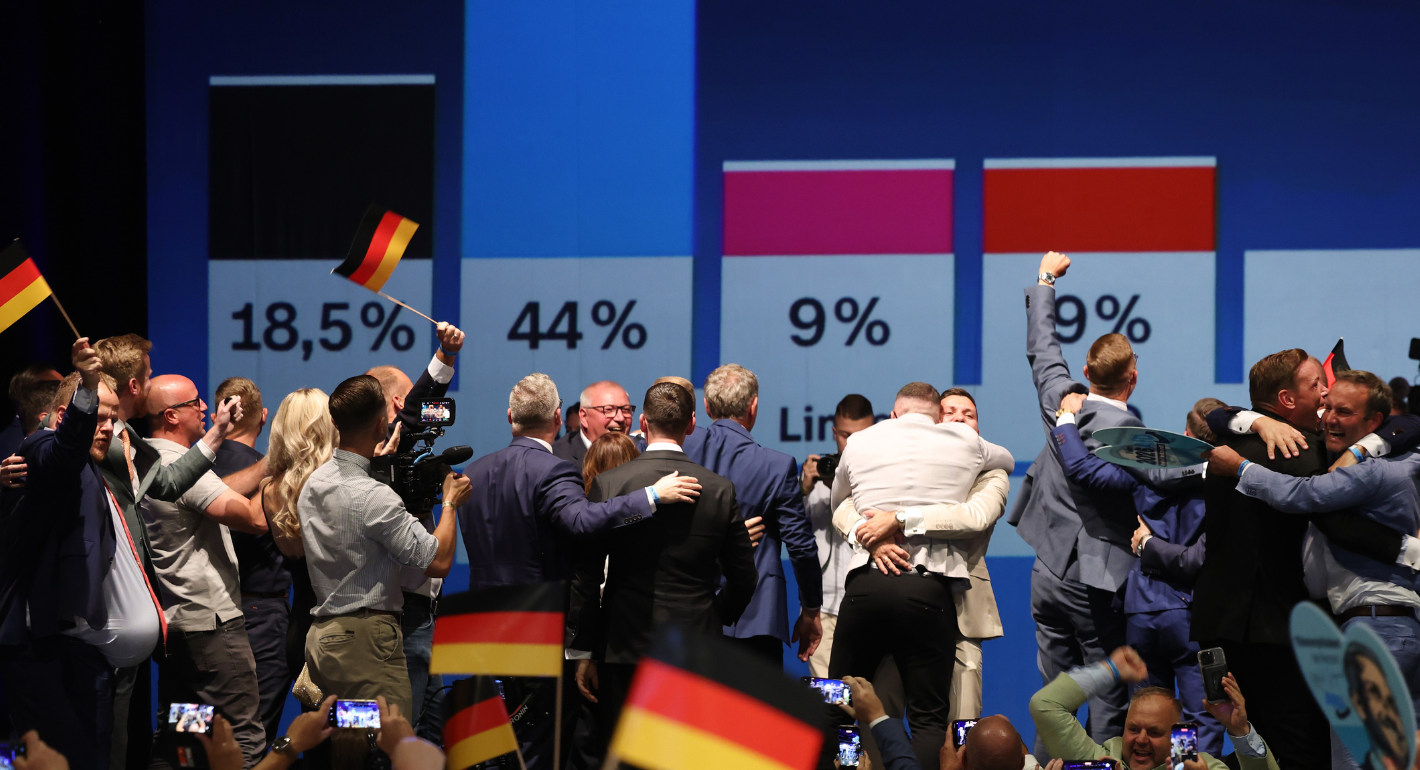
An overwhelming victory by a far-right-wing party in a small state in eastern Germany will have major repercussions for Chancellor Friedrich Merz’s coalition.

Judy Dempsey

The EU’s responses to two recent incidents expose the gulf between European perceptions and capabilities. Unless the union can bridge that gap, it will never become a real geostrategic power.
Rym Momtaz

European states control several Overseas Countries and Territories around the world that carry strategic, economic, and environmental weight. As great powers challenge the rules-based order, defending them is a geopolitical imperative for Europe.

Marc Pierini