

Commentary
Dmitri Trenin
{
  "authors": [
    "Dmitri Trenin"
  ],
  "type": "commentary",
  "centerAffiliationAll": "",
  "centers": [
    "Carnegie Endowment for International Peace",
    "Carnegie Russia Eurasia Center"
  ],
  "collections": [],
  "englishNewsletterAll": "",
  "nonEnglishNewsletterAll": "",
  "primaryCenter": "Carnegie Russia Eurasia Center",
  "programAffiliation": "",
  "programs": [],
  "projects": [],
  "regions": [
    "Russia",
    "Eastern Europe",
    "Ukraine",
    "Western Europe"
  ],
  "topics": [
    "Security",
    "Foreign Policy"
  ]
}
Source: Getty
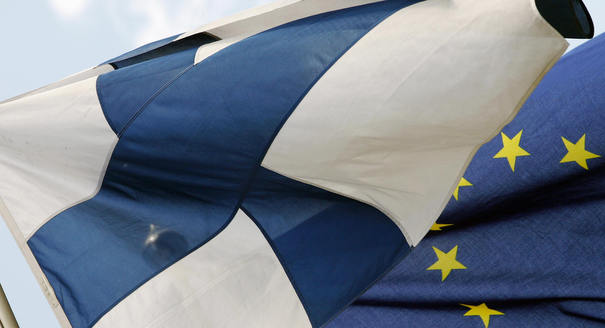
The current situation in Ukraine has intensified the long-simmering debate in Finland about joining NATO.
Any possible compromise in and on Ukraine would leave the country a neutral territory between Russia to the east and NATO to the west. Speaking at the 50th Munich Security Conference last February—it seems like a different epoch now—Zbigniew Brzezinski even spoke about “Finlandization” of Ukraine. A long time ago, my Finnish friends strongly discouraged me from ever using the term, which they treat as derogatory, and I have been keeping my promise ever since.
Inevitably, the current situation in Ukraine has intensified the long-simmering debate in Finland about joining NATO. Proponents of accession argue that membership in the alliance is the only guarantee of Russia's non-intervention. It is not clear, however, why Russia should want to invade Finland, with which it has had excellent relations for close to seventy years now, and which it has learned to respect from the Winter War onward.
That respect is not due to Finland's neutrality, as such, but to Finland's stubborn independence. During the Cold War, it learned to manage the Soviet Union much better than vice versa. After the Cold War, after initial hesitation, Moscow accepted Finland's decision to join the European Union as part of the process of European economic integration. NATO membership, by contrast, would be seen by Russia as the end of Finland's precious strategic independence.
Former Director, Carnegie Moscow Center
Trenin was director of the Carnegie Moscow Center from 2008 to early 2022.
Recent Work
Dmitri Trenin
Dmitri Trenin
Carnegie does not take institutional positions on public policy issues; the views represented herein are those of the author(s) and do not necessarily reflect the views of Carnegie, its staff, or its trustees.

The EU can impose sanctions but struggles to enforce them without the United States. With Washington increasingly disinterested in backing European interests, the bloc must now fend for itself.


Nicu Popescu, Tiago Antunes

Russia is testing the waters of NATO’s mutual defense clause. What do strikes in Romanian territorial waters mean for the alliance’s posture toward Moscow?

Dimitar Bechev

With its public finances in shambles, the far right polling at 35 percent ahead of the 2027 presidential election, and a growing protest movement, is France’s crisis a threat to the EU’s geopolitical awakening?

Rym Momtaz, ed.

Ahead of a tough winter for Ukraine, Donald Trump’s swing back toward Russia bodes ill. But instead of panicking, Kyiv’s European allies are focusing on action.
Rym Momtaz

Funding Ukraine remains a priority for European leaders. As Russia’s war of aggression heads into another winter, two feasible options to mobilize support for Kyiv should be fast-tracked.


Vladyslav Rashkovan, Gregory P. Wilson