

Commentary
As we close out another season of Strategic Europe, it is worth taking stock of the deep shifts underway.
Rym Momtaz
{
  "authors": [
    "Alexey Arbatov",
    "Vladimir Dvorkin"
  ],
  "type": "legacyinthemedia",
  "centerAffiliationAll": "dc",
  "centers": [
    "Carnegie Endowment for International Peace",
    "Carnegie Russia Eurasia Center"
  ],
  "collections": [],
  "englishNewsletterAll": "ctw",
  "nonEnglishNewsletterAll": "",
  "primaryCenter": "Carnegie Russia Eurasia Center",
  "programAffiliation": "russia",
  "programs": [
    "Russia and Eurasia"
  ],
  "projects": [],
  "regions": [
    "Russia",
    "Eastern Europe",
    "Ukraine"
  ],
  "topics": [
    "Security",
    "Military",
    "Foreign Policy"
  ]
}
Source: Getty
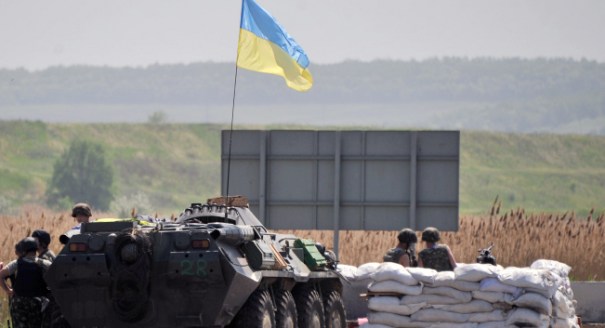
Even as relations sour between Russia and Ukraine, Russian-Ukrainian defense-industrial cooperation remains very important for both countries. They both stand to lose if it wanes.
Source: Foreign Affairs
The upheaval in eastern and southern Ukraine comes with a hidden cost for one of the region’s little-known success stories: the close ties between the Russian and Ukrainian defense industrial bases. In late March, Yuri Tereshenko, the head of Ukraine’s state-controlled defense-industrial conglomerate Ukroboronprom declared that Kiev planned to curtail its military and technical cooperation with Russia in response to Russia’s annexation of Crimea. A month later, Russian President Vladimir Putin shot back. At a May meeting with defense industrial managers and top military commanders, he said, “We need to do our utmost for anything used in our defense sector to be produced on our territory, so that we are not dependent on anyone.” It is hard to overstate how disruptive it could be if Tereshenko and Putin get their way: decades of cooperation in a vast industry originally developed will come to an end.
After a crash start under the first five-year industrial plan in the 1930s, the Soviet armament industry expanded dramatically in the decades that followed, giving rise to a scientifically complex and geographically distributed sector. By the end of the 1980s, Ukraine housed 30 percent of the Soviet-era defense industry. It was home to some 750 factories and 140 scientific and technical organizations. At that time it employed approximately 1.5 million people.
The breakup of the Soviet Union in 1991 dealt a heavy blow to all sectors of Soviet industry. But it was a true catastrophe for the military-industrial complex. Practically overnight, the economic sector that had turned the country into a military superpower on par with the United States fractured. A complicated and multi-layer production chain was suddenly scattered over several countries.Realizing the disaster on their hands, as the union was breaking apart, the Russian and Ukrainian governments attempted to preserve military-industrial cooperation and establish sustainable commercial ties. This was especially important for Ukraine, since, at the time, more than 70 percent of Ukrainian defense enterprises depended on components from Russian factories. Meanwhile, 20 percent of Russian defense enterprises depended on Ukraine. Over the coming decade, the two countries signed several agreements intended to encourage defense-industrial cooperation, keep employment up in the factories in both countries, and jointly produce weapons for export (a key source of hard currency for both countries) and for their own armed forces.
Despite their attempts, though, the two countries’ military industries and cooperation between them declined significantly in the intervening period. In 1994, Russia was the top destination for Ukraine’s military exports -- 68 percent, or $620 million per year. By 2010, it was in fifth place, after China, Iraq, India, and Azerbaijan. The Russian market accounted for only $64 million, or less than ten percent of total Ukrainian military exports. Further, whereas 262 Ukrainian enterprises were involved in military-industrial cooperation with Russia in 1996, in 2013 that number fell to 156.
The reason for the decline? Because of its small procurement budget, Ukraine relies much more heavily on arms exports than Russia does. And with Russia producing its own tanks for its army and sales abroad, Ukraine was willing to sell to just about anyone. In 2000, Kiev sold 12Kh-55/ AS-15 Kent strategic air cruise missiles (without nuclear warheads) to Iran and China. Ukraine also passed to China Russian-Ukrainian design secrets for engines used in intercontinental ballistic missiles (ICBMs) and Sukhoi Su-27SK/ Flanker fighter jets. The latter served as the prototype for China’s Shenyang J-11B fighter. Occasionally, the two countries have competed for the same deals. In the late 1990s, Kiev even competed against Moscow and won a $650 million contract to sell T-80 tanks to Pakistan. A decade later, Ukraine beat Russia again, signing a $230 million contract to sell T-84 tanks to Thailand.
Meanwhile, Russia was producing very little for its army due to budget limitations in the 1990s and was trying to sell as much as possible to the outside world, but within strict security regulations. After 2004 it started to rapidly increase its defense budget and arms procurement for its forces and for sales abroad.
Even with these problems, Russian-Ukrainian cooperation has continued in key areas. Before the collapse of the Soviet Union, many of Russia’s heavy intercontinental missiles were designed and built in Ukrainian factories, including the Yuzhnoye Design Bureau in Dnepropetrovsk and the Kharkiv-based Khartron-Arkos. Every year after 1991, these facilities have inspected and serviced some types of the missiles in the Russian fleet. In fact, the inspectors have managed to extend the service life of the world’s most powerful intercontinental missiles (named SS-18 in the West) for 27 years beyond their original projected term of ten years. If continued to 2020, this joint effort would enable Russia to save some $500 million while also avoiding unnecessary haste in developing a new heavy intercontinental missile system.
Another important area of civil cooperation involves the space launcher Dnepr, which Russia and Ukraine created by a joint decree in 1998. The rocket is intended to carry multipurpose satellites weighing up to four tons. This joint project is supervised by the International Space Company Kosmotras, which is headquartered in Moscow with a branch in Kiev. The shares of this company are divided: 45 percent belong to Russia, 45 percent to Ukraine, and 10 percent to Kazakhstan. Since the first launch of the Dnepr in April 1999, 18 launches have carried 86 satellites into near-Earth orbit for 19 countries, including the United States, Great Britain, Germany, and France.
Military aviation, too, remains a major area of cooperation between the Russian and Ukrainian governments and private enterprises. This includes the overhaul of the Mikoyan MiG-29 and the Sukhoy Su-25 aircraft during recent two decades; the Mil Mi-24 helicopters; as well as the design and manufacturing of a wide range of aircraft engines, radio-electronic equipment, air-launched missiles, unmanned aerial vehicles, and cruise missiles. Russia and Ukraine are also working together on the repair and modernization of their air defense systems, including surface-to-air missiles, air defense radars, and air traffic control systems.
Finally, although Russian-Ukrainian cooperation on armaments for ground forces has lagged far behind the two countries’ efforts in aerospace cooperation, ongoing work includes the modernization and development of anti-tank missiles, short-range air defense systems, rifle sights and thermal imagers, and armor development. Although the scope of joint defense production and engineering is declining, the aggregate portfolio of Russian defense contracts in Ukraine is more than $15 billion.
Even as relations sour between Russia and Ukraine, Russian-Ukrainian defense-industrial cooperation remains very important for both countries. It serves each country’s military interests, steadies their political relationship, and boosts their economies. In Ukraine, industrial operations located largely in the East, Southeast, and Southwest of Ukraine, where Russian-speakers make up a significant portion of the population, depend on Russian business. Due to Ukraine’s centralized budget system, no regional data is available, but about 40 percent of Ukrainian budget revenues come from these southeastern regions. Should Russian-Ukrainian defense-industrial cooperation wind down for political reasons, these large enterprises will close, resulting in mass unemployment, a loss of tax revenues for Ukraine, and yet more unrest. That bodes ill as Ukraine undertakes deep structural economic reforms as part of an EU Association Agreement which are certain to deliver a painful blow to heavy industry in eastern Ukraine.
As for Russia, its defense industry would lose valuable established partners. It is hard to say how much Russia would lose, as the data is not publicly available. Ukrainian cooperation probably accounts for less than ten percent of Russian defense production requirements, but in some unique sectors the manufacturing and expertise Ukraine provides would be hard and expensive to replicate in Russia. Perhaps not surprisingly, by proponents of annexing eastern Ukraine and using these arguments.
In other words, both countries stand to lose as military-industrial cooperation between them wanes. This cooperation between Russia and Ukraine poses no military threat to the West. In some areas, such in aerospace cooperation, Russo-Ukrainian joint efforts serve the interests of many countries in the West and the entire world. The way out of the present crises is to deescalate the violence in the industrial southeastern Ukraine and revive mutually beneficial cooperation between the two states while providing Ukrainian defense industrial regions more economic autonomy within the borders of sovereign Ukraine.

Alexey Arbatov
Alexey Arbatov is the head of the Center for International Security at the Primakov National Research Institute of World Economy and International Relations.
Vladimir Dvorkin
Major General Dvorkin (retired) is a chief researcher at the Center for International Security at the Institute of World Economy and International Relations.
Carnegie does not take institutional positions on public policy issues; the views represented herein are those of the author(s) and do not necessarily reflect the views of Carnegie, its staff, or its trustees.

As we close out another season of Strategic Europe, it is worth taking stock of the deep shifts underway.

Rym Momtaz

The hybrid warfare landscape is evolving rapidly, leaving policymakers without clear strategies. To better inform their work in addressing emerging challenges, governments must dig deeper into the underlying dynamics at play.


Raluca Csernatoni, Alicia Wanless
The EU had to compromise to adopt a twenty-first sanctions package against Russia, exposing growing cracks in the union’s resolve. Is this latest, weaker round worth it to keep pressure on Moscow?
Rym Momtaz, ed.

Trump is distracted and Ukraine wants Europe to step up. The continent’s leaders must find their voice and assert it in talks with Russia.

Alissa de Carbonnel

Mounting economic strain and battlefield losses will not necessarily make the Kremlin less dangerous. They could instead push Moscow toward a more aggressive hybrid campaign designed to test NATO’s Eastern flank, exploit allied hesitation, and fracture European resolve.

Maksym Beznosiuk