

In The Media
Petr Topychkanov
{
  "authors": [
    "Petr Topychkanov"
  ],
  "type": "commentary",
  "centerAffiliationAll": "",
  "centers": [
    "Carnegie Endowment for International Peace",
    "Carnegie Russia Eurasia Center"
  ],
  "collections": [],
  "englishNewsletterAll": "",
  "nonEnglishNewsletterAll": "",
  "primaryCenter": "Carnegie Russia Eurasia Center",
  "programAffiliation": "",
  "programs": [],
  "projects": [],
  "regions": [
    "South Asia",
    "India",
    "Pakistan",
    "Russia"
  ],
  "topics": [
    "Economy",
    "Trade",
    "Security",
    "Military",
    "Foreign Policy"
  ]
}
Source: Getty
The launch of military-technological cooperation between Russia and Pakistan, in addition to the long-existing ties with India, would provide balance to Moscow’s relations with New Delhi and Islamabad.
Narendra Modi’s swearing-in ceremony became a momentous occasion for both India and its neighbors, especially Pakistan. Along with the leaders of other South Asian countries, Pakistan’s Prime Minister Nawaz Sharif has visited India to congratulate Modi on his victory. Sharif’s acceptance of Modi’s invitation to visit the Indian capital opens up new opportunities for restarting India-Pakistan dialogue at the summit level.
The stabilization of the India-Pakistan relations would not only be in the long-term interests of both countries but is also beneficial to others, including Russia. It is well understood in the region. For instance, the Pakistani Defense Minister Khawaja Asif assured Moscow that Pakistan has no aggressive designs against India. On the contrary, he talked of Islamabad’s strong interest in resolving its problems with New Delhi.
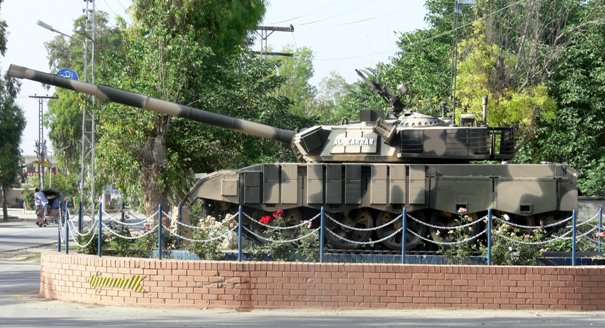
Pakistan is interested in such cooperation. First, following the diminished American interest, the country fears greater dependency on its “any-weather friend,” China, and thus needs Russia to balance against the Chinese influence. Second, Islamabad is clearly interested in Russian arms. Third, the Pakistani armed forces have used Soviet and Russian military technologies in the past, receiving them either through occasional contracts with Russia (for instance, military transport helicopters) or through third countries, which include Belarus, Ukraine, and, of course, China.
Russia, too, would benefit from such cooperation. First, Moscow would thus be able to control the transfer of Soviet and Russian military technologies that presently end up in Pakistan by way of other countries. Second, stronger armed forces would allow Pakistan to more effectively counteract security threats in its tribal territories, which also negatively affect Russia’s own security. Some terrorists that are active in Pakistan come from Russia and the former Soviet republics, and may later return to their places of origin. Third, long-term cooperation with one of the largest armed forces in Asia offers prospects of hefty rewards for the Russian military industrial complex.
Because of the intimate nature and large scale of defense ties between Moscow and New Delhi, Russia’s cooperation with India will remain a priority regardless of prospects for military-technological cooperation between Russia and Pakistan. Therefore, if India raises reasonable objections to some prospective Russian arms or military technology transfers to Pakistan, the transfers would be unlikely to materialize.
Moscow can take a few steps to make New Delhi’s position more flexible. First, any negotiations on military-technological cooperation between Moscow and Islamabad should be made fully transparent for New Delhi. If necessary, the negotiations can be conducted in conjunction with the Russian-Indian consultations. This rarely happens on the international level; however, Russia might have to do it in the context of South Asia. Besides, Russia must ensure Pakistan’s strict compliance with the ban on transferring arms, military technologies, and documentation to third countries. This will alleviate New Delhi’s concerns about possible transfer of technologies Pakistan obtains through contacts with Russia to Beijing.
Second, since China’s potential concerns India no less, and perhaps even more, than Pakistan’s military capabilities, Russia could take India’s position on this issue into account and accommodate it whenever possible. It does not mean Moscow should curtail its military-technological cooperation with Beijing, but it may want to consider India’s concerns when signing its future contracts with China.
Third, while developing military-technological cooperation with Pakistan, Russia should also significantly enhance its relations with India in all areas. As far as military-technological cooperation is concerned, Moscow and New Delhi could initiate new strategic projects, similar to the BrahMos missile project. This would help Russia to strengthen its positions on the Indian arms market, since it would cooperate with India on the aspects of military technologies which other countries are not yet ready to cooperate on.
Developing new strategic projects would not only serve to expand the current military-technological cooperation between the two countries but would also bring their relations to a new level. Joint efforts by Moscow and New Delhi could enable them to produce components for strategic weapons systems or the systems themselves. Under the current conditions, such cooperation would be in Russia’s interests. Russia’s relations with a host of countries have been adversely affected by the Ukraine crisis, thus the country is now experiencing difficulties with receiving certain components necessary for its arms and military technology production. In addition, it would be imprudent to cooperate with China in this field given its record of technological espionage. Finally, India has acquired extensive experience in developing and using high technology in the military industrial sector during the last few decades thanks to its cooperation with Russia, Israel, France and a number of other countries.
Russian-Indian defense cooperation needs to intensify irrespective of the prospects for developing the Russian-Pakistani military-technological cooperation. Otherwise, the collaboration between Moscow and New Delhi may enter the period of stagnation. In this case, no contracts with Pakistan will offset the losses Russia is likely to suffer.
As this post was being written, a news item that both confirms and contradicts some of its contents appeared. The head of Rostec Corporation Sergey Chemezov informed the public that Moscow is open to military-technological cooperation with Pakistan, and the negotiations on the sales of Mi-35 multipurpose military transport helicopters to that country are already underway.
On one hand, Chemezov’s statement indicates that Russian authorities no longer see any obstacles to exporting arms and military technology to both India and Pakistan. On the other hand, such statements may harm military-technological cooperation between Russia and India, especially at the present time when Russia is trying to establish ties with the newly-elected Indian government. Perhaps, more fertile ground for such pronouncements should first be created through consultations with New Delhi officials and informing the Indian press. Quite frequently, the exact opposite is the case: such statements are followed by tardy explanations. To a great extent, the negative effect of the Russian-Pakistani military-technological cooperation on the Russian-Indian relations can be counteracted by consistently moving military-technological cooperation between Moscow and New Delhi into the truly strategic realm.
Former Fellow, Nonproliferation Program, Moscow Center
Topychkanov was a fellow in the Carnegie Moscow Center’s Nonproliferation Program.
Recent Work
Petr Topychkanov
Petr Topychkanov
Carnegie does not take institutional positions on public policy issues; the views represented herein are those of the author(s) and do not necessarily reflect the views of Carnegie, its staff, or its trustees.
The full list of humiliations Europe has endured since Donald Trump returned to the White House makes for grim reading. But Washington’s adversarial approach to its allies undermines its own power base.

Rym Momtaz
The closure of the Strait of Hormuz has triggered a global energy crisis, but Europe is stuck in reaction mode. Without more strategic foresight, the EU will remain dependent on fossil fuels and will never be truly secure.


Milo McBride, Pauline Gerard
Debate is heating up on how Turkey could be integrated into a common European defense framework. Commercial and industrial deals offer a better chance at alignment than sweeping political efforts.

Marc Pierini
After spending much of 2025 trying to placate Donald Trump, some European leaders are starting to change posture. But is even a hostile Washington still so important to Europe that the U.S. president’s outbursts are worth putting up with?
Rym Momtaz, ed.
European leaders have now not only lost faith in Donald Trump’s U.S. presidency, but also in America’s hegemony as a whole. But short-term challenges make an immediate divorce unwise.
Rym Momtaz