

Commentary
Funding Ukraine remains a priority for European leaders. As Russia’s war of aggression heads into another winter, two feasible options to mobilize support for Kyiv should be fast-tracked.
Vladyslav Rashkovan, Gregory P. Wilson
{
  "authors": [
    "Cornelius Adebahr",
    "Marc Otte",
    "Nathalie Tocci"
  ],
  "type": "legacyinthemedia",
  "centerAffiliationAll": "dc",
  "centers": [
    "Carnegie Endowment for International Peace",
    "Carnegie Europe"
  ],
  "collections": [
    "Iranian Proliferation"
  ],
  "englishNewsletterAll": "menaTransitions",
  "nonEnglishNewsletterAll": "",
  "primaryCenter": "Carnegie Europe",
  "programAffiliation": "MEP",
  "programs": [
    "Middle East",
    "Europe"
  ],
  "projects": [],
  "regions": [
    "Middle East",
    "Europe",
    "Iran",
    "Western Europe"
  ],
  "topics": [
    "Foreign Policy",
    "Nuclear Policy"
  ]
}
Source: Getty
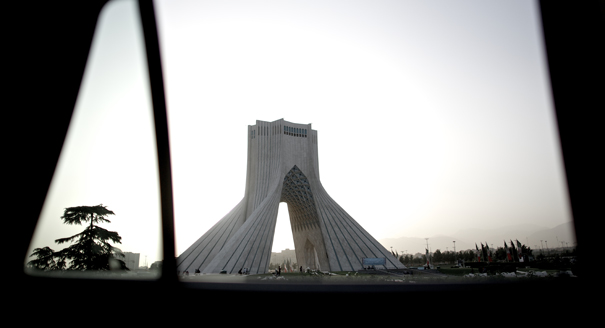
The EU’s approach to Iran has emerged as one of the few successes of European foreign policy. Now, the EU needs to develop a comprehensive strategy beyond the nuclear issue.
Source: EUobserver
BRUSSELS - The EU’s approach to Iran has emerged as one of the few successes of European foreign policy.
The EU’s approach to #Iran has emerged as one of the few successes of European foreign policy.Tweet This
In particular, the signing of an interim agreement in November 2013 that put limits on Tehran’s nuclear programme, brokered by then-EU foreign policy chief Catherine Ashton, marked a historic victory for EU diplomacy.
Ashton continues to lead negotiations with Iran on behalf of the international community despite the end of her term as EU high representative, aiming to reach a “comprehensive” long-term agreement by 24 November.
Even so, the EU is not thinking strategically about Iran.Over the years, but particularly during the past few months, both the European External Action Service (EEAS) and individual member states have focused exclusively on concluding the negotiations.
The EU has neither explored possibilities for broader engagement with Iran in the event of a successful outcome nor prepared its position for a potential failure of the talks.
By refusing to look at anything beyond the nuclear issue, Europe runs the risk of seeing an agreement as an end in itself rather than as a necessary precondition for a more effective policy in an unravelling region.
The nuclear dispute is only one of four major stumbling blocks to closer European-Iranian relations.
After years of neglect, the EU now needs to tackle the other three: Iran’s attitude toward the Israeli-Palestinian conflict; its domestic human rights situation; and its support for terrorist groups.
Alongside this, the EU also needs to capitalise on the constructive potential of Iran’s role in the region, notably in the fight against Isis.
Europe needs to develop a comprehensive strategy for how to deal with Iran.
The EU needs to develop a comprehensive strategy for #Iran, which goes beyond the nuclear issue.Tweet This
The policy needs to look beyond the nuclear programme and should include three basic elements.
First, frame the conflict with Iran as a non-proliferation and not as a “rogue state” issue.
The EU’s approach to Iran should be part of a larger global effort to strengthen the Non-Proliferation Treaty rather than “merely” trying to solve the Iranian “nuclear problem”.
At the regional level, the nuclear talks should be a complement to the drive to establish a WMD-free zone in the Middle East.
Second, increase the outreach on human rights issues.
The EU should revive its Human Rights Dialogue with Iran and step up outreach to the wider population, focusing on press freedom, labour rights, and Iran’s violations of its own domestic laws and the UN treaties it has signed.
At the same time, the EU should welcome Iran’s efforts to formulate its own approach to Islam and modernity as part of the proposed “dialogue of civilisations”.
Third, co-operate with Iran on regional conflict resolution.
The EU should work with the US and partner countries in the region to include Iran in tackling those regional challenges where it has a role, including stabilising Afghanistan and Iraq, tackling cross-border drug trafficking, and bringing an end to the conflict in Syria.
In the longterm, the aim should be to establish a regional security framework developed by the countries concerned but with outside guarantor powers.
If there is a nuclear agreement, then the EU could also devise co-operation projects in the fields of energy, environment, transport, research, and education.
The EU should increase its outreach to civil society to avoid isolating the Iranian people.Tweet This
In case of an outright failure of the negotiations, the EU should at the very least increase its outreach to civil society by providing information and opportunities for exchange, so as to avoid an isolation of the Iranian people.
In parallel, and in order to devise a new policy approach on Iran with the support of member states, the EU should enhance the internal organisational capacity of its External Action Service.
An Iran task force would bring together the different desks currently dealing (or failing to deal) with the country: sanctions; human rights; non-proliferation and disarmament; the geographical desks (including the broader region but also the United States and Russia); and the Situation Centre (EU intelligence).
It would also bring together elements outside the EEAS, such as desks in the Directorates-General for trade, development and co-operation, EuropeAid, or education and culture.
An EU Special Representative (EUSR) should head this task force and the team should include sufficient staff to implement the broader policy approach.
The EU must also establish a presence in Iran.
It is ironic that the EU enjoys a valuable network of 139 delegations worldwide, but does not have a delegation in Tehran.
Starting with a field office for the EUSR, the EU needs its own interlocutors on the ground to provide local intelligence to EU decision-makers.
Over time, the office could be transformed into a full-fledged delegation, with the EUSR temporarily double-hatted as the head of delegation.
The EU should strive to make its Iran policy a showcase of how a well-organised EEAS can benefit both EU member states and Europe’s partners.
Only a more comprehensive and strategic approach would do justice to the relevance of Iran for Europe beyond the nuclear file.
Former Nonresident Fellow, Carnegie Europe
Cornelius Adebahr was a nonresident fellow at Carnegie Europe. His research focuses on foreign and security policy, in particular regarding Iran and the Persian Gulf, on European and transatlantic affairs, and on citizens’ engagement.
Marc Otte

Nathalie Tocci
Professor of Practice, Johns Hopkins SAIS
Tocci is professor of practice at Johns Hopkins SAIS. She has been Special Advisor to EU High Representatives Federica Mogherini and Josep Borrell. In that capacity, she wrote the European Global Strategy and worked on its implementation.
Carnegie does not take institutional positions on public policy issues; the views represented herein are those of the author(s) and do not necessarily reflect the views of Carnegie, its staff, or its trustees.

Funding Ukraine remains a priority for European leaders. As Russia’s war of aggression heads into another winter, two feasible options to mobilize support for Kyiv should be fast-tracked.


Vladyslav Rashkovan, Gregory P. Wilson

While the EU and European governments are embracing the much-lauded middle-power moment, this entails three difficult conundrums.

Richard Youngs

Europe is facing rising populism internally as well as external pressures from Russia, China, Turkey, and the United States.

Dimitar Bechev

A notable degree of participative democracy has firmly arrived in Europe. But to have more far-reaching impact, democratic deliberation needs to move into a radically new phase.
Richard Youngs

Much has been said of the changes Brussels is trying to make to the EU enlargement process. Here’s why gradual integration might—or might not—be the answer.
Dimitar Bechev