

In The Media
Vikram Nehru
{
  "authors": [
    "Vikram Nehru"
  ],
  "type": "legacyinthemedia",
  "centerAffiliationAll": "dc",
  "centers": [
    "Carnegie Endowment for International Peace"
  ],
  "collections": [],
  "englishNewsletterAll": "asia",
  "nonEnglishNewsletterAll": "",
  "primaryCenter": "Carnegie Endowment for International Peace",
  "programAffiliation": "AP",
  "programs": [
    "Asia"
  ],
  "projects": [],
  "regions": [
    "Southeast Asia",
    "Myanmar"
  ],
  "topics": [
    "Political Reform",
    "Democracy"
  ]
}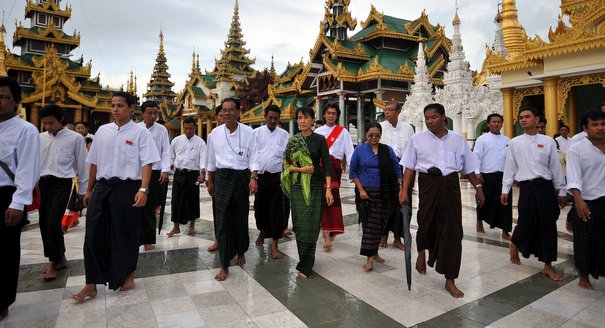
Source: Getty
While the easy reforms in Myanmar have been implemented, institutional reforms are necessary going forward.
Source: NPR’s Here & Now
Speaking on NPR’s Here & Now, Carnegie’s Vikram Nehru discussed the current situation in Myanmar in light of President Obama’s statement, at a joint press conference with Aang San Suu Kyi, that Myanmar’s political reforms are “still incomplete” and that the rights of the Rohingya need to be protected. Nehru described the persecution and violence suffered by the Rohingya after the military junta declared them stateless in 1982. He stated that they face widespread antagonism across all levels of society and that protecting their rights going forward would be difficult. This is especially true given the Rakhine Action Plan, which is a law that purports to offer the Rohingya a path to citizenship.While seemingly positive, Nehru said, this law actually presents such difficult-to-meet requirements for citizenship that it may only help a few. Those Rohingya who are not “naturalized” face being put into internment camps. Nehru went on to discuss U.S. and international interest in Myanmar, stating that while reforms in Myanmar have been slow, there has been progress, which has invited more foreign investment into the country. Nehru finished by commenting that while the easy reforms in Myanmar have been implemented, institutional reforms are necessary going forward.
This interview was originally published on NPR’s Here & Now.
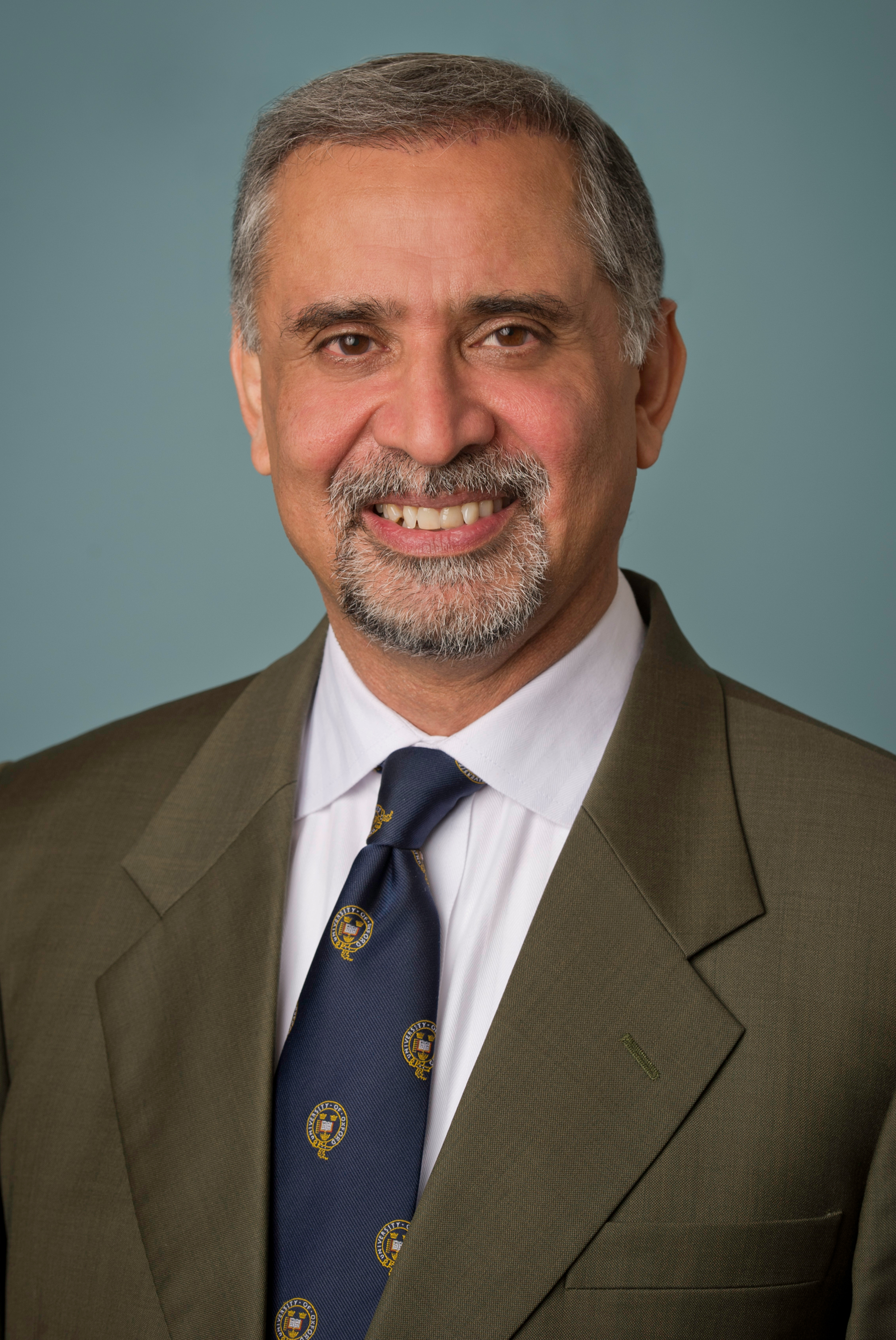
Former Nonresident Senior Fellow, Asia Program
Nehru was a nonresident senior fellow in the Carnegie Asia Program. An expert on development economics, growth, poverty reduction, debt sustainability, governance, and the performance and prospects of East Asia, his research focuses on the economic, political, and strategic issues confronting Asia, particularly Southeast Asia.
Recent Work
Vikram Nehru
Vikram Nehru
Carnegie does not take institutional positions on public policy issues; the views represented herein are those of the author(s) and do not necessarily reflect the views of Carnegie, its staff, or its trustees.

Radical-right parties are expected to do well in upcoming elections in four of the EU's biggest member states. If successful, they could prevent the union from addressing key challenges ahead.

Stefan Lehne

An overwhelming victory by a far-right-wing party in a small state in eastern Germany will have major repercussions for Chancellor Friedrich Merz’s coalition.

Judy Dempsey

In supporting Europe’s far-right, MAGA and Russia both want the same thing: a weaker EU. Europe must defend itself without abandoning the openness these forces exploit.

Armida van Rij

The hybrid warfare landscape is evolving rapidly, leaving policymakers without clear strategies. To better inform their work in addressing emerging challenges, governments must dig deeper into the underlying dynamics at play.


Raluca Csernatoni, Alicia Wanless

As the EU confronts profound challenges, several leaders have called for fundamental reform to the union’s model—but only modest, superficial changes have resulted. What if Europe really could be reimagined from zero today: What should such a redesigned European order look like?

Richard Youngs, ed.