

Report
- +3
James M. Acton, Alexey Arbatov, Vladimir Dvorkin, …
{
  "authors": [
    "Petr Topychkanov"
  ],
  "type": "commentary",
  "centerAffiliationAll": "",
  "centers": [
    "Carnegie Endowment for International Peace",
    "Carnegie Russia Eurasia Center"
  ],
  "collections": [],
  "englishNewsletterAll": "",
  "nonEnglishNewsletterAll": "",
  "primaryCenter": "Carnegie Russia Eurasia Center",
  "programAffiliation": "",
  "programs": [],
  "projects": [
    "Eurasia in Transition"
  ],
  "regions": [
    "South Asia",
    "India",
    "Pakistan",
    "Russia"
  ],
  "topics": [
    "Security",
    "Military",
    "Foreign Policy"
  ]
}
Source: Getty
Military cooperation between Russia and Pakistan will be very specific and driven by concrete, pragmatic, and limited goals. At the same time, India remains Russia’s priority partner.
Тhe visits of high-ranking Russian officials to Pakistan, which I wrote about earlier, have continued this year. Russia’s Defense Minister, Sergey Shoigu, came to Islamabad last week as part of a 41-member delegation that included his deputies Anatoli Antonov, who is in charge of military technological cooperation, and Tatyana Shevtsova, whose responsibilities include financing the Russian Armed Forces.
The visit highlighted the following vectors for bilateral relations in the military sphere:
The parties paid particular attention to developing naval cooperation that includes joint naval exercises and Pakistani and Russian warship calls to each other’s ports. The possibility of drafting a memorandum on naval cooperation was also considered.
In addition, the parties certainly discussed the prospects for bilateral military technological cooperation. However, contrary to some reports, they did not agree on the sale of Russia’s Mi-35M multi-role combat helicopters to Pakistan. These reports are based on the Russian Ambassador to Pakistan, Alexei Dedov’s, November 12 interview in which he said that the deal has been approved in principle. However, the parties have not yet agreed on the timeframe for the shipment, the number of helicopters to be shipped, their modification, as well as arming, equipping and subsequently servicing them.
Meanwhile, lack of information on these issues draws some erroneous conclusions from some Indian experts. For example, in his interview to IHS Jane’s, the former Chief of Naval Staff of the Indian Navy, Admiral Arun Prakash, stated that “By offering to sell military equipment to Pakistan, the Russians are, in all probability, trying to arm-twist India from sourcing its defense requirements from alternate suppliers. Such tactics should not intimidate India's new administration.”
With all due respect to Admiral Prakash, the deal on Mi-35M helicopters, if concluded, is not an attempt to pressure New Delhi. This possible deal has absolutely no anti-Indian motives.
It should be remembered that India was not satisfied with Mi-35M performance during the 1999 Kargil conflict (it has a total of 20 Mi-35M helicopters). The helicopters were later substantially modernized with the help of Israel Aerospace Industries (IAI), which has prolonged their lifecycle. However, in 2012 India decided to acquire 22 American AH-64E Apache Guardian helicopters which better suited its requirements.
In 2012, India has chosen American helicopters over the ones of Russia. The Mi-35M helicopters are of limited combat use in the mountainous terrain and under inclement weather conditions, especially if they are not equipped with the systems that IAI equipped the Indian helicopters with. The Mi-35M helicopters may be used in counterterrorist and rescue operations depending on how they are armed, although this issue has still not been cleared. However, their addition to the Pakistani Armed Forces will have no bearing on the balance of forces between India and Pakistan.
Both the issue of the Mi-35M sale to Pakistan and other issues of military and military technological cooperation discussed during Shoigu’s visit to Islamabad suggest that this cooperation will be very specific. In the framework of their bilateral relations, Moscow and Islamabad are driven by concrete, pragmatic, and limited goals of combatting terrorism, drug trafficking, and piracy rather than attempts to pressure India, as Admiral Prakash believes. India remains Russia’s priority partner not only in the South Asia but in the world at large.
Former Fellow, Nonproliferation Program, Moscow Center
Topychkanov was a fellow in the Carnegie Moscow Center’s Nonproliferation Program.
Recent Work

James M. Acton, Alexey Arbatov, Vladimir Dvorkin, …
Petr Topychkanov
Carnegie does not take institutional positions on public policy issues; the views represented herein are those of the author(s) and do not necessarily reflect the views of Carnegie, its staff, or its trustees.

Trump is distracted and Ukraine wants Europe to step up. The continent’s leaders must find their voice and assert it in talks with Russia.

Alissa de Carbonnel

Mounting economic strain and battlefield losses will not necessarily make the Kremlin less dangerous. They could instead push Moscow toward a more aggressive hybrid campaign designed to test NATO’s Eastern flank, exploit allied hesitation, and fracture European resolve.

Maksym Beznosiuk

Over the past ten years, NATO has held almost as many summits as it did during the entirety of the Cold War. Are they still useful, or is it time to stop holding annual meetings?

Rym Momtaz, ed.
Nearly a year and a half after Europeans leaned into sucking up to Trump, the strategy has produced some benefits when it comes to Ukraine.
Rym Momtaz
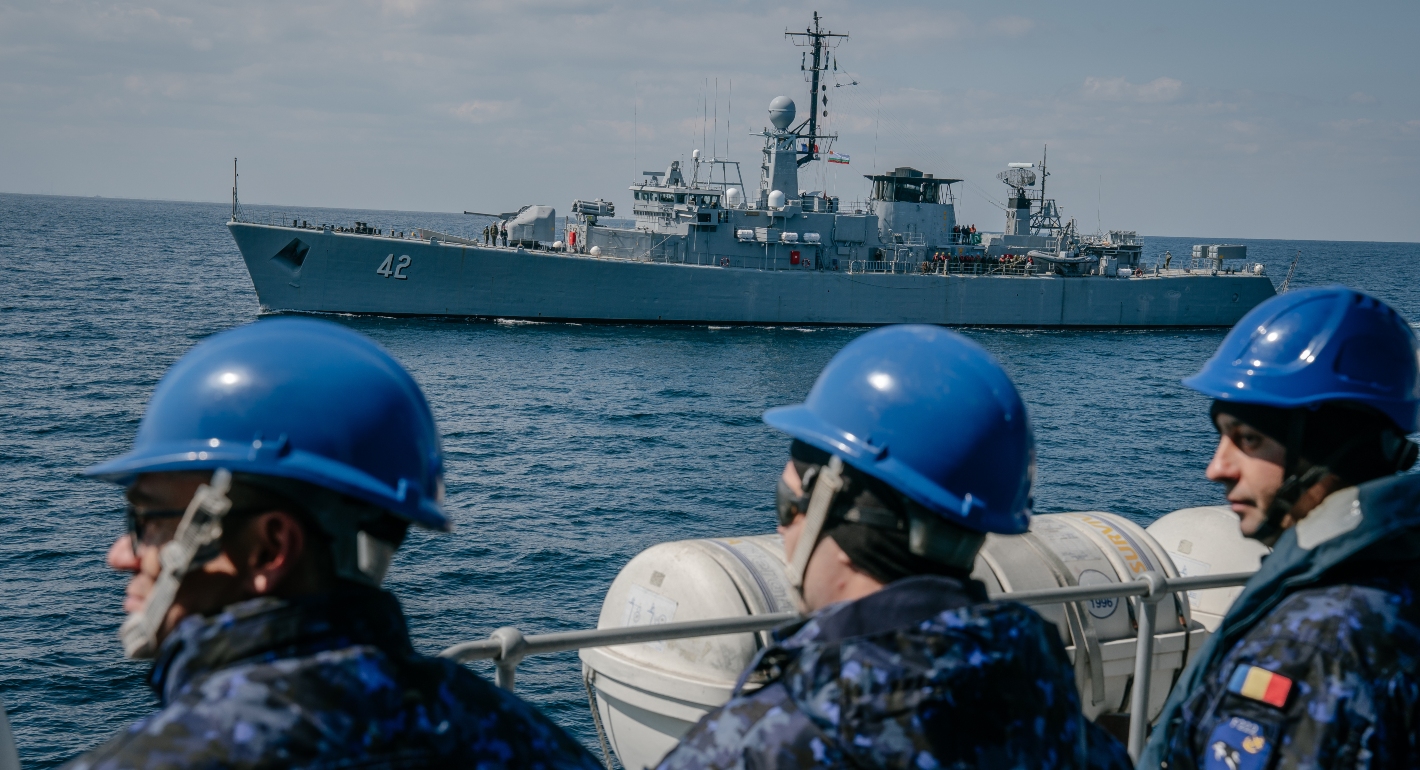
As Russia's war on Ukraine drags on, NATO is expanding its footprint in the Black Sea. Turkey, Romania, and Bulgaria are upgrading their fleets and deepening trilateral cooperation.

Dimitar Bechev