

Research
- +10
Rosa Balfour, Frances Z. Brown, Yasmine Farouk, …
{
  "authors": [
    "Moisés Naím"
  ],
  "type": "legacyinthemedia",
  "centerAffiliationAll": "",
  "centers": [
    "Carnegie Endowment for International Peace"
  ],
  "collections": [
    "Arab Awakening",
    "Inside Russia"
  ],
  "englishNewsletterAll": "",
  "nonEnglishNewsletterAll": "",
  "primaryCenter": "Carnegie Endowment for International Peace",
  "programAffiliation": "",
  "programs": [],
  "projects": [],
  "regions": [
    "North America",
    "United States",
    "Middle East",
    "North Africa",
    "South Asia",
    "East Asia",
    "Russia",
    "Eastern Europe",
    "Western Europe",
    "United Kingdom"
  ],
  "topics": [
    "Political Reform",
    "Democracy",
    "Economy",
    "Climate Change",
    "Foreign Policy",
    "Civil Society"
  ]
}
Source: Getty
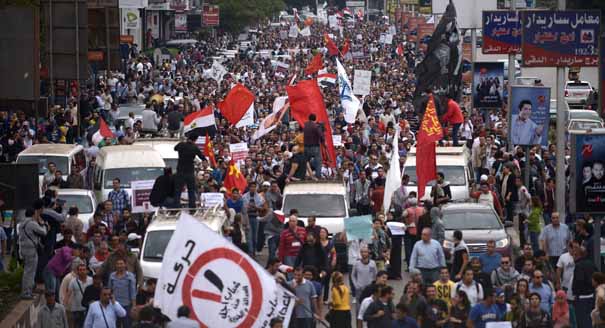
Power in the twenty-first century is a less concrete asset than it once was.
Source: WNYC’s Takeaway
Moisés Naím has worked as Venezuela's trade and industry minister, as well as editor-in-chief of Foreign Policy magazine, and those experiences have led him to conclude that power just isn't what it used to be.
Naím is the author of the book, The End of Power, which shot to fame after it was selected by Facebook Founder Mark Zuckerberg for his new book club.In this broadcast, Moisés Naím joins The Takeaway to discuss his book and his own experience of power, and what he hopes the Facebook CEO and his fans will take from his work.

Distinguished Fellow
Moisés Naím is a distinguished fellow at the Carnegie Endowment for International Peace, a best-selling author, and an internationally syndicated columnist.
Recent Work



Rosa Balfour, Frances Z. Brown, Yasmine Farouk, …
Moisés Naím
Carnegie does not take institutional positions on public policy issues; the views represented herein are those of the author(s) and do not necessarily reflect the views of Carnegie, its staff, or its trustees.

Before the next wave of EU enlargement takes place, the union needs to grapple with thorny questions of how power is distributed among its members.


Emil Sondaj Hansen, Ditte Brasso Sørensen

The new U.S.–Denmark–Greenland agreement will help Washington exert political, economic, and financial dominance under the guise of security. Yet, it acknowledged Copenhagen’s and Nuuk’s sovereignty on the island.

Marc Pierini

A summer of escalation in the Black Sea has hurt Ukraine economically and is exacerbating world food security. A truce is needed—as is a broader reframing of Europe’s Ukraine strategy.

Thomas de Waal

Are Germany’s economic, industrial, and political struggles becoming a liability for the EU’s ability to rise to the geopolitical moment?

Rym Momtaz, ed.

European Commission President Ursula von der Leyen is about to give her annual address on the state of the EU. Here’s what she won’t—but should—say.
Rym Momtaz