

In The Media
David Rothkopf
{
  "authors": [
    "David Rothkopf"
  ],
  "type": "legacyinthemedia",
  "centerAffiliationAll": "",
  "centers": [
    "Carnegie Endowment for International Peace"
  ],
  "collections": [],
  "englishNewsletterAll": "",
  "nonEnglishNewsletterAll": "",
  "primaryCenter": "Carnegie Endowment for International Peace",
  "programAffiliation": "",
  "programs": [],
  "projects": [],
  "regions": [
    "North America",
    "United States",
    "Russia",
    "Western Europe",
    "France"
  ],
  "topics": [
    "Political Reform",
    "Democracy",
    "Security",
    "Foreign Policy",
    "Civil Society"
  ]
}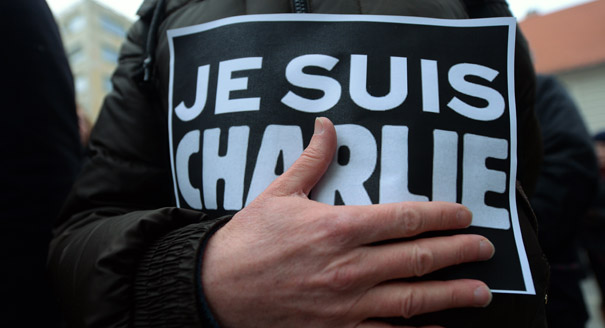
Source: Getty
The ‘Charlie Hebdo’ attack is a reminder that it is people’s response to extremist violence that determines its success or failure.
Source: Foreign Policy
The Interview was not a very good movie. Charlie Hebdo published satire that strained the bounds of good taste. Journalists who ventured into war-torn Syria put their own lives at risk. From Danish cartoonists mocking the Prophet Mohammed to Salman Rushdie’s novel The Satanic Verses, creative artists knowingly provoked extremists.
While each of these statements may be true, each one is absolutely extraneous to the crimes committed (or threatened) in response to the free expression of the filmmakers, journalists, cartoonists, editors, and others who dared challenge the twisted parameters of the sociopaths who have gone to war against the words and images that threaten them.
Once again, as with the attacks on the schoolchildren of Peshawar or on Malala Yousafzai, the worst among us have revealed just how terrified they are of ideas. Their fear may be understandable given that just a hint of reflection or examination reveals their objectives to be as indefensible as their methods and that their own intolerance completely disqualifies any claims they may assert to be acting in the name of a higher power or what is right.Nonetheless, in the wake of the attack in Paris on Wednesday that claimed the lives of 10 journalists at the French satirical magazine Charlie Hebdo, even venerable publications like the Financial Times produced “instant analysis” — a piece by columnist Tony Barber that suggests that there was some hint of fault on the part of the French editors because they had published a cartoon portraying the life of the Prophet Mohammed or, in their current issue, coverage of a new novel depicting France “in the grip of an Islamic regime led by a Muslim president.” In Barber’s analysis, which is really a disgrace to the journalistic values for which the FT has historically stood (and is inconsistent with the FT’s own editorial on the subject), the following paragraph (whose last six words have since been deleted from the website) stands out:
“This is not in the slightest to condone the murderers, who must be caught and punished, or to suggest that freedom of expression should not extend to satirical portrayals of religion. It is merely to say that some common sense would be useful at publications such as Charlie Hebdo, and Denmark’s Jyllands-Posten, which purport to strike a blow for freedom when they provoke Muslims, but are actually just being stupid.”
The argument made by a self-anointed arbiter of what is and isn’t stupid echoes those made around the release of The Interview. (We will set aside for a moment the stunning and ironic stupidity of offering up such “hot takes” on breaking news, analyses that sacrifice judgment for the sake of timely posting on the Internet.) A debate raged about many aspects of the movie, including, specifically, whether the filmmakers had crossed a line in depicting the death of Kim Jong Un at the end of the movie. It was debated whether this was tasteless or whether it would be tolerated regarding a different leader (as it was in, for example, Death of a President, regarding George W. Bush). Quoted by the New York Times, Jeanine Basinger, a Wesleyan University professor, opined, “The gory killing of a sitting foreign leader is new territory for a big studio movie.”
Setting aside the fascinating — and in itself comically golden — debate over just how gory that death should be, as revealed in the emails released following the Sony hack, these discussions again miss the point. Similarly, so did the White House’s Jay Carney when, in a Sept. 19, 2012, press conference, in response to a question about the publication of cartoons of the Prophet Mohammed by Charlie Hebdo, he said, “We have questions about the judgment of publishing something like this. We know that these images will be deeply offensive to many and have the potential to be inflammatory.… We don’t question the right of something like this to be published; we just question the judgment behind the decision to publish it.”
In free societies, there are no prohibitions based on the opinions of a few over whether something is smart or stupid, tasteful or repugnant. Indeed, it is the freedom to cross those lines or openly flaunt them that marks societies as truly open and encourages the kind of intellectual and artistic vibrancy that, whenever it has been fostered, has driven civilization forward.
Publications like Charlie Hebdo and the work of satirists everywhere often deliberately cross those lines not simply to get attention but to challenge the way we think, to force our perspective to shift. Sometimes those who employ this technique do so for the wrong reasons or without much talent or finesse. But we deliberately and consciously allow them the latitude to do so because it leaves room for others to make constructive use of the creative space provided.
That is why musings such as those of Barber in the Financial Times or Carney at the White House are so ill-considered. It is also why, in the wake of these brutal murders, the altered presentation of selected Charlie Hebdo covers by publications covering the story is precisely the wrong way to handle the situation.
Not only do they either practice or promote the idea of self-censorship based on the tastes or demands of thugs, but they distract from the real issue at hand. That is that there are forces afoot in the world that seek to enforce their version of political, cultural, and ideological correctness at gunpoint — or at the threat of a cyberattack or the issuance of a fatwa. Allowing these forces to gain any traction in the wake of such threats — whether through half-baked media commentary, political pronouncements, or decisions to kowtow to the bad guys, like the one Sony made to pull its movie from theaters — cedes them small, corrosive, and dangerous victories. And this — rather than death tolls or threats of violence that may grab the headlines — is the metric by which enemies of open societies measure their success.
In the years ahead, this issue will become more important. That is because, as the Sony hack reminded us, the tools at the disposal of our enemies are evolving and growing more pernicious. Nonstate actors and small states now have the ability to project force into our companies, our marketplaces, and the spaces we create for our public discourse, and they’re doing it at precious little risk to themselves. (The Obama administration’s feeble sanctions against North Korea, announced late on the Friday afternoon of a holiday weekend to minimize the public debate over their lameness, illustrate just how limited that risk is unless the United States and other states adopt much more robust policies of deterrence against such cyberattacks.)
Similarly, while (as of this writing) we do not know for sure the origins of the attack on Charlie Hebdo, we do know that in the years ahead growing numbers of potential attackers are likely to infiltrate our cities and those of our allies. This will come both as the number of extremists continues to grow as it has in recent years and, more specifically, as a result of the growth in the number of foreign fighters joining groups like the Islamic State in the Middle East, fighters who will no doubt return to their countries of origin with new and dangerous skills to go with their distorted and radicalized perspectives.
That is why it is important not to view such attacks as we tend to, spinning them up in media coverage for a few days, framing them in televised discussions as to whether they are the latest in the never-ending stream of “watersheds” and “turning points” — points upon which hyperbolic cable and Internet analysis seems to depend. We must prepare for an ongoing future of such threats and learn to deal with them in the course of our daily affairs. We cannot go to war over every such attack. Rather, we need multilayered strategies involving the effective coordination of the intelligence community and domestic police forces in order to anticipate risks, public-private collaboration to harden our assets, civil and military responses to attacks and attackers, international collaboration on deterrence and on bringing bad actors to justice, harsh sanctions for any states that support such activities, and, where required, military responses against terrorist groups that pose an ongoing threat.
But the most important reaction in all these cases will not come from government officials. It will come from each of us. We must stop periodically and examine what is important to us within our societies. We must fortify ourselves to resist the temptation to give in to the threats we receive and encourage or embrace or even tolerate changes that might seek to buy security at the price of other vital freedoms. That’s not easy. Not only has some of the debate around these recent incidents illustrated that, but we engaged in the same kind of trade-offs that compromised our values when we chose to accept torture and mass surveillance as options to contain terrorism. We do likewise when we let our commercial interests persuade us to overlook facts like the reality that today one of our most important partners, China, has also imprisoned more journalists than any other country. With each of these steps we give up some of what all in open societies have fought for over the centuries. It is in the concessions and compromises we make on these issues that we actually lose to terrorists and despots. That’s why, on the issues of our most important rights and freedoms, each of us as individuals makes up the first line of defense, and the really important battles of our era go on in our hearts and minds.

Former Visiting Scholar
David Rothkopf was a visiting scholar at the Carnegie Endowment as well as the former CEO and editor in chief of the FP Group.
Recent Work
David Rothkopf
David Rothkopf
Carnegie does not take institutional positions on public policy issues; the views represented herein are those of the author(s) and do not necessarily reflect the views of Carnegie, its staff, or its trustees.
Closer EU-UK ties could help address urgent European concerns. But is the EU ready for rapprochement with the United Kingdom?

Rym Momtaz, ed.
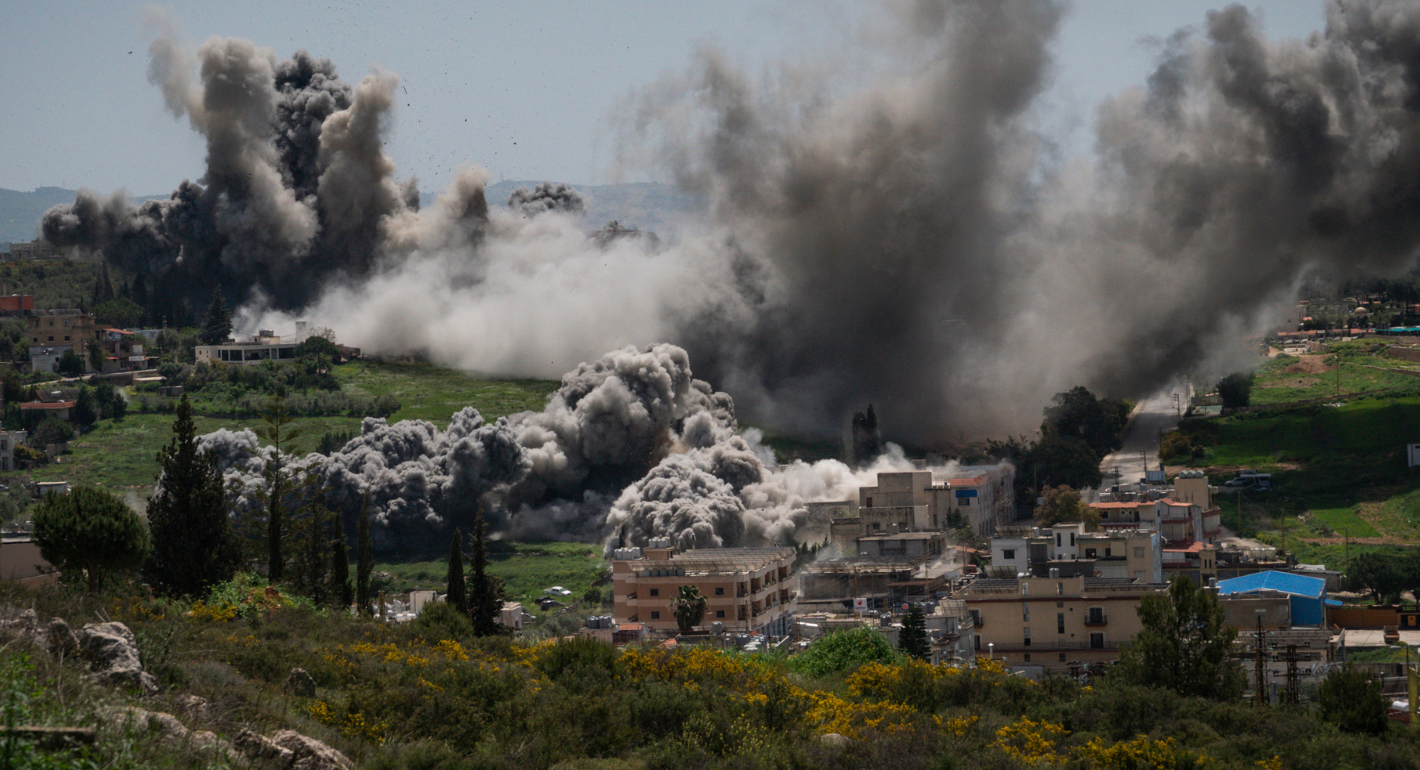
Europe has been standing by while its Southern neighborhood is being redrawn by force. To establish a path to peace between Israel and Lebanon, it’s time for Europeans to get involved with hard power.
Rym Momtaz

In Ukraine, Gaza, and Iran, AI warfare has come to dominate, with barely any oversight or accountability. Europe must lead the charge on the responsible use of new military technologies.

Raluca Csernatoni
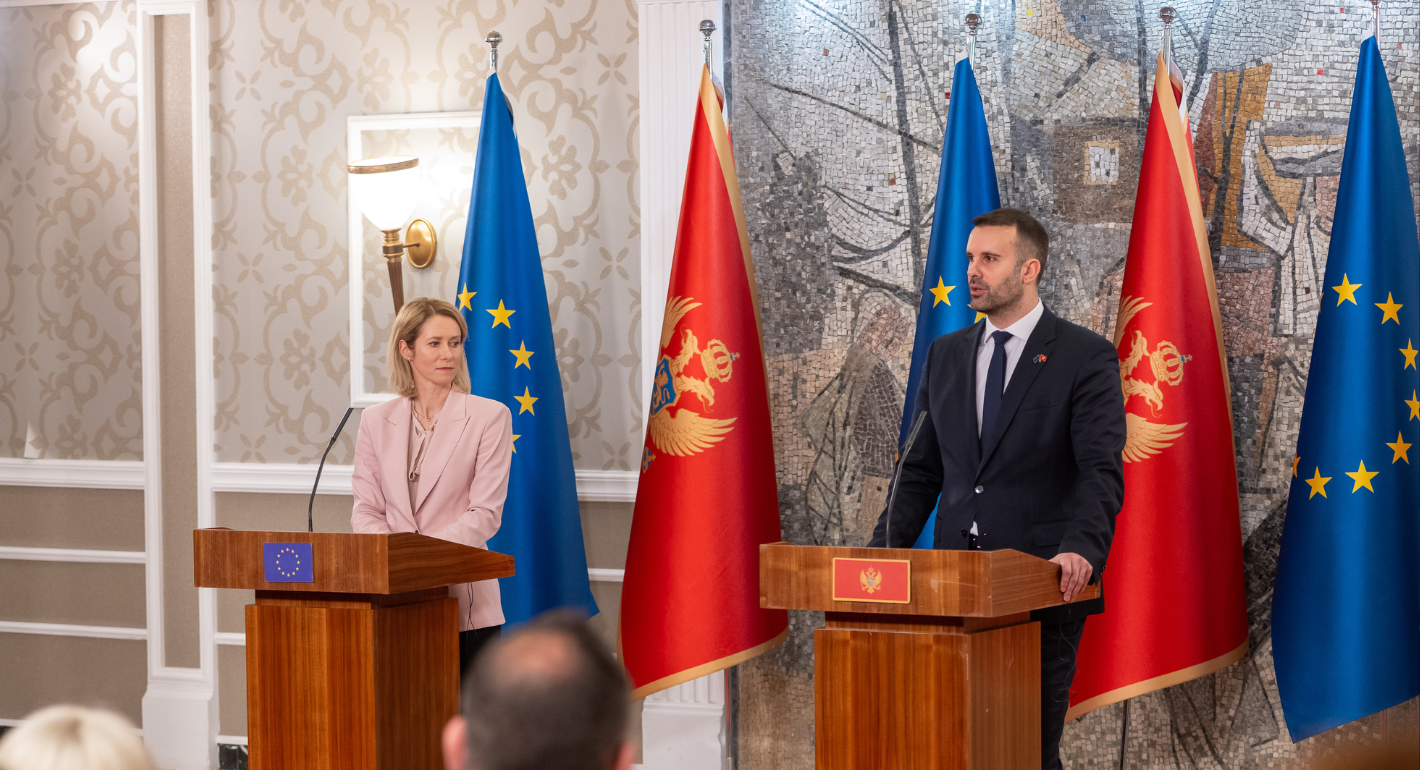
Montenegro and Albania are frontrunners for EU enlargement in the Western Balkans, but they can’t just sit back and wait. To meet their 2030 accession ambitions, they must make a strong positive case.


Dimitar Bechev, Iliriana Gjoni
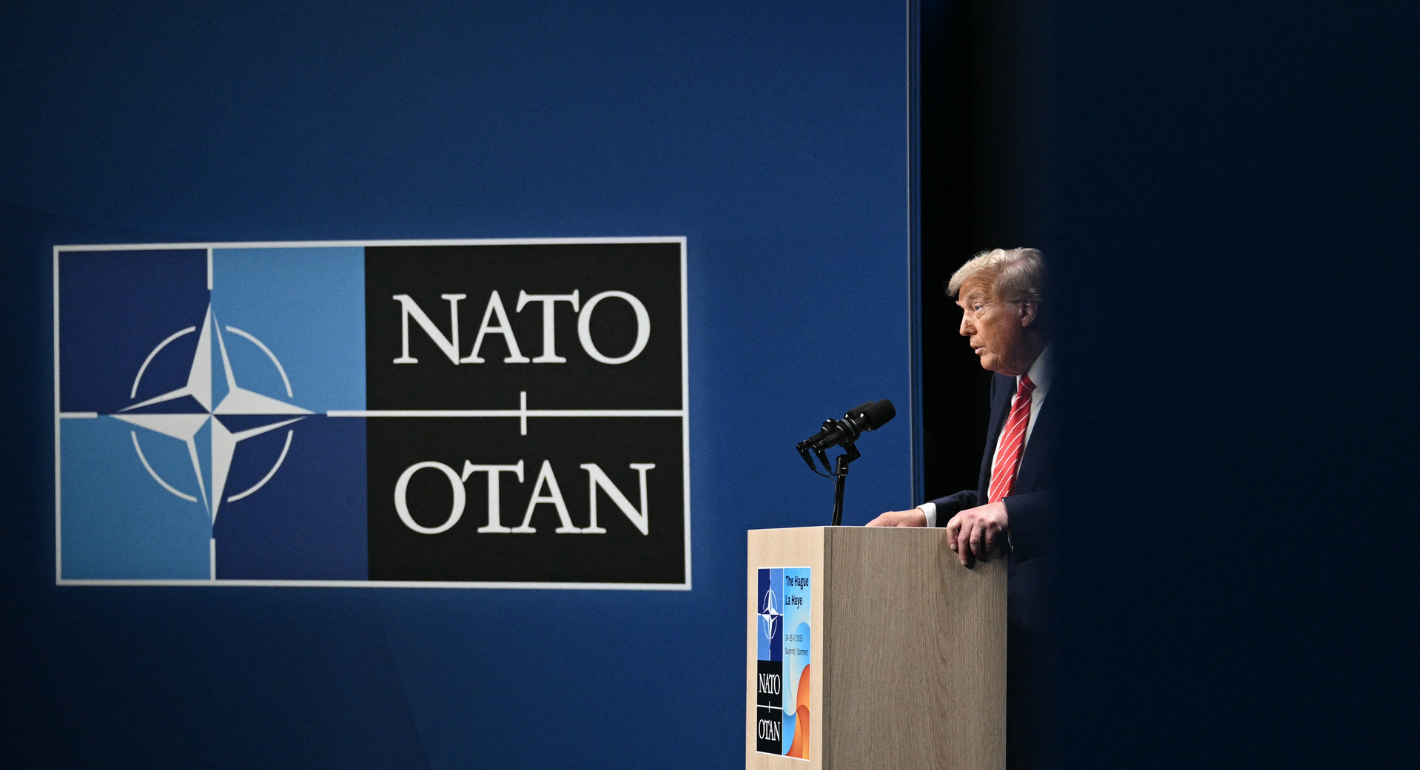
Donald Trump has repeatedly bashed NATO and European allies, threatening to annex Canada and Greenland and deploring their lack of enthusiasm for his war of choice in Iran. Is this latest round of abuse the final straw?
Rym Momtaz, ed.