

Article
Carole Nakhle
{
  "authors": [
    "Carole Nakhle"
  ],
  "type": "legacyinthemedia",
  "centerAffiliationAll": "dc",
  "centers": [
    "Carnegie Endowment for International Peace",
    "Malcolm H. Kerr Carnegie Middle East Center"
  ],
  "collections": [],
  "englishNewsletterAll": "menaTransitions",
  "nonEnglishNewsletterAll": "",
  "primaryCenter": "Malcolm H. Kerr Carnegie Middle East Center",
  "programAffiliation": "MEP",
  "programs": [
    "Middle East"
  ],
  "projects": [],
  "regions": [
    "Levant",
    "Lebanon",
    "Middle East"
  ],
  "topics": [
    "Political Reform",
    "Economy",
    "Climate Change"
  ]
}
Source: Getty
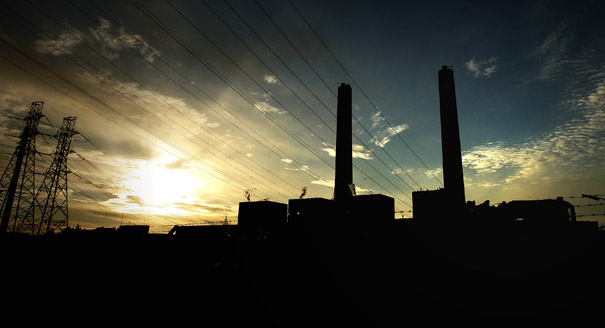
Doubts have been raised and criticisms continue to be made concerning Lebanon’s choice of upstream petroleum fiscal terms and strategies to award oil and gas licenses.
Source: Daily Star
Doubts have been raised and criticisms continue to be made concerning Lebanon’s choice of upstream petroleum fiscal terms and strategies to award oil and gas licenses.
This criticism is not surprising given the fact that Lebanon is facing a completely new experience and is a country often stuck in stalemates stemming from political disagreements. What complicates the situation further is the fact that there is no one ideal strategy that Lebanon can follow. There are, however, some internationally recognized guiding principles. Policymakers should look closely at the experience of other countries and learn from both their successes and their failures. But every country is unique and must tailor the choice of strategies to its own needs, objectives, and conditions.
It seems there has been an overemphasis in the debate over Lebanon’s petroleum fiscal regime on a single instrument: the royalty. Some have condemned the “low” royalty rate for which the country has opted, especially when compared with Israel. One possible explanation for such a stance is the limited understanding of what a fiscal regime actually encompasses. A royalty is only one instrument in a long list of fiscal and quasi-fiscal instruments.Additionally, Israel has selected an arrangement, the so-called concessionary system, which has an overall different composition and functioning from the Production Sharing Agreement that Lebanon has opted for. It is the interaction of all various components that should be taken into consideration when evaluating the fiscal regime. Curtailing the exercise to the choice and rate of the headline taxes is restrictive. Worse still, limiting the assessment to one instrument – in this case the royalty – is simply inaccurate.
Petroleum taxation is a subject of considerable complexity and variety, and is characterized by continued evolution. It is affected and shaped by multifaceted geological, technical and market factors together with unstable and unpredictable political influences. The design of a fiscal regime should take into consideration the conditions of the oil and gas region. A high level of government take may not be justified in cases of high-risk exploration and high-cost development.
With respect to license allocation, Lebanon selected the competitive bidding procedure whereby prequalified companies participate in an auction and rights go to the highest bidder. This strategy has become the preferred process around the world. Its popularity is likely to continue, especially as many nongovernmental organizations promote its use under the argument that it is the most transparent procedure.
The success or failure of an auction, however, largely depends on its design and a government’s commitment to transparency. Rights should be allocated in a climate of openness, with the highest standard of professionalism and adherence to international practice – issues that worry many in Lebanon.
Additionally, a key decision that host governments face when designing an auction is selecting the biddable parameters. Once the credentials of potential investors have been established and companies prequalified, international good practice favors setting a limited number of clearly specified criteria for the award of a license. This is particularly recommended in countries with limited expertise in oil and gas matters and constrained administrative capacity, such as Lebanon.
Even in a country like the United States, which has more than a century of experience in oil and gas, the legislation forbids the use of more than one bid variable. In Lebanon, one concern is the intention to include three biddable factors, of which two are important fiscal parameters, namely: the limit on the amount companies can claim as cost each year (the “cost recovery ceiling”) and the sharing of profit between the investor and the government (“profit oil”), in addition to the commonly used proposed work program.
With respect to block delineation, questions have been raised about whether the blocks Lebanon aims to offer for bidding are too large and whether all blocks should be offered at once. Lebanon’s offshore block sizes do not fall outside the reasonable range. In fact, there is no specific formula for dividing acreage into blocks.
The choice of block sizes should take into consideration several factors, mainly, the type of opportunity (for instance, onshore or offshore, shallow or deepwater), level of competition, license duration, and relinquishment provision, which determines the proportion of the block that investors should return to the government at the end of each period of their exploration license.
For instance, a high level of competition between prospective investors, an attractive geological potential such as in a proven basin, or a lenient relinquishment rule allow the government to offer smaller blocks. By contrast, where interest is limited, the geological risk is high, such as in frontier areas where the relinquishment rule could be considered tough from an investor’s perspective, larger blocks tend to be offered to mitigate business risk.
It is advisable that Lebanon not award all its territory for exploration and exploitation simultaneously. Through a gradual award of blocks, the government retains the flexibility to make some changes in the terms and conditions of future awards, following newly acquired information.
If the oil and gas sector is successfully established, it can dwarf any other sector in the Lebanese economy. But to achieve that success, some basic requirements should be met first. One of the initial steps is the establishment of a simple yet robust, stable and internationally competitive fiscal regime. Furthermore, any assessment of the regime should be based on objective, sound judgment and holistic analysis. The government should also commit to a transparent allocation process.
Finally, to those calling for an increase in the royalty rate, the question which should be raised is: Should international oil companies be expected to invest in Lebanon – an unexplored area, suffering from domestic and regional instability as well as weak institutions – especially during a period of declining oil prices and increasing competition from other regions?

Former Nonresident Scholar, Middle East Center
Nakhle was a nonresident scholar at Carnegie Middle East Center, specializing in international petroleum contracts and fiscal regimes for the oil and gas industry, world oil and gas market developments, energy policy, and oil and gas revenue management.
Recent Work
Carole Nakhle
Carole Nakhle
Carnegie does not take institutional positions on public policy issues; the views represented herein are those of the author(s) and do not necessarily reflect the views of Carnegie, its staff, or its trustees.

As the EU confronts profound challenges, several leaders have called for fundamental reform to the union’s model—but only modest, superficial changes have resulted. What if Europe really could be reimagined from zero today: What should such a redesigned European order look like?

Richard Youngs, ed.

Western Europe’s dual-use infrastructure melted down during its latest heat wave. If a predicted hot weather event can take the continent by surprise, what chance does it have to withstand unexpected geopolitical crises?

Rym Momtaz
Europe’s industrial supply chains leave it vulnerable to global shocks. The EU needs a pragmatic green industrial strategy that balances durable partnerships and bolsters homegrown clean tech without sacrificing low-carbon ambition.


Milo McBride, Pauline Gerard
As geopolitical rivalry weaponizes global supply chains, the EU’s true vulnerability lies in emerging-risk imports. For these goods, suppliers are growing more concentrated, substitution more difficult, and political risk is looming.

Sinan Ülgen

The EU is putting together a new security strategy to meet today’s myriad challenges. But for any proposal to be effective, the union needs to grapple with its identity and ambitions.

Pierre Vimont