

Article
C. Raja Mohan, Darshana M. Baruah
{
  "authors": [
    "C. Raja Mohan"
  ],
  "type": "legacyinthemedia",
  "centerAffiliationAll": "dc",
  "centers": [
    "Carnegie Endowment for International Peace",
    "Carnegie India"
  ],
  "collections": [],
  "englishNewsletterAll": "ctw",
  "nonEnglishNewsletterAll": "",
  "primaryCenter": "Carnegie India",
  "programAffiliation": "SAP",
  "programs": [
    "South Asia"
  ],
  "projects": [],
  "regions": [
    "South Asia",
    "Pakistan",
    "India"
  ],
  "topics": [
    "Foreign Policy",
    "Democracy",
    "Security"
  ]
}
Source: Getty
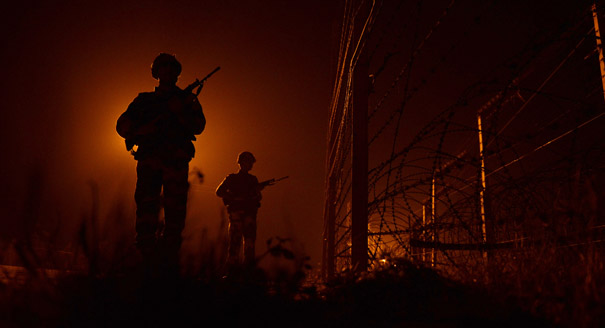
There is a growing conviction across the subcontinent that the region must overcome the many tragic consequences of Partition.
Source: Indian Express
That the RSS came out in support of the NDA government’s engagement with Pakistan is not surprising. But the argument advanced by the RSS in defence of a sustained dialogue with Pakistan is certainly interesting and important. After a high-level coordination meeting with the government late last week, the RSS joint general secretary, Dattatreya Hosabale, reminded us that Pakistan and Bangladesh were once part of India and must be treated not just as neighbours, but as part of an extended South Asian family. Hosabale pointed to the fact that quarrels are not uncommon between brothers. He underlined the importance of improving ties with the South Asian neighbours, including Pakistan, which are tied to India through geography, history and culture.
Some have suggested that the unexpected positive signal from the RSS might be rooted in its ideology of “Akhand Bharat” or “Greater India”. The RSS, then, is damned if it does and damned if it does not. Long accused as the source of the present government’s hostility towards Pakistan, the RSS is now being charged with the ambition to build a “Hindu Rashtra” across the subcontinent in the name of Akhand Bharat.There was a time when many in Pakistan were deeply offended by the notion of Akhand Bharat, which they believed was a plot to undo Partition. No one today is betting that reversing Partition is either possible or desirable. All of India’s neighbours — from nuclear Pakistan to tiny Maldives — have strong national identities of their own, and no one is ready to dissolve them into the idea of a greater India.
But there is a growing conviction across the subcontinent that the region must overcome the many tragic consequences of Partition, as well as seek a lasting political reconciliation and build deeper economic cooperation. The logic of globalisation and the imperatives of regionalism have also been nudging India and its neighbours to open their borders and reconnect with each other.
The RSS is not the only political formation in the subcontinent that is ambivalent about Partition and imagines the prospect for South Asian unity of some kind. After 1947, many on both sides of the new divide believed that Partition would be temporary. The socialists, for example, kept up the demand for a “confederation” between India and Pakistan.
A leading ideologue of the RSS, Deendayal Upadhyay, and the socialist leader Ram Manohar Lohia issued a joint statement in 1964 urging India and Pakistan to explore the idea of a confederation. Lohia’s successors, including Mulayam Singh Yadav, have often reaffirmed that call. Inder Kumar Gujral and Manmohan Singh, two Indian prime ministers hailing from the Punjab that paid with a lot of blood for Partition, were deeply committed to the pursuit of peace with Pakistan. Gujral put Kashmir back on the negotiating table with Pakistan and Singh explored a solution to the Kashmir dispute in a back-channel negotiation with General Pervez Musharraf.
The chief ministers of Punjab, whether Amarinder Singh of the Congress or Parkash Singh Badal of the Akali Dal, have demanded normal relations between India and Pakistan and initiated efforts of their own to promote cooperation across the Radcliffe Line in Punjab. In Kashmir, another region that continues to bleed from the wounds of Partition, the idea of an Indo-Pak confederation has long been supported by the Abdullahs of the National Conference.
The neat domestic divide on Pakistan constructed by Indian liberals — between the secular peacemakers and Hindutva hawks — never had much basis in reality. BJP leader Atal Bihari Vajpayee pursued good relations with Pakistan — when he was foreign minister in the Janata government of 1977-79 and then prime minister of the NDA government during 1998-2004 — more boldly than some of his “secular” peers.
PM Narendra Modi, in turn, has consistently invoked Vajpayee’s legacy in putting special emphasis on transforming ties with neighbours. This was not empty rhetoric. Modi spent some political capital in implementing the boundary settlement with Bangladesh, despite considerable opposition within his own party.
Despite apparent flip flops, Modi is acutely conscious that many of the difficulties of dealing with Pakistan are rooted in the tragedy of Partition. While political leaders of all colours have been aware of the bitter legacies of Partition, they were not, unfortunately, willing to leave some space for the government of the day to do what is right on Pakistan. Meanwhile, the national security elites have cultivated, over decades, a narrow and self-defeating approach towards Pakistan.
In recent years, the electronic media has, on a daily basis, injected much poison into the national discourse on Pakistan. The reminder from the RSS on the special nature of our relations with the neighbours should help detox the current foreign policy debate and allow the Modi government to develop a more coherent strategy towards Pakistan.
This article was originally published in the Indian Express.
Former Nonresident Senior Fellow, Carnegie India
A leading analyst of India’s foreign policy, Mohan is also an expert on South Asian security, great-power relations in Asia, and arms control.
Recent Work

C. Raja Mohan, Darshana M. Baruah


Alexander Gabuev, Paul Haenle, C. Raja Mohan, …
Carnegie does not take institutional positions on public policy issues; the views represented herein are those of the author(s) and do not necessarily reflect the views of Carnegie, its staff, or its trustees.
Trump is distracted and Ukraine wants Europe to step up. The continent’s leaders must find their voice and assert it in talks with Russia.

Alissa de Carbonnel

Mounting economic strain and battlefield losses will not necessarily make the Kremlin less dangerous. They could instead push Moscow toward a more aggressive hybrid campaign designed to test NATO’s Eastern flank, exploit allied hesitation, and fracture European resolve.

Maksym Beznosiuk
Over the past ten years, NATO has held almost as many summits as it did during the entirety of the Cold War. Are they still useful, or is it time to stop holding annual meetings?

Rym Momtaz, ed.

As the EU confronts profound challenges, several leaders have called for fundamental reform to the union’s model—but only modest, superficial changes have resulted. What if Europe really could be reimagined from zero today: What should such a redesigned European order look like?

Richard Youngs, ed.
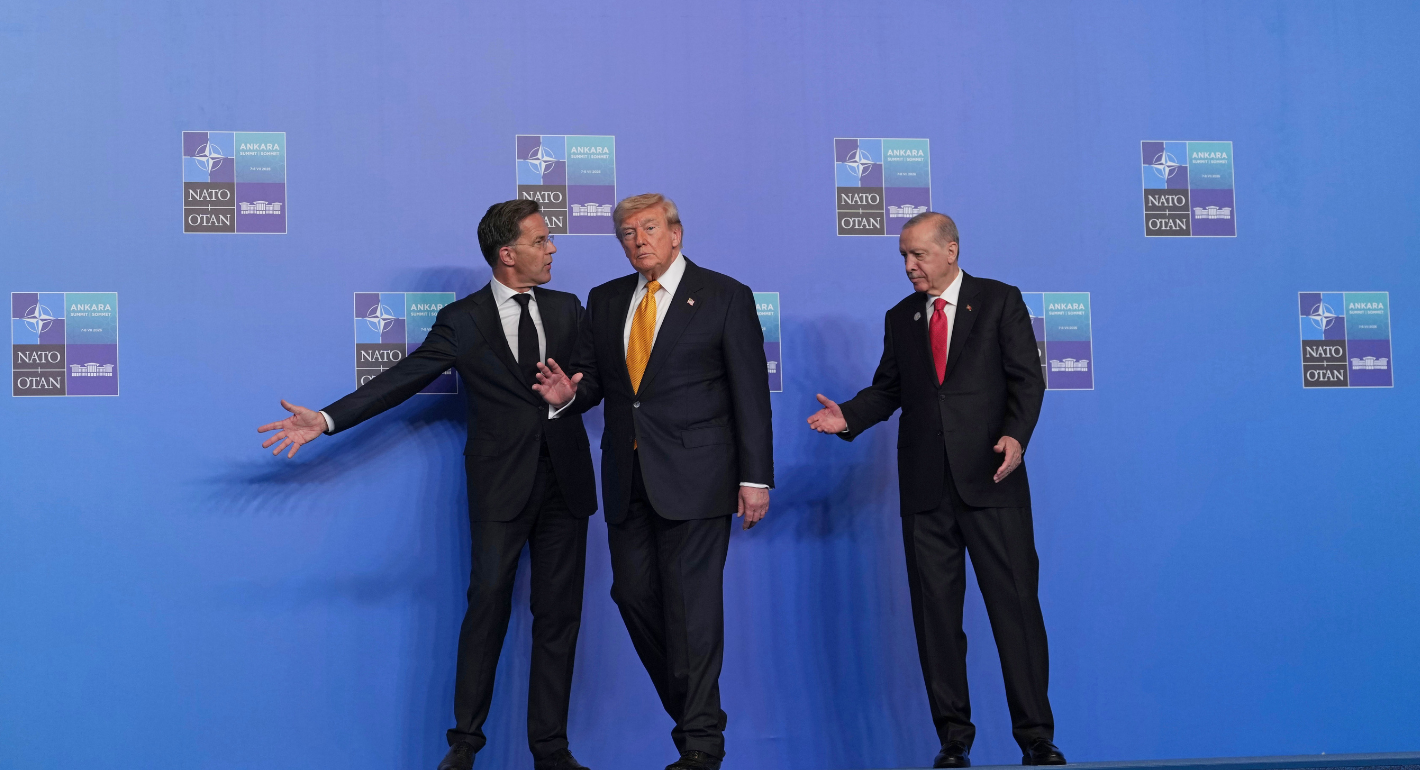
Nearly a year and a half after Europeans leaned into sucking up to Trump, the strategy has produced some benefits when it comes to Ukraine.
Rym Momtaz