

Research
- +5
Alper Coşkun, Fatih Ceylan, Tacan İldem, …
{
  "authors": [
    "Sinan Ülgen"
  ],
  "type": "legacyinthemedia",
  "centerAffiliationAll": "dc",
  "centers": [
    "Carnegie Endowment for International Peace",
    "Carnegie Europe"
  ],
  "collections": [
    "Turkey’s Transformation"
  ],
  "englishNewsletterAll": "ctw",
  "nonEnglishNewsletterAll": "",
  "primaryCenter": "Carnegie Europe",
  "programAffiliation": "EP",
  "programs": [
    "Europe"
  ],
  "projects": [],
  "regions": [
    "Russia",
    "Europe",
    "Türkiye",
    "Middle East",
    "Iran"
  ],
  "topics": [
    "Security",
    "Foreign Policy"
  ]
}
Source: Getty
The Turkish public, whose sensitivities regarding Syria have consistently grown more intense over the years, must now be persuaded of the astuteness of Turkey's foreign policy choices.
Source: Anadolu Agency
The assassination of Andrey Karlov, the Russian ambassador to Turkey, in Ankara on Monday evening during the opening ceremony of an exhibition has expectedly sent shockwaves all around.
An act of this nature, where an ambassador was killed, is a first in Turkey.
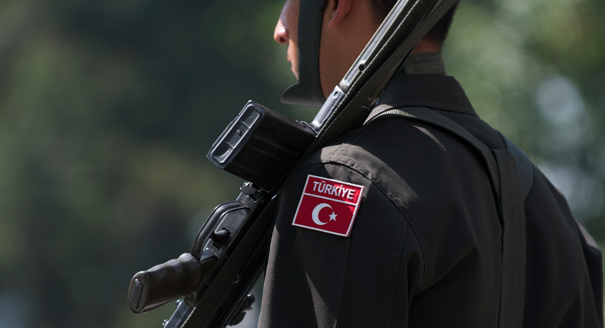
What happened basically is that the head of a foreign mission appointed to Turkey became the victim of a deadly act of terrorism while under the protection of the Turkish government.
In this respect, Turkey has a historic responsibility in bringing this deplorable act to full light.
I suppose this responsibility takes on greater importance given that Turkey itself lost many members of its foreign missions to Armenian terrorism in the recent past.
Turkey is expected to respond to this act with the kind of care, precision, character and depth that it would have expected of other countries had one of its diplomats been the victim of a similar attack. As a matter of fact, Turkish officials, in their first statements to the press, expressed similar feelings.
Primarily, every single aspect of the incident must be investigated in the most competent manner.
It is essential to categorically establish whether this act was actually perpetrated by a single person in a way similar to what has come to be termed as "lone-wolf attacks" or by a more organized terrorist network that has managed to infiltrate the Turkish police force.
In an extremely justified manner, Russia will expect Turkey to carry out such a meticulous investigation.
On a different note, we must also dwell on the likely consequences of the fact that this act was perpetrated by an attacker who carried an official police ID.
Indeed, what we have seen immediately after the attack indicates that many tend to think, in their analysis of this incident, that terrorist networks have apparently infiltrated even the staff assigned by the Turkish police to ensure the security of such events attended by members of foreign missions.
The very first condition for Turkey to ensure its domestic security and to give out the message that it is a safe country is to make sure that its police force and intelligence are composed of people who are absolutely loyal to the Turkish state.
This incident will be assessed as Turkey's failure to fully purge its police and intelligence of any such disloyal elements despite the concerted efforts to that end that have intensified especially in the aftermath of the coup attempt of July 15.
If this attack was aimed at creating a tense atmosphere in Turkish-Russian relations, which had indeed been strained over the shooting of a Russian warplane on Nov. 24, 2015, we need to stress that this time terrorism has failed to reach its goal.
As can be seen from the first official statements by Moscow and Ankara, which were friendly and prudent, this act has failed to hamper the normalization process between Turkey and Russia, which has been gaining momentum for some time.
We might, on the other hand, reckon that the timing of the attack may not be completely independent of the meeting in Moscow on the future of Syria, held with the participation of the Turkish, Russian, and Iranian foreign and defense ministers.
Indeed, the attack somewhat undermined Turkey's influence prior to these challenging negotiations.
As a country that has failed to protect the life of the Russian ambassador, who was the Russian president's representative in Turkey, it has become more difficult for Turkey to defend its arguments against the Russian ones with the same level of power and influence, at least immediately after this attack.
Moreover, Turkey lacks a natural ally that could give it support throughout these negotiations.
As the only NATO member that participated in these negotiations, Turkey will be endeavoring to have a consensus reached regarding an expected operation of the Russia and Iran-backed regime forces in Idlib.
Turkey is also concerned about the condition of the civilian population and opposition elements in the same area with regard to the awaited operation as well as several critical issues that matter greatly in terms of its national interests, such as the status of the Syrian Kurdish Democratic Union Party (PYD).
On the other hand, the Turkish government's rhetoric pushing for "regime change in Syria" in the recent past has resulted in a certain sector of Turkish society developing a high level of sensitivity toward the human tragedy unfolding in Syria, and particularly in Aleppo.
In the meantime, however, Turkey has forsaken its former aspirations aimed at creating a new order in the Middle East and adopted a more realistic foreign policy stance while also significantly toning down its "regime change" rhetoric along the way.
It has also embarked on a process of negotiation with Russia and Iran, the two supporters of the Syrian regime, in order to obtain concrete results, however limited they may be.
As a natural result of what we may call "the returns of realpolitik," Turkey has already made some gains.
For instance, we need to point out that the ongoing success of Operation Euphrates Shield is a result of seeking alliances at a tactical level.
But also precisely for this reason, Ankara, compared to its past reactions, has been forced to remain silent in the face of such incidents as the bombing of Aleppo.
Foreign policy is an area where countries have to make such hard choices.
The Turkish public, whose sensitivities regarding Syria have consistently grown more intense over the years, must now be persuaded of the astuteness of these right foreign policy choices and be made more resistant to possible provocations.
Otherwise, choices made in the name of a more realistic foreign policy have the likelihood of triggering a reaction in a certain portion of Turkish society, especially at a time when Turkish foreign policy is undergoing a transformation.
In democracies, social sensitivities have a bearing on how foreign policy takes shape.
But foreign policy cannot be built exclusively on social sensitivities.
The reason for this is, domestic public pressure can be influential in the short- or medium-term, but foreign policy choices bring long-term, actually very long-term consequences.
Now that Turkey is bound to live in such a challenging part of the world, the importance of establishing a balance between its foreign and domestic policies is becoming more and more obvious with every single incident, a balance which is a significant gain of the republican tradition.

Senior Fellow, Carnegie Europe
Sinan Ülgen is a senior fellow at Carnegie Europe in Brussels, where his research focuses on Turkish foreign policy, transatlantic relations, international trade, economic security, and digital policy.
Recent Work

Alper Coşkun, Fatih Ceylan, Tacan İldem, …
Carnegie does not take institutional positions on public policy issues; the views represented herein are those of the author(s) and do not necessarily reflect the views of Carnegie, its staff, or its trustees.

Are Germany’s economic, industrial, and political struggles becoming a liability for the EU’s ability to rise to the geopolitical moment?

Rym Momtaz, ed.

European Commission President Ursula von der Leyen is about to give her annual address on the state of the EU. Here’s what she won’t—but should—say.
Rym Momtaz

Radical-right parties are expected to do well in upcoming elections in four of the EU's biggest member states. If successful, they could prevent the union from addressing key challenges ahead.

Stefan Lehne

The aftermath of the Ceuta crisis shows Europe has drawn the wrong lessons. Rather than doubling down on failed migration policies, the EU needs to address the underlying roots of such episodes.

Richard Youngs
An overwhelming victory by a far-right-wing party in a small state in eastern Germany will have major repercussions for Chancellor Friedrich Merz’s coalition.

Judy Dempsey