

In The Media
David Rothkopf
{
  "authors": [
    "David Rothkopf"
  ],
  "type": "legacyinthemedia",
  "centerAffiliationAll": "",
  "centers": [
    "Carnegie Endowment for International Peace"
  ],
  "collections": [],
  "englishNewsletterAll": "",
  "nonEnglishNewsletterAll": "",
  "primaryCenter": "Carnegie Endowment for International Peace",
  "programAffiliation": "",
  "programs": [],
  "projects": [],
  "regions": [
    "North America",
    "United States",
    "East Asia",
    "China",
    "Western Europe"
  ],
  "topics": [
    "Political Reform",
    "Economy",
    "Trade",
    "Foreign Policy",
    "Global Governance"
  ]
}
Source: Getty
While most of the crowd at Davos would love to see America lead as before, they have never been more skeptical about its prospects.
Source: Foreign Policy
There are two Davoses. There is gathering it aspires to be and there is the one it is. The program of the World Economic Forum is really an extraordinary undertaking, perhaps the most ambitious of any comparable event in the world. It seeks to cover more ground than any other, with regional and topical areas of sweep, scope, importance, breadth, and depth: from synthetic foods to microbiomes, from the future of trade to a day in the life of refugees. The ambition is nothing less than turning the attention of the rich and mighty to the issues and ideas that will shape the future. To a remarkable extent, the forum succeeds in fulfilling that ambition.
Sometimes, it also transcends all that with speeches or encounters that have historical or political significance. That’s remarkably rare given the parade of the powerful that passes through the small Alpine village. But it does happen.
This year, the speech by China’s President Xi Jinping was clearly such a moment. The rise of China comes as no surprise to anyone. Even the remarkable speed of that rise is something even the most casual observers have become accustomed to. But Xi’s speech was a watershed moment. It was the moment that a Chinese leader effectively accepted the role of being one of the world’s two leading powers and then went further, making the case that if the other great power — the United States — would not lead in the further development of the global system, China would step up.
It is a moment that many expected. But few expected it to come so soon or to be presented as effectively as it was by Xi, for whom the Davos speech was a career high-water mark. China is an emerging power, to be sure. But it is also a country whose record on basic human rights is often bad and sometimes appalling. Many expected that before China could truly assume a global leadership role, it would have to right some of these wrongs, make progress in adopting international standards of behavior. They would, in other words, have to clear a bar. But the arrival of Donald Trump on the scene has lowered that bar.
The anti-trade, anti-U.N., anti-EU, anti-NATO, anti-immigrant nationalism that Trump embodies has been seen by the world as a repudiation of the international order, for which the United States has been the principle architect and champion. It is a shock to the leaders present at Davos that America seems ready to embrace another path, one more in tune with the populists and ethno-nationalists now found in Europe and Russia. Delegates came to Davos unnerved, in the market for someone to fill the void on the international stage that seems quite likely to be a consequence of the Trump presidency. And up stepped Xi as a global statesman. While all recognize the huge hurdles China faces internally and its shortcomings as a leader of the international Western order, the behavior and rhetoric of the incoming American president has been such that he has already jettisoned much of the moral authority his predecessors have handed him.
When Donald Trump puts his hand on the bible and swears the oath of office he will — because of his actions, who he is, and the people with whom he has surrounded himself — instantly diminish the presidency. He may assume that the world will defer to him as it has to past presidents. But the message at Davos right now is: “not so fast.” American leadership is not a divine right. The Bush years damaged America’s standing. Obama did not do much to elevate it. And now comes Trump.
While most of the crowd at Davos (largely, older and traditionalist) would love to see America lead as before, they have never been more skeptical about its prospects. And that has opened the door for Xi’s historic speech and the geopolitical shift it signals. Speeches seldom move history. But the really important ones capture something special about the zeitgeist and Xi’s did that. This is what we will remember most from this World Economic Forum.
On the flip side of Davos — not what it aspires to be but what it can’t shake being — once again the event, for all that recommends it, has to contend with the fact that many of the world’s most powerful people just aren’t necessarily the world’s best people. As a result, there is some ugliness here.
Part of it is, once again, how unrepresentative it is of the world it seeks to improve. Once again, women are grossly under-represented among the delegates, at a ratio of roughly one to five. I’ve been writing about this for years, as have many others. The forum itself acknowledges it is an issue. But if it’s so easy to fix and yet, year after year, it is not fixed then one has to wonder if something else is afoot. Is the mix they get actually the mix they want?
The emerging world is also once again under-represented here. And those who do represent it are typically the millionaires and billionaires who run global enterprises that happen to be based in what Davosians often refer to as “the global South.” Artists and scientists are also woefully under-represented. (And I say all this despite excellent portions of the program on gender, the emerging world, and culture and scientific issues. But that’s the dichotomy between intent and reality.)
Beyond this, you have the attendees themselves. Many are the dead-eyed sharks of the deal world, people who only evaluate counterparts in terms of what they can do for them and their pocketbooks. Some are star-fuckers. Some are officious hangers-on (the entourages are almost inevitably more odious than the bosses).
And some are completely clueless. Despite a year filled with headlines about the disconnectedness of elites, this was a year at Davos in which I heard pundits defend themselves against their lousy 2016 record — not by admitting or contemplating where they went wrong but by arguing that anti-expert feeling was a populist plot, that Trump’s supporters and their ilk wanted to get rid of experts because of the real knowledge they possess. While there’s some truth in that, there is also a huge deficit of self-awareness or intellectual honesty.
Perhaps more shocking in the face of the same populist wave was the other incident that will live with me as vibrantly as Xi’s speech. I heard a billionaire, admittedly under the guise of a joke, stand up and make the case that “elites are people, too” and that “elites have feelings.” Then another of the world’s biggest fat cats got up to hoot and holler: “Yeah, let’s hear it for the elites!” If this had been caught on video, people would have been marching up the mountain roads to this little town ready to burn it down. That room full of the world’s richest and most powerful people laughing and cheering for themselves as the unfairly targeted was so out-of-control nuts that it almost made me overlook the side conversations I heard (in which they whispered with top U.K. and U.S. influencers about how to shed a bunch of the regulations they found so damn constraining.
Where’s a torch and a pitchfork when you need one? Where are the men and women of conscience and sensitivity who represent the high-minded elements of the Davos programs when the scenes that would make Gordon Gekko blanche were unfolding? (I heard one EuroCEO refer to those program elements as Davos’s “self-inflicted guilt trip.”) I guess that’s the beauty of this place: you find great and passionate illustrations of why such change is so necessary.
Former Visiting Scholar
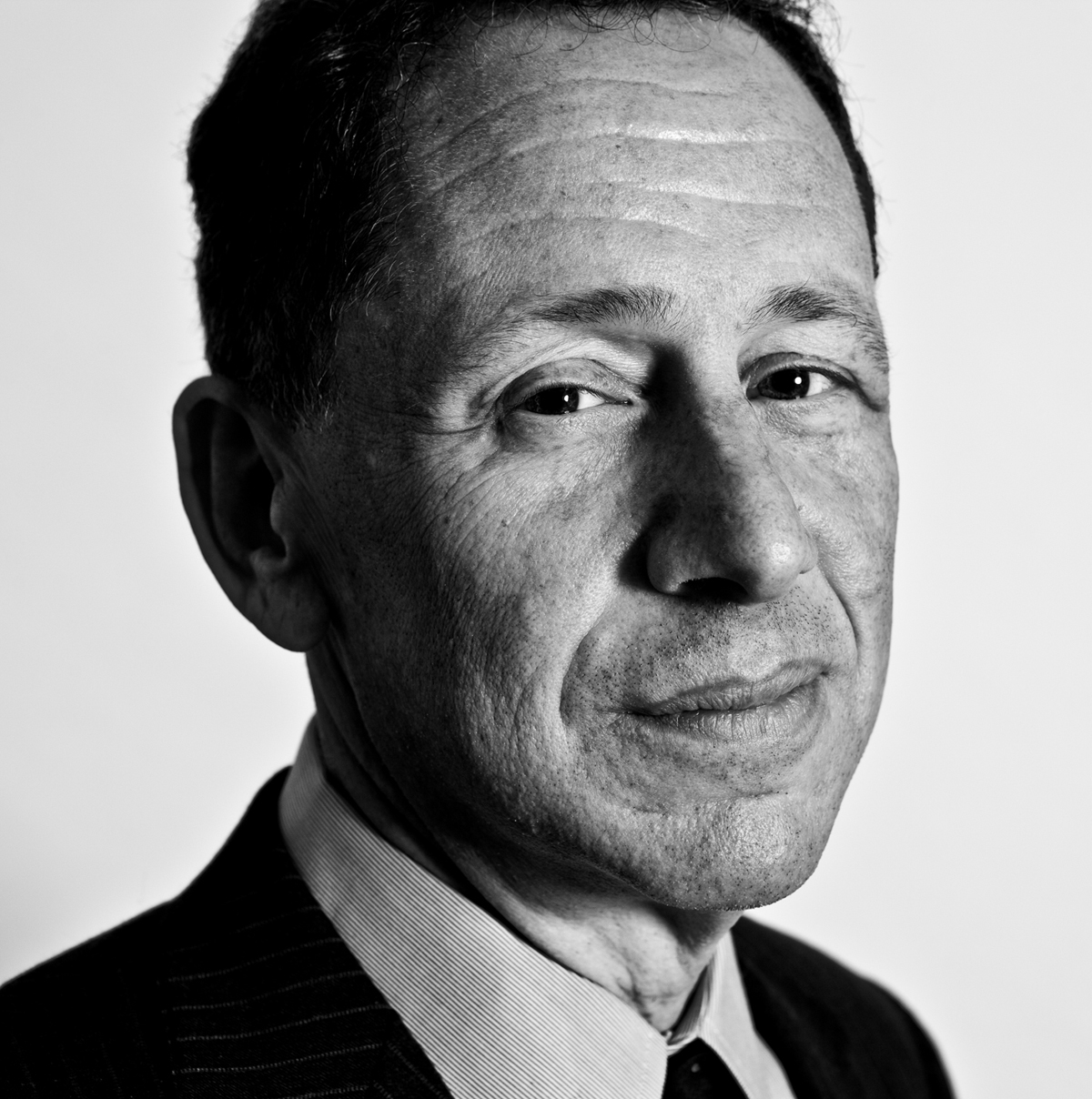
David Rothkopf was a visiting scholar at the Carnegie Endowment as well as the former CEO and editor in chief of the FP Group.
Recent Work
David Rothkopf
David Rothkopf
Carnegie does not take institutional positions on public policy issues; the views represented herein are those of the author(s) and do not necessarily reflect the views of Carnegie, its staff, or its trustees.

Radical-right parties are expected to do well in upcoming elections in four of the EU's biggest member states. If successful, they could prevent the union from addressing key challenges ahead.

Stefan Lehne

The aftermath of the Ceuta crisis shows Europe has drawn the wrong lessons. Rather than doubling down on failed migration policies, the EU needs to address the underlying roots of such episodes.

Richard Youngs

Canadian Prime Minister Mark Carney has twice inspired praise for standing up to U.S. President Donald Trump: at the 2026 World Economic Forum in Davos and on Canada-U.S. trade negotiations. Is Carney showing a third way better than the EU has in dealing with the Trump administration?

Rym Momtaz, ed.

The EU’s responses to two recent incidents expose the gulf between European perceptions and capabilities. Unless the union can bridge that gap, it will never become a real geostrategic power.
Rym Momtaz

European states control several Overseas Countries and Territories around the world that carry strategic, economic, and environmental weight. As great powers challenge the rules-based order, defending them is a geopolitical imperative for Europe.

Marc Pierini