

Commentary
Ahead of a tough winter for Ukraine, Donald Trump’s swing back toward Russia bodes ill. But instead of panicking, Kyiv’s European allies are focusing on action.
Rym Momtaz
{
  "authors": [
    "Erik Brattberg",
    "James L. Schoff"
  ],
  "type": "commentary",
  "centerAffiliationAll": "dc",
  "centers": [
    "Carnegie Endowment for International Peace",
    "Carnegie Europe",
    "Carnegie Russia Eurasia Center"
  ],
  "collections": [],
  "englishNewsletterAll": "asia",
  "nonEnglishNewsletterAll": "",
  "primaryCenter": "Carnegie Endowment for International Peace",
  "programAffiliation": "AP",
  "programs": [
    "Asia",
    "Europe"
  ],
  "projects": [],
  "regions": [
    "North America",
    "United States",
    "East Asia",
    "Japan",
    "Western Europe",
    "Asia",
    "Europe",
    "Iran"
  ],
  "topics": [
    "Economy",
    "Trade",
    "Foreign Policy",
    "EU"
  ]
}
Source: Getty
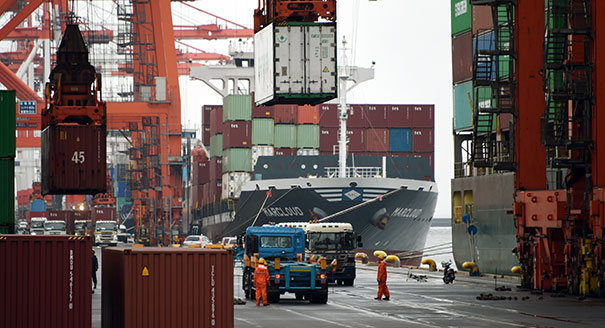
Brussels and Tokyo are stepping up at a time when Washington is retrenching from its traditional leadership role on global trade issues.
Source: Diplomat
Nowhere is U.S. President Donald Trump’s antipathy for multilateral trade liberalization hitting harder than in Europe and Japan. Both have the U.S.-led international rules-based order to thank for enabling their present-day security and prosperity. And as major export-oriented economies, they share a huge stake in shaping the future global economic order. It is not surprising, therefore, to see Brussels and Tokyo stepping up at a time when Washington is retrenching from its traditional leadership role on global trade issues. Their agreement on a free-trade pact timed with the G20 meeting in Germany can be as substantive as it is symbolic, raising the key question of whether it might serve as a turning point for the United States as the Trump administration decides on its future trade agenda.
Both the EU and Japan have for years had their eyes on separate trade agreements involving the United States — for Japan, the 12-nation Trans-Pacific Partnership (TPP), and for the EU, the Transatlantic Trade and Investment Partnership (TTIP). The prospect of deepened trade integration with the United States served both economic and geostrategic rationales.
The EU and Japan viewed their prospective trade deals with the United States as a way to uphold the international rules-based order by setting high joint standards (in such areas as labor, safety, digital trade, and environmental and consumer protection) underpinned by shared norms and values that would force emerging powers like China to accommodate. Moreover, TPP and TTIP would, respectively, serve to complement and deepen Japan and the EU’s security partnerships with Washington at a time of growing pressure from China in Asia and Russia in Europe.
Trump’s early decision to withdraw the United States from TPP and de facto freeze the TTIP negotiations was accordingly a major setback to Tokyo and European capitals, and it intensified Japan and Europe’s desire to strike their own trade deal with each other. While the bilateral EU-Japan trade negotiations date back to 2013, the Trump administration’s economic nationalism and protectionist rhetoric incentivized both sides to announce their “agreement in principle” on the Japan-EU Economic Partnership Agreement (JEEPA) ahead of the G20 meeting in Hamburg in early July....

Former Director, Europe Program, Fellow
Erik Brattberg was director of the Europe Program and a fellow at the Carnegie Endowment for International Peace in Washington. He is an expert on European politics and security and transatlantic relations.

Former Senior Fellow, Asia Program
James L. Schoff was a senior fellow in the Carnegie Asia Program. His research focuses on U.S.-Japan relations and regional engagement, Japanese technology innovation, and regional trade and security dynamics.
Carnegie does not take institutional positions on public policy issues; the views represented herein are those of the author(s) and do not necessarily reflect the views of Carnegie, its staff, or its trustees.

Ahead of a tough winter for Ukraine, Donald Trump’s swing back toward Russia bodes ill. But instead of panicking, Kyiv’s European allies are focusing on action.

Rym Momtaz

Funding Ukraine remains a priority for European leaders. As Russia’s war of aggression heads into another winter, two feasible options to mobilize support for Kyiv should be fast-tracked.


Vladyslav Rashkovan, Gregory P. Wilson

While the EU and European governments are embracing the much-lauded middle-power moment, this entails three difficult conundrums.

Richard Youngs

Europe is facing rising populism internally as well as external pressures from Russia, China, Turkey, and the United States.

Dimitar Bechev

A notable degree of participative democracy has firmly arrived in Europe. But to have more far-reaching impact, democratic deliberation needs to move into a radically new phase.
Richard Youngs