

Research
- +8
William J. Burns, Michael Chertoff, Catherine Ashton, …
{
  "authors": [
    "William J. Burns"
  ],
  "type": "other",
  "centerAffiliationAll": "",
  "centers": [
    "Carnegie Endowment for International Peace",
    "Carnegie China"
  ],
  "collections": [],
  "englishNewsletterAll": "",
  "nonEnglishNewsletterAll": "",
  "primaryCenter": "Carnegie Endowment for International Peace",
  "programAffiliation": "",
  "programs": [],
  "projects": [],
  "regions": [
    "North America",
    "United States"
  ],
  "topics": [
    "Political Reform",
    "Democracy",
    "Security",
    "Foreign Policy"
  ]
}
Source: Getty
At a moment when international order is under severe strain, power is fragmenting and great-power rivalry has returned, the values and purpose at the core of the American idea matter more than ever.
Source: Foreign Service Journal
This piece is excerpted from Ambassador Burns’ remarks at the May 5 Foreign Affairs Day luncheon at the Department of State.
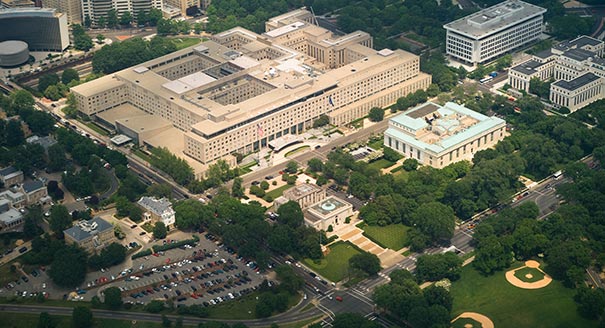
Year after year for more than a half-century, we’ve come together on the first Friday in May. We’ve come together during Republican and Democratic administrations, during times of war and peace, and during moments of promise and moments of reckoning. We’ve come together to mourn after gut-wrenching loss and hardship and heartache. We’ve come together to celebrate diplomatic triumphs, as well as those less heralded examples of good professionals wading through risk and difficulty to make our imperfect world a little less threatening.
We’ve come together to honor those who came before us, and to remind ourselves of our obligation to new generations of diplomats. And we’ve come together at moments of growth and revitalization, as well as moments of austerity and bureaucratic consolidation, and even amputation.
We come together this year at an undeniably difficult moment—a time of domestic upheaval and global disorder, and a time of deep doubt about the value and purpose of American diplomacy. After more than 15 years of war in Iraq and Afghanistan, and almost a decade removed from the Great Recession, Americans feel a profound sense of insecurity about their future and fatigue about engagement with the world. Baffled and battered by the dislocating forces of globalization, the sense of identity that has long animated us as a nation is fraying. Fed a narrative of carnage and chaos at home, and of decline and danger abroad, Americans wonder whether we can—and whether we even should—continue to play a leadership role on an endlessly complicated international landscape. …
I am still close enough to my time in government to understand vividly what Secretary of State Rex Tillerson and everyone in this department wake up to every morning—challenges that are relentless and choices that have to be made under unforgiving time pressures and with inevitably incomplete information. I have immense respect for what they must cope with, and for the professionalism and decency that they bring to the task. I miss the people I served with, and the unique fulfillment of public service; but I must admit that my nostalgia is under control for yet another meeting in the White House Situation Room to debate the tortured policy possibilities of North Korea or Syria, or to worry about the next big global health or humanitarian crisis. Ours is a hard business.
But I worry, really worry, that we’re about to make diplomacy a lot harder. Thirty percent budget cuts, substantial reductions in both the Foreign and Civil Services, disruptive fantasies about deep states and the particularly pernicious practice of questioning the loyalty of individual career public servants because they worked in the previous administration are troubling phenomena. And I fear they reflect dismissiveness about the role of diplomacy and diplomats that is not only regrettable, but deeply counterproductive.
What we’re risking—despite the fine and capable people at the top of this administration’s national security team and the truly heroic efforts of our career colleagues under extremely tough circumstances—is the hollowing out of the ideas, initiative and institutions on which American leadership and international order rest.
The idea of America has been at the heart of our success in the world for 70 years. For all our imperfections, we have embodied political and economic openness, respect for human dignity and a sense of possibility. The power of our example has mattered more than the power of our preaching, and enlightened self-interest has driven our strategy.
But what we see bubbling to the surface at this moment of uncertainty is far more focus on “self” than “enlightened”—a nasty brew of mercantilism, unilateralism and unreconstructed nationalism. At a moment when international order is under severe strain, power is fragmenting and great-power rivalry has returned, the values and purpose at the core of the American idea matter more than ever.
American initiative—the willingness and ability to mobilize others to deal with shared problems—is another crucial asset at risk. From regional challenges to wider global dilemmas such as climate change, U.S. leadership has been critical to the unprecedented peace and prosperity of the post-World War II era. Of course … we got a lot wrong and made our share of serious mistakes. And, of course, we need to make significant adjustments in a world in which the United States is no longer dominant but still pre-eminent.
But too many people in today’s Washington seem to see the United States as a hostage to the very international order it created. Alliances are millstones, multilateral arrangements such as the Trans-Pacific Partnership and NAFTA are constraints rather than opportunities, and the United Nations and other international bodies are distractions, if not irrelevant. We’re Gulliver, in their view, and it’s time to break the bonds of the Lilliputians.
That is more than just an attitude, and more than just a new articulation of a recurring isolationist instinct in U.S. politics. It’s already proving corrosive, by creating a trade vacuum in Asia that China is eagerly filling; threatening to squander hard-won gains in our own hemisphere and Africa; and unnerving European allies by indulging populist nationalists and encouraging more Brexits.
At the same time, we risk the decay of institutions that translate American ideas and initiative into action. By continuing to rely so heavily on hard power, we continue to reinforce a calamitous pattern in which we have often inverted the roles of force and diplomacy. Force becomes our tool of first resort, with diplomacy its under-resourced enabler, rather than diplomacy enabled by the vast potential of the American military, as well as our rich array of economic, development and soft-power capabilities.
Of course we have to substantially reform domestic and international agencies. No one is more familiar with—or been more frustrated by—the imperfections and inefficiencies of this department than we are. Substantial streamlining is long overdue. And it’s about time that we took effective aim at the ballooning of seventh-floor staff, the endless layering of bureaucracy, the bottomless clearance pages, and the proliferation of special envoys and offices. And I haven’t even mentioned travel orders and other byzantine administrative processes, a form of self-flagellation that we are especially adept at in this department.
But reform ought to be motivated by an interest in strengthening American diplomacy, not sidelining it. Long delays in filling bureau and embassy leadership posts eviscerate morale and undermine our capacity to promote our interests, defend our policies and ensure the safety and security of American citizens. And draconian reductions in assistance programs are penny-wise but pound-foolish.
Our foreign aid barely makes a dent in the federal budget, but gutting it guarantees the kind of state failures and conflicts that often drag in the U.S. military, at far greater cost in blood and treasure. That is not just the self-serving view of the diplomatic community, but also of the men and women in uniform and throughout our intelligence agencies who have seen firsthand the indispensable role the U.S. Agency for International Development and other development agencies play in preventing and mitigating crisis and conflict.
We need to guard against those illusions. We shouldn’t want to find ourselves a few years down the road with hollow institutions. Now is not the time to hunker down and wait for the world’s troubles to pass. We can either try to shape an international landscape that addresses the ills upending societies and regions and protects our values and interests, or watch as it is shaped for us by other powers and other players with starkly different visions for the century unfolding before us.
Now more than ever, we need American diplomacy to open markets, expand exports overseas and ensure a level and high-quality playing field for American companies. We need to enhance—not roll back—cooperation to combat terrorists, reduce nuclear weapons and prevent their proliferation, and ease the economic troubles and unresolved conflicts on which violent extremists feed.
Now more than ever, we need American diplomacy to support the rule of law and advance a wider agenda of better global health, better opportunities for women, better prospects for food and water security, and better possibilities for dealing effectively with climate and energy challenges.
Now more than ever, we need American diplomacy to tend partnerships, alliances and coalitions. They are what set us apart from lonelier powers like China and Russia. We need to help write new rules of the road to maximize the promise of technological innovation while mitigating its risks. And we need to pursue tough-minded engagement with our adversaries—a mark of American strength and confidence, not weakness.
Now more than ever, we need to recruit and invest in the talent and patriotism of young Americans eager for the opportunity to serve their country as diplomats and development professionals. Turning them away today will prove to be a devastating self-inflicted wound from which it will take decades to recover.
And now more than ever, all of us have a role to play in making the case for American diplomacy—not just to admire the problem or carp from the sidelines, or worse yet, as I already find myself doing, boring those still laboring in the department with stories of how things worked when giants walked the earth.
We need to be a source of ideas and initiative and encouragement, and sometimes honest concerns, as well as active and committed advocates for the profession and the department to which we and our families dedicated so much of our lives.
I am often reminded these days of Winston Churchill’s saying that the thing he liked best about Americans was that they always did the right thing in the end—they just liked to exhaust all the alternatives first. While I worry a lot that we will spend inordinate amounts of time over the next few years exhausting all the alternatives, I remain hopeful that we can still get this right, and still ensure the priority for American diplomacy that our country needs, that this moment in history requires. And I will always remain deeply proud to have shared with all of you the remarkable experience of being an American diplomat.
This piece was originally published by the Foreign Service Journal.

Former Carnegie President (2015-2021)
A former career diplomat, William J. Burns served as director of the CIA, deputy secretary of State, and ambassador to Russia and Jordan. Burns was also president of the Carnegie Endowment for International Peace from 2015 to 2021.
Recent Work
William J. Burns, Michael Chertoff, Catherine Ashton, …
William J. Burns
Carnegie does not take institutional positions on public policy issues; the views represented herein are those of the author(s) and do not necessarily reflect the views of Carnegie, its staff, or its trustees.

The EU can impose sanctions but struggles to enforce them without the United States. With Washington increasingly disinterested in backing European interests, the bloc must now fend for itself.


Nicu Popescu, Tiago Antunes

Russia is testing the waters of NATO’s mutual defense clause. What do strikes in Romanian territorial waters mean for the alliance’s posture toward Moscow?

Dimitar Bechev

With its public finances in shambles, the far right polling at 35 percent ahead of the 2027 presidential election, and a growing protest movement, is France’s crisis a threat to the EU’s geopolitical awakening?

Rym Momtaz, ed.

Ahead of a tough winter for Ukraine, Donald Trump’s swing back toward Russia bodes ill. But instead of panicking, Kyiv’s European allies are focusing on action.
Rym Momtaz

Funding Ukraine remains a priority for European leaders. As Russia’s war of aggression heads into another winter, two feasible options to mobilize support for Kyiv should be fast-tracked.


Vladyslav Rashkovan, Gregory P. Wilson