

In The Media
Jessica Tuchman Mathews
{
  "authors": [
    "Jessica Tuchman Mathews"
  ],
  "type": "legacyinthemedia",
  "centerAffiliationAll": "",
  "centers": [
    "Carnegie Endowment for International Peace"
  ],
  "collections": [],
  "englishNewsletterAll": "",
  "nonEnglishNewsletterAll": "",
  "primaryCenter": "Carnegie Endowment for International Peace",
  "programAffiliation": "",
  "programs": [],
  "projects": [],
  "regions": [
    "North America",
    "United States"
  ],
  "topics": [
    "Political Reform",
    "Democracy"
  ]
}
Source: Getty
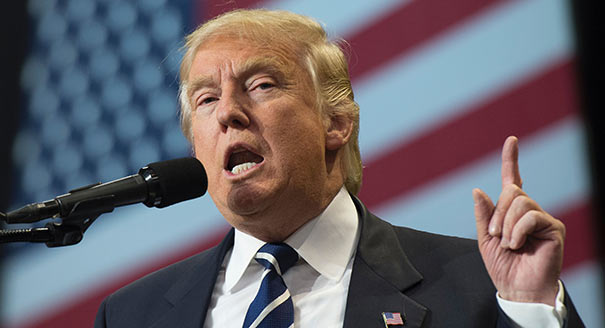
The swift exodus of chief executives that collapsed the White House business councils reveals that U.S. politics works better in the private sector than it does in the public one.
Source: Washington Post
The swift exodus of chief executives that collapsed the White House business councils last week reveals a strange and disquieting fact about American society: Our politics works better in the private sector than it does in the public one.
With the exception of Kenneth Frazier of Merck, who cited “personal conscience” for his quick decision to step down after President Trump’s response to the neo-Nazi protests and violence in Charlottesville, these resignations did not follow moral conviction. The CEOs were reacting to pressure from constituents — their customers.
These men and women live in a separate universe from most Americans. They fly in private planes, live in gated communities and travel the world to tend global markets. It has been years, maybe decades, since any of them has had to spare a thought for the family budget — other than where to invest the annual surplus. They don’t worry about the mortgage or medical care or retirement.
Yet as distant as they are from how most Americans live, the leaders of even the largest enterprises tremble in the face of public opinion. Once a trend has taken hold, they know they have to act — quickly.
In stark contrast, the elected representatives whose job it is to reflect their constituents’ thoughts and experiences, to know the price of a carton of milk and how to get a college loan, spent days in stunning silence. With a handful of exceptions, Republican condemnations of Trump’s response Charlottesville were tweeted in the distant third person or the impersonal declarative (House Speaker Paul D. Ryan: “We must be clear. White supremacy is repulsive.”). Trump’s name was not mentioned. Nor was a response offered.
By last Thursday, the congressional party was dug into a deep communal foxhole. CNN announced that it had invited all 52 Republican senators to appear on its morning show in a failed effort to find one who would do so. In this case, it is Republicans who are frozen, but if the facts were reversed, there is little doubt that Democrats would be doing the same.
The firms that raced to distance themselves from the president included Campbell Soup and Walmart, which are obviously vulnerable to brand damage or even a consumer boycott. But even hedge funds that cater to the uber-rich and companies that sell mostly to other businesses felt a greater need to respond to the public revulsion than did members of Congress. Because elected representatives face the ultimate public test of reelection, this seems paradoxical.
But election to Congress is now tantamount to a lifetime appointment. Last year, 97 percent of incumbent representatives and 93 percent of senators were reelected. These numbers (slightly above recent averages) include losses to primary challengers.
At some level, Americans seem to have absorbed this. A group of New York-based advocacy groups collected 400,000 signatures asking the heads of JPMorgan Chase and Blackstone to resign from one of Trump’s councils. This political effort was presumably directed where the organizers felt it would have an impact: not to their congressman but to a corporate executive. Why?
There is some evidence that people have given up on the federal government. A poll has asked the same question every few years since 1958: “Do you trust the government in Washington to do what is right, all or most of the time?” Until the mid-1960s, 75 percent of Americans said yes, but the trust percentage fell below half in about 1972. So, although Americans have voted for drastic changes in leadership and ideology over the ensuing decades, anyone younger than 45 has lived their entire life in a country where the majority does not expect their government to do what they think is right.
Before you despair, note it wasn’t that long ago that Washington did function. In four years of Lyndon Johnson’s presidency, Congress passed nearly 200 major laws, including three revolutionary civil rights laws that transformed the nation — the Civil Rights Act, the Voting Rights Act and the Fair Housing Act — plus Medicare and Medicaid. Two Cabinet agencies,food stamps, Head Start and 35 national parks and protected areas were created. The essential Freedom of Information Act was passed and a great deal more from urban mass transit to international monetary reform.
Much has changed since then, some of which we cannot control — especially globalization and job-destroying technological advances. But most of what has produced glaring inequality, an underperforming, overly costly health-care system, crumbling infrastructure and rising deficits is the result of conscious policy choices, and to practices, from gerrymandering to campaign finance rules, that have produced an immovable, unresponsive and unproductive Congress.
Threats from abroad quickly capture national attention. But for most people, such as myself, who are professionally concerned with national security, the greater anxiety these days is the long-term threat from domestic gridlock and the consequent loss of self-confidence that underlies a successful foreign policy. Quite apart from Trumpian chaos, this is a system in need of basic repair.
This article was originally published in the Washington Post.

Distinguished Fellow
Mathews is a distinguished fellow at the Carnegie Endowment for International Peace. She served as Carnegie’s president for 18 years.
Recent Work
Jessica Tuchman Mathews
Jessica Tuchman Mathews
Carnegie does not take institutional positions on public policy issues; the views represented herein are those of the author(s) and do not necessarily reflect the views of Carnegie, its staff, or its trustees.

Ahead of a tough winter for Ukraine, Donald Trump’s swing back toward Russia bodes ill. But instead of panicking, Kyiv’s European allies are focusing on action.

Rym Momtaz

While the EU and European governments are embracing the much-lauded middle-power moment, this entails three difficult conundrums.

Richard Youngs

Europe is facing rising populism internally as well as external pressures from Russia, China, Turkey, and the United States.

Dimitar Bechev

A notable degree of participative democracy has firmly arrived in Europe. But to have more far-reaching impact, democratic deliberation needs to move into a radically new phase.
Richard Youngs

European NATO countries are wrestling with the possibility of U.S. disengagement from the alliance. With the continent’s security increasingly uncertain, governments must restore the credibility of their collective defense.



Hans-Dieter Lucas, Adam Thomson, Pierre Vimont