

Report
- +8
Salman Ahmed, Wendy Cutler, Rozlyn C. Engel, …
{
  "authors": [
    "Christopher Smart"
  ],
  "type": "other",
  "centerAffiliationAll": "dc",
  "centers": [
    "Carnegie Endowment for International Peace"
  ],
  "collections": [],
  "englishNewsletterAll": "americanStatecraft",
  "nonEnglishNewsletterAll": "",
  "primaryCenter": "Carnegie Endowment for International Peace",
  "programAffiliation": "ASP",
  "programs": [
    "American Statecraft"
  ],
  "projects": [],
  "regions": [
    "Western Europe",
    "Germany"
  ],
  "topics": [
    "Economy",
    "Trade",
    "Foreign Policy"
  ]
}
Source: Getty
German officials lack a shared intellectual framework with U.S. and other European officials around either the role of fiscal policy in a crisis or the malign effect of persistent economic imbalances.
If all politics is local, then all economics is to be found in first-year textbooks. The combined wisdom of Tip O’Neill and Paul Samuelson actually captures most of what can be said about the political economy of any country.1 It certainly describes much of the German response to Europe’s financial crisis and the frustration of US and other European officials who were urging a more robust response as the postwar project teetered on collapse. There are also continuing consequences today as the US finds itself buffeted by new political impulses and old economic ideas.
It is perhaps unfair – in retrospect and from afar – to criticise the crisis response of a democratically-elected government for excessive sensitivity to the preferences of its voters. Sending taxpayer money to a foreign country with incompetent or corrupt leaders is not a vote winner anywhere, even if Chancellor Merkel and her government ultimately made the case for their vision of European solidarity and conditional German financial commitments. Nevertheless, it remains a great puzzle that German officials and voters alike remain wedded to idiosyncratic macroeconomic theory that reinforced their reluctance to lead. These ideas remain at the heart of a debate around the future of the euro and how best to strike the balance between solidarity and responsibility within the common currency.
Above all, there is a barely concealed German supposition that debts and imbalances are prima facie evidence of political virtue and vice, rather than complex aggregates of economic policies and cycles. Germany’s success, according to this logic, depended upon paying down debt and boosting exports which complicated any discussion of shared responsibility for boosting demand within the Eurozone. It all but precluded a broader conversation about the role of German domestic demand in redressing global imbalances.
US officials, who were just recovering from the turmoil around the 2008 collapse of Lehman Brothers, felt confident that a failure of confidence in the euro’s capacity to respond required a generous and determined reaction from monetary and fiscal authorities. They were equally adamant that the global recovery would not be sustainable if it were driven entirely by the indebted American consumer. “Strong, sustainable and balanced growth” became the mantra of nearly every economic communique with the word “balanced” intended primarily for Beijing and Berlin, where the current account balances were significant. These differences are of more than historical interest. With the Trump Administration now fashioning an international policy that draws on protectionist politics and mercantilist economics, the conversation seems headed for a new and stormier phase.
This chapter was originally published in Ordoliberalism: A German Oddity?, released by VoxEU.
1 “All politics is local” is often attributed to Thomas P. (Tip) O’Neill, the Speaker of the US House of Representatives from 1977 to 1987. Nobel laureate Paul Samuelson distilled the power of basic shared economic ideas elegantly: “I don’t care who writes the nation’s laws – or crafts its advanced treatises – as long as I can write its economics textbooks.”
Former Nonresident Fellow, Geoeconomics and Strategy Program
Christopher Smart was a nonresident fellow at the Carnegie Endowment for International Peace, where he focuses on the interaction of global financial markets and international economic policy.
Recent Work
Salman Ahmed, Wendy Cutler, Rozlyn C. Engel, …
Salman Ahmed, Allison Gelman, Tarik Abdel-Monem, …
Carnegie does not take institutional positions on public policy issues; the views represented herein are those of the author(s) and do not necessarily reflect the views of Carnegie, its staff, or its trustees.
Closer EU-UK ties could help address urgent European concerns. But is the EU ready for rapprochement with the United Kingdom?

Rym Momtaz, ed.
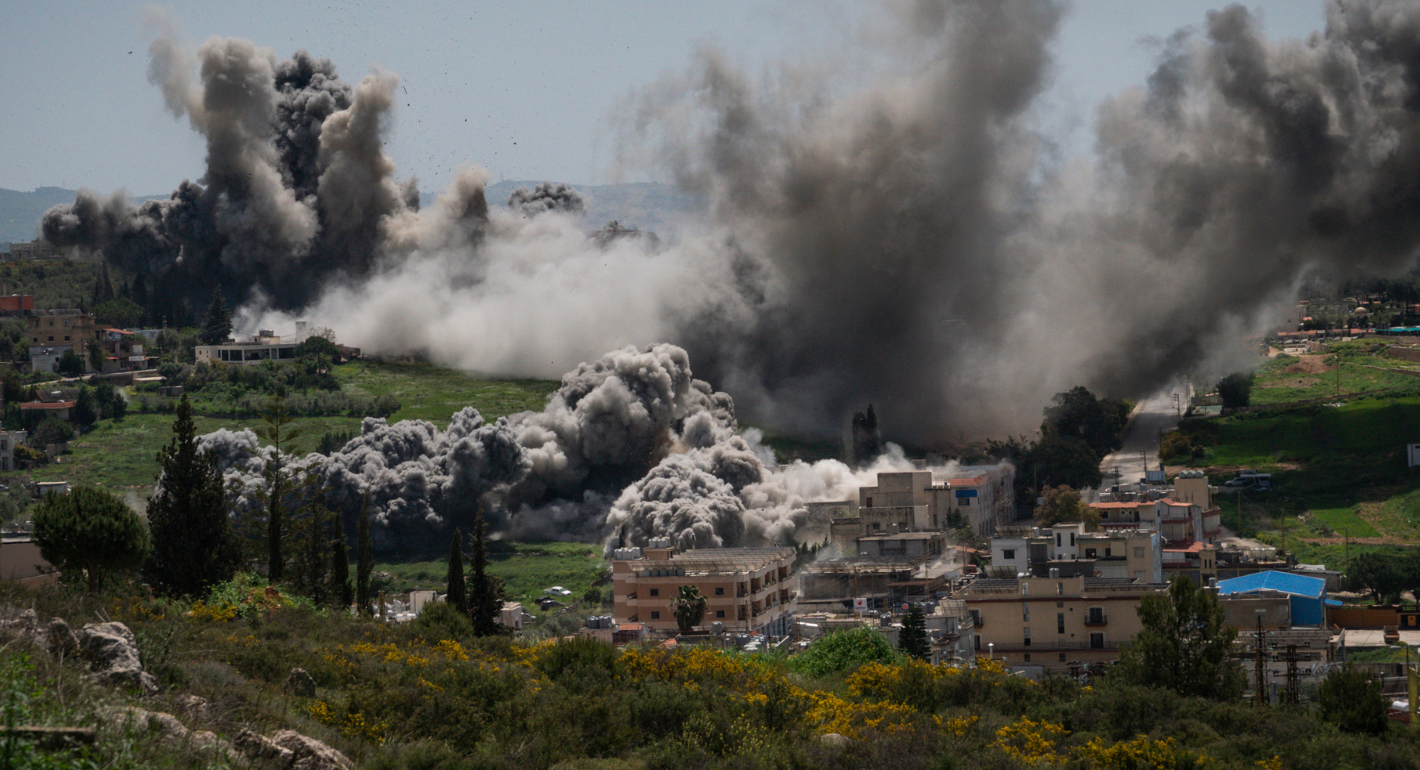
Europe has been standing by while its Southern neighborhood is being redrawn by force. To establish a path to peace between Israel and Lebanon, it’s time for Europeans to get involved with hard power.
Rym Momtaz

In Ukraine, Gaza, and Iran, AI warfare has come to dominate, with barely any oversight or accountability. Europe must lead the charge on the responsible use of new military technologies.

Raluca Csernatoni
Montenegro and Albania are frontrunners for EU enlargement in the Western Balkans, but they can’t just sit back and wait. To meet their 2030 accession ambitions, they must make a strong positive case.


Dimitar Bechev, Iliriana Gjoni
Donald Trump has repeatedly bashed NATO and European allies, threatening to annex Canada and Greenland and deploring their lack of enthusiasm for his war of choice in Iran. Is this latest round of abuse the final straw?
Rym Momtaz, ed.