

Report
- +8
Salman Ahmed, Wendy Cutler, Rozlyn C. Engel, …
{
  "authors": [
    "Christopher Smart"
  ],
  "type": "legacyinthemedia",
  "centerAffiliationAll": "dc",
  "centers": [
    "Carnegie Endowment for International Peace"
  ],
  "collections": [],
  "englishNewsletterAll": "americanStatecraft",
  "nonEnglishNewsletterAll": "",
  "primaryCenter": "Carnegie Endowment for International Peace",
  "programAffiliation": "ASP",
  "programs": [
    "American Statecraft"
  ],
  "projects": [],
  "regions": [
    "China",
    "Western Europe"
  ],
  "topics": [
    "Economy",
    "Trade"
  ]
}
Source: Getty
Chinese authorities are now farther than ever from offering an alternative currency the world can trust. Those with longer-term doubts about the dollar will likely give Europe a second look.
Source: Medium
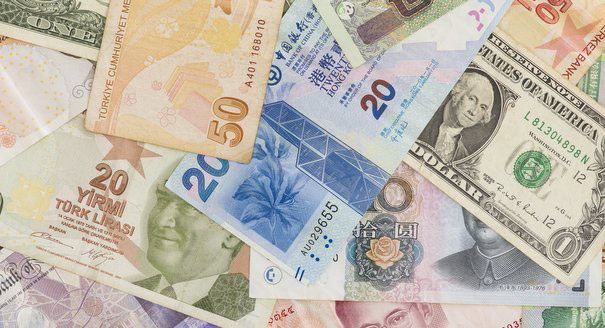
Will China’s currency topple the dollar? The real question this week is whether it will ever outshine the euro.
While the dollar’s lead remains formidable, we are likely headed for a world of more than one safe-haven currency as other economies grow and investors begin to hedge their bets against what they see as protracted dysfunction in Washington. This need not be disastrous for the United States as long as it learns to act more like a managing partner of the emerging configuration than a selfish bully.
In the meantime, for all their efforts and ambition, Chinese authorities are now farther than ever from offering an alternative currency the world can trust. The announcement that President Xi Jinping may extend his term indefinitely underscored the legal and political murkiness that is 21st century China. When markets rumble, it will be a long time before global investors choose to stash their retirement savings in a Chinese bank.
More likely than not, in fact, the ones who are beginning to have longer-term doubts about the dollar will now give Europe a second look.
Yes, the whole European project nearly fell apart over the Greek debt crisis and then again over waves of unwelcome refugees. Yes, China’s 19th Party Congress revealed a country with energy, ambition and purpose.
With a determined push from Beijing, usage is expanding in trade and finance, even if it still represents less than 2 percent of payments. Germany has now included Chinese currency in sovereign reserves, but it remains a long climb from its current level of 1 percent of the world’s $6.9 trillion total. The dollar represents two thirds, while the euro tops 20 percent.
Besides, a real safe haven must offer deep and liquid bond markets that absorbs large international flows when investors are running scared. This requires more than opening up the capital account and liberalizing the exchange rate. It involves reliable market infrastructure, transparency around corporate borrowers, independent regulators and trustworthy courts.
These were not prominent on the Chinese Communist Party program, but they are both longstanding traditions in most European states and an abiding focus of current euro area regulators.
Besides, while Europe’s handling of its financial crisis has been operatic, the institutions that protect and oversee the region’s finances have emerged stronger. There is now a plan in place for lending against reforms to euro countries in trouble. And while Greece’s agony continues, other borrowers from Ireland to Portugal to Spain are back on their feet.
European fiscal policy is still too tight and inflexible, but this may start to compare favorably to the U.S. where tax reform and a budget deal have jettisoned any semblance of deficit discipline. While the Federal Reserve is now well on a path to monetary normalization, the European Central Bank is not far behind.
But what of the travails of Angela Merkel? What about the impending Italian elections?
Politics will always be messier in Europe because there will always be an important election looming. Still, for all the twists, investors usually have a better sense of potential outcomes than they do not in China. Germany’s new government may be less coherent, but the extremists have been held in check. The next Italian government may be more skeptical about the pace of European integration, but radical reorientation is difficult and, therefore, unlikely.
In fact, Europe’s coherence on major international issues compares favorably with the United States these days. It speaks with a single voice in the Brexit negotiations, using its leverage to reinforce the rules that will bind those members who remain. European trade negotiators have secured a major trade agreement with Japan and are working on deals that will boost demand for euros globally. Europe has also been setting the pace, for better and worse, on the regulation of data flows that will be crucial to the global economy with the rollout of its General Data Protection Regulation in May.
Of course, there is more to be done. A Brexit deal must actually land. Europe will not benefit from a wounded Britain and the euro will suffer if it cannot tap freely into London’s capital markets. The euro area must also push ahead with its ambitious agenda for banking and capital markets union to release otherwise trapped pools of liquidity. Also, as Greece completes its bailout this summer, Europe must grant debt relief to speed its return to sustainable growth.
Still as questions mount around the U.S. commitment to shaping a fair and transparent global system and China’s alternative recedes ever further into the future, investors could do much worse than the beleaguered euro.
Former Nonresident Fellow, Geoeconomics and Strategy Program
Christopher Smart was a nonresident fellow at the Carnegie Endowment for International Peace, where he focuses on the interaction of global financial markets and international economic policy.
Recent Work

Salman Ahmed, Wendy Cutler, Rozlyn C. Engel, …
Salman Ahmed, Allison Gelman, Tarik Abdel-Monem, …
Carnegie does not take institutional positions on public policy issues; the views represented herein are those of the author(s) and do not necessarily reflect the views of Carnegie, its staff, or its trustees.

While the EU and European governments are embracing the much-lauded middle-power moment, this entails three difficult conundrums.

Richard Youngs

Europe is facing rising populism internally as well as external pressures from Russia, China, Turkey, and the United States.

Dimitar Bechev

A notable degree of participative democracy has firmly arrived in Europe. But to have more far-reaching impact, democratic deliberation needs to move into a radically new phase.
Richard Youngs

Much has been said of the changes Brussels is trying to make to the EU enlargement process. Here’s why gradual integration might—or might not—be the answer.
Dimitar Bechev

The European Commissioner for Trade is headed to China. But after President Xi’s bridge-building visit to Washington, can a more isolated EU overcome Beijing’s stranglehold on critical raw materials? Who will blink first?

Rym Momtaz, ed.