

Commentary
Matthew T. Page, Feyi Fawehinmi
{
  "authors": [
    "Matthew T. Page"
  ],
  "type": "other",
  "centerAffiliationAll": "dc",
  "centers": [
    "Carnegie Endowment for International Peace"
  ],
  "collections": [
    "Violence and Conflict"
  ],
  "englishNewsletterAll": "democracy",
  "nonEnglishNewsletterAll": "",
  "primaryCenter": "Carnegie Endowment for International Peace",
  "programAffiliation": "DCG",
  "programs": [
    "Democracy, Conflict, and Governance"
  ],
  "projects": [],
  "regions": [
    "Southern, Eastern, and Western Africa",
    "East Asia",
    "China"
  ],
  "topics": [
    "Democracy",
    "Economy",
    "Trade",
    "Security"
  ]
}
Source: Getty
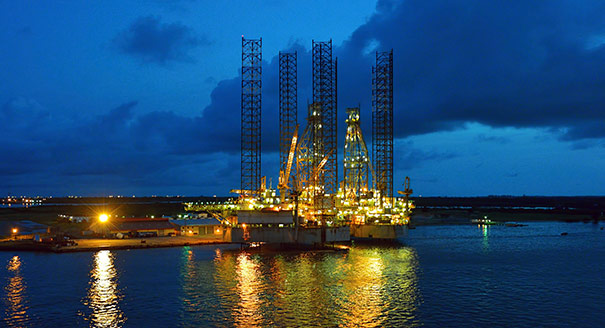
China’s strategic interests in Nigeria are deeply intertwined with the country’s complicated conflict landscape, and Chinese commercial activities have both constructive and potentially destabilizing effects on Nigeria’s peace and security.
Source: United States Institute of Peace
Like Washington, Beijing has an abiding strategic interest in promoting stability and security in Nigeria—the largest economy in Africa, a major oil and gas producer, and on track to become the world’s third most populous country by 2050. Yet from the Boko Haram insurgency in its northeast to farmer-herder clashes in its Middle Belt region and militancy in the oil-rich Niger Delta, insecurity undermines Nigeria’s socioeconomic development. This Special Report examines how China’s economic interests intersect with Nigeria’s complicated conflict landscape.
This report was originally published by the U.S. Institute of Peace.

Former Nonresident Scholar, Democracy, Conflict, and Governance Program
Matthew T. Page was a nonresident scholar at the Carnegie Endowment for International Peace.
Recent Work
Matthew T. Page, Feyi Fawehinmi
Matthew T. Page, Abdul H. Wando

Russia is testing the waters of NATO’s mutual defense clause. What do strikes in Romanian territorial waters mean for the alliance’s posture toward Moscow?

Dimitar Bechev

With its public finances in shambles, the far right polling at 35 percent ahead of the 2027 presidential election, and a growing protest movement, is France’s crisis a threat to the EU’s geopolitical awakening?

Rym Momtaz, ed.

While the EU and European governments are embracing the much-lauded middle-power moment, this entails three difficult conundrums.

Richard Youngs

Europe is facing rising populism internally as well as external pressures from Russia, China, Turkey, and the United States.
Dimitar Bechev

A notable degree of participative democracy has firmly arrived in Europe. But to have more far-reaching impact, democratic deliberation needs to move into a radically new phase.
Richard Youngs