

Article
C. Raja Mohan, Darshana M. Baruah
{
  "authors": [
    "C. Raja Mohan"
  ],
  "type": "legacyinthemedia",
  "centerAffiliationAll": "",
  "centers": [
    "Carnegie Endowment for International Peace",
    "Carnegie India"
  ],
  "collections": [],
  "englishNewsletterAll": "",
  "nonEnglishNewsletterAll": "",
  "primaryCenter": "Carnegie India",
  "programAffiliation": "",
  "programs": [],
  "projects": [],
  "regions": [
    "United States",
    "Middle East"
  ],
  "topics": [
    "Foreign Policy"
  ]
}
Source: Getty
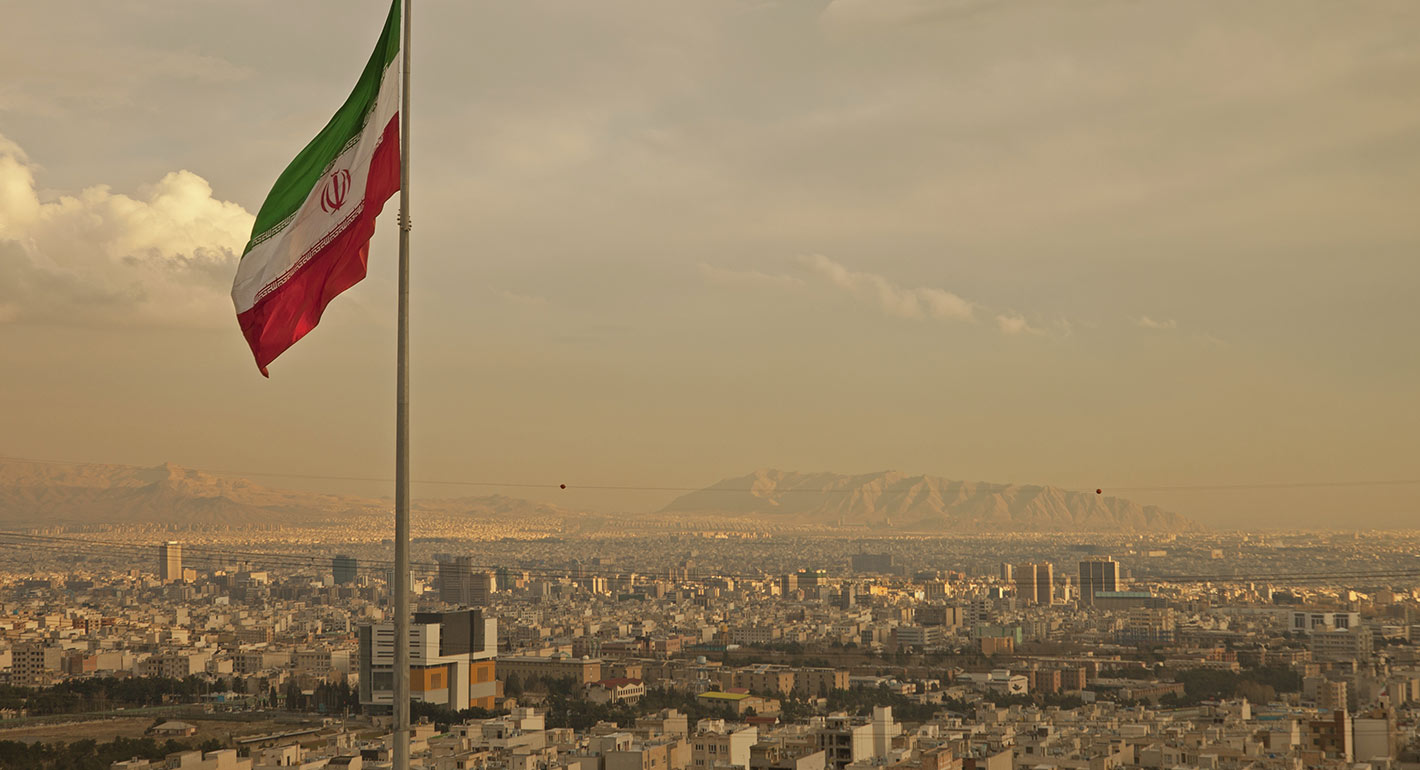
If a revolutionary Iran exports ideology and destabilizes its neighbors, others have no option but to push back, balance, or contain.
Source: Indian Express
Is the Islamic Republic of Iran a country or a cause? Many moons ago, Henry Kissinger, the guru of modern geopolitics, asked this basic question with characteristic strategic clarity. If Iran were a normal state operating on the basis of national interest, Kissinger explained, it should be possible to resolve differences through give and take. But if a revolutionary Iran exports ideology and destabilises its neighbours, others have no option but to push back, balance or contain.
For most Arab regimes, the answer to Kissinger’s question was never in doubt. For them, what Ayatollah Khomeini wrought during 1978-79 was a revolution and it posed an existential threat to their legitimacy and survival. It was not that the Arab governments misread the Iranian revolution. Once Ayotollah Khomeini hijacked and turned what was a broad-based democratic upsurge against the Shah of Iran that included everyone — from Communists to liberal democrats and the bazaaris to the traditional clergy — into an Islamist revolution, there was little room to misread its objectives.
Like Bolshevik Russia and Maoist China, Khomeini’s Iran framed its international objectives in expansive terms. It declared the intent to overthrow the extant regional order in the Middle East. It claimed to “out-Arab” the Arabs in confronting imperialism, Zionism and backing the Palestinian cause. Unlike the Bolsheviks and the Maoists, the Khomeinists framed their international objectives in religious terms. It was no surprise that Iran’s radical Islamism threatened the conservative Islamic regimes of the Arabian Peninusla. If the Iranian revolution was seen as over-turning the status quo, the Arabs wasted no time in pushing back.
They turned to Saddam Hussein, the strongman of Iraq and Iran’s neighbour in the Gulf. That, however, turned out to be a bad bet. Saddam, hired as the “Arab Gendarme” against the “Islamist hordes” of Iran, did engage in a prolonged war with Tehran through the 1980s that bled both the nations into a draw. But Saddam tried to recoup his losses by turning a predator. After he annexed Kuwait in 1990, the Gulf regimes looked to the US for redress. The US mounted a massive military operation to liberate Kuwait and put it back on the map in early 1991. It had some serious unintended consequences.
Osama bin Ladin, who worked with the Americans and the Saudis in promoting jihad in Afghanistan against the Soviet occupation in the 1980s, turned against them. Angered by the Saudi decision to host “infidel troops” on the holy Arabian peninsula, bin Ladin set up the al Qaeda to confront both America and the Arabian rulers friendly to it.
A decade later, al Qaeda attacked New York and Washington, on 9/11, which in turn brought Americans into Afghanistan. Rather than consolidating Afghanistan, Washington invaded Iraq in 2003 to overthrow Saddam Hussein. More unintended consequences. In the new Iraq, liberated from Saddam’s secular autocracy, Tehran gained huge influence, especially among the now empowered Shia majority.
Arabia, long ruled by Sunni regimes, now confronted the first Shia-dominated Arab state — Iraq. The Arabs began to worry about a new dimension of the Iranian threat —Tehran’s support to Shia minorities in other states, or the construction of the so-called Shia Crescent. The need to counter Iran’s “Shi’ite geopolitics” became a pressing preoccupation for the Arabs since the middle of the last decade.
Aware of the costs of a sectarian conflicts, the two sides often tried to find ways to reconcile. Iran’s President Mohammed Khatami sought to ease the conflict at the turn of the millennium. King Abdullah of Saudi Arabia too reached out to to Khatami’s successor, Mohammed Ahmandinejad. But the elected Iranian presidents, moderate or otherwise, do not have control over foreign and security policies. That is the preserve of the “Leader” — Ayatollah Khamenei, who seemed reluctant to compromise.
The Iran problem became even more challenging for Arabia, as the Arab Spring of 2011-12 unleashed new threats to the region’s stability. They were frightened by the resurgence of the Muslim Brotherhood in Egypt and the important support it won from Turkey and Qatar. On top of all this, came the rise of the extreme Sunni force, the Islamic State. Even as the the Sunni Arabs regimes felt squeezed from multiple forces in the region, the Obama administration concluded an agreement with Iran on limiting its nuclear programme.
While Washington proclaimed it as a “non-proliferation” agreement, for Arabs it was about ending Iran’s international isolation, boosting Iran’s economy by lifting sanctions, and tilting the balance ever more in favour of Iran. The unexpected election of Donald Trump provided an opportunity for the Gulf Arabs to successfully lobby Washington against the nuclear deal.
As weak states, the Gulf regimes have long relied on America for their security. Having seen America turn wild, the Gulf Arabs can no longer afford to put all their eggs in the American basket. While they hold on to the US, they are inviting other powers like France and Britain back into the Gulf. They are also boosting national military capabilities.
The Gulf Arabs deeply dislike what they see as the “pro-Iranian” policies of Russia and China in the Middle East. But as political realists in an unforgiving regional environment, Arabs are quite happy to explore common ground with Moscow and Beijing. But India simply confounds the Arabs. They are surprised by Delhi’s strange duality in the Gulf: Apolitical mercantilism when it comes to the Arabs and delusions of grand strategy in dealing with Iran. But that story is for another day.
This article was originally published in the Indian Express.
Former Nonresident Senior Fellow, Carnegie India
A leading analyst of India’s foreign policy, Mohan is also an expert on South Asian security, great-power relations in Asia, and arms control.
Recent Work

C. Raja Mohan, Darshana M. Baruah


Alexander Gabuev, Paul Haenle, C. Raja Mohan, …
Carnegie does not take institutional positions on public policy issues; the views represented herein are those of the author(s) and do not necessarily reflect the views of Carnegie, its staff, or its trustees.

As we close out another season of Strategic Europe, it is worth taking stock of the deep shifts underway.

Rym Momtaz

The hybrid warfare landscape is evolving rapidly, leaving policymakers without clear strategies. To better inform their work in addressing emerging challenges, governments must dig deeper into the underlying dynamics at play.


Raluca Csernatoni, Alicia Wanless
The EU had to compromise to adopt a twenty-first sanctions package against Russia, exposing growing cracks in the union’s resolve. Is this latest, weaker round worth it to keep pressure on Moscow?
Rym Momtaz, ed.
Trump is distracted and Ukraine wants Europe to step up. The continent’s leaders must find their voice and assert it in talks with Russia.

Alissa de Carbonnel
Mounting economic strain and battlefield losses will not necessarily make the Kremlin less dangerous. They could instead push Moscow toward a more aggressive hybrid campaign designed to test NATO’s Eastern flank, exploit allied hesitation, and fracture European resolve.

Maksym Beznosiuk