

Commentary
Peter Kellner
{
  "authors": [
    "Peter Kellner"
  ],
  "type": "legacyinthemedia",
  "centerAffiliationAll": "",
  "centers": [
    "Carnegie Endowment for International Peace",
    "Carnegie Europe"
  ],
  "collections": [
    "Brexit and UK Politics"
  ],
  "englishNewsletterAll": "",
  "nonEnglishNewsletterAll": "",
  "primaryCenter": "Carnegie Europe",
  "programAffiliation": "",
  "programs": [],
  "projects": [],
  "regions": [
    "Europe",
    "Western Europe",
    "United Kingdom"
  ],
  "topics": [
    "EU"
  ]
}
Source: Getty
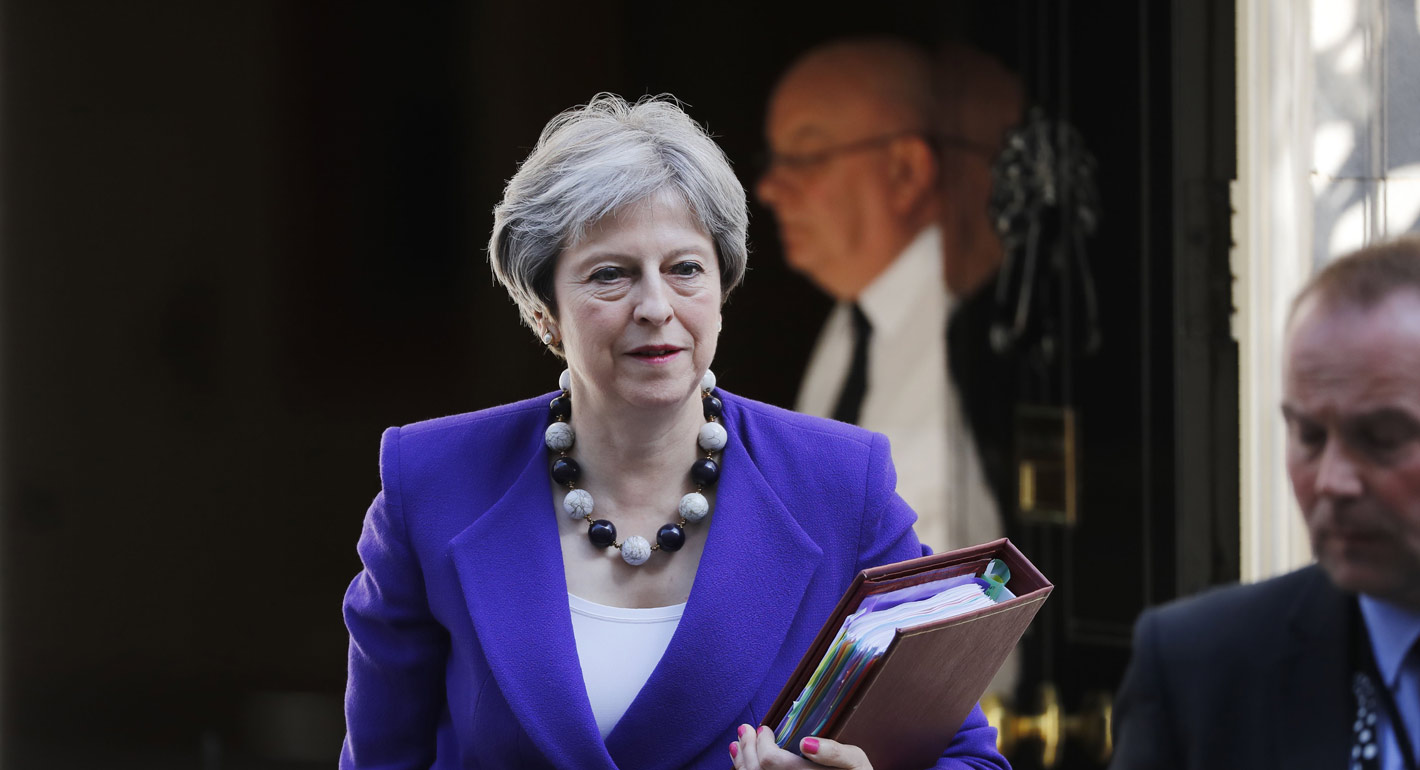
If the talks for the UK’s exit from the European Union fall apart, it could precipitate a major crisis for Britain’s government and Parliament.
Source: Axios
Wednesday’s summit of European leaders, which followed another meeting last month, failed to produce a breakthrough in the Brexit talks. If the negotiations fall apart, it could precipitate a major crisis for Britain’s government and Parliament.
The big picture: If the March 29, 2019, withdrawal date comes without an agreement on the day-to-day U.K.–EU relationship, MPs would urgently seek a way to resolve the crisis. All potential solutions are likely to involve a U.K. request to delay withdrawal, with a new referendum being the most likely outcome.
Delaying the withdrawal is allowed under Article 50 of the Lisbon Treaty. However, it would need the unanimous consent of the other 27 members of the EU. Beyond this commonality, there are various ways in which events could unfold:
The bottom line: A referendum would likely generate a majority vote to remain in the EU: The UK’s demographics are moving in a pro-EU direction, and some voters have changed their minds. Faced with the prospect of a no-deal Brexit and its economic harm, more voters may opt for the safety of the status quo. But, as in 2016, the outcome would be far from certain.

Former Nonresident Scholar, Carnegie Europe
Kellner was a nonresident scholar at Carnegie Europe, where his research focused on Brexit, populism, and electoral democracy.
Recent Work
Peter Kellner
Peter Kellner
Carnegie does not take institutional positions on public policy issues; the views represented herein are those of the author(s) and do not necessarily reflect the views of Carnegie, its staff, or its trustees.

The EU can impose sanctions but struggles to enforce them without the United States. With Washington increasingly disinterested in backing European interests, the bloc must now fend for itself.


Nicu Popescu, Tiago Antunes

Russia is testing the waters of NATO’s mutual defense clause. What do strikes in Romanian territorial waters mean for the alliance’s posture toward Moscow?

Dimitar Bechev

With its public finances in shambles, the far right polling at 35 percent ahead of the 2027 presidential election, and a growing protest movement, is France’s crisis a threat to the EU’s geopolitical awakening?

Rym Momtaz, ed.

Ahead of a tough winter for Ukraine, Donald Trump’s swing back toward Russia bodes ill. But instead of panicking, Kyiv’s European allies are focusing on action.
Rym Momtaz

Funding Ukraine remains a priority for European leaders. As Russia’s war of aggression heads into another winter, two feasible options to mobilize support for Kyiv should be fast-tracked.


Vladyslav Rashkovan, Gregory P. Wilson