

Other
- +18
James M. Acton, Saskia Brechenmacher, Cecily Brewer, …
{
  "authors": [
    "Tong Zhao"
  ],
  "type": "commentary",
  "centerAffiliationAll": "",
  "centers": [
    "Carnegie Endowment for International Peace",
    "Carnegie China"
  ],
  "collections": [
    "U.S.-China Relations",
    "China’s Foreign Relations",
    "Carnegie China Commentaries"
  ],
  "englishNewsletterAll": "",
  "nonEnglishNewsletterAll": "",
  "primaryCenter": "Carnegie China",
  "programAffiliation": "",
  "programs": [],
  "projects": [],
  "regions": [],
  "topics": [
    "Arms Control",
    "Security"
  ]
}
Source: Getty
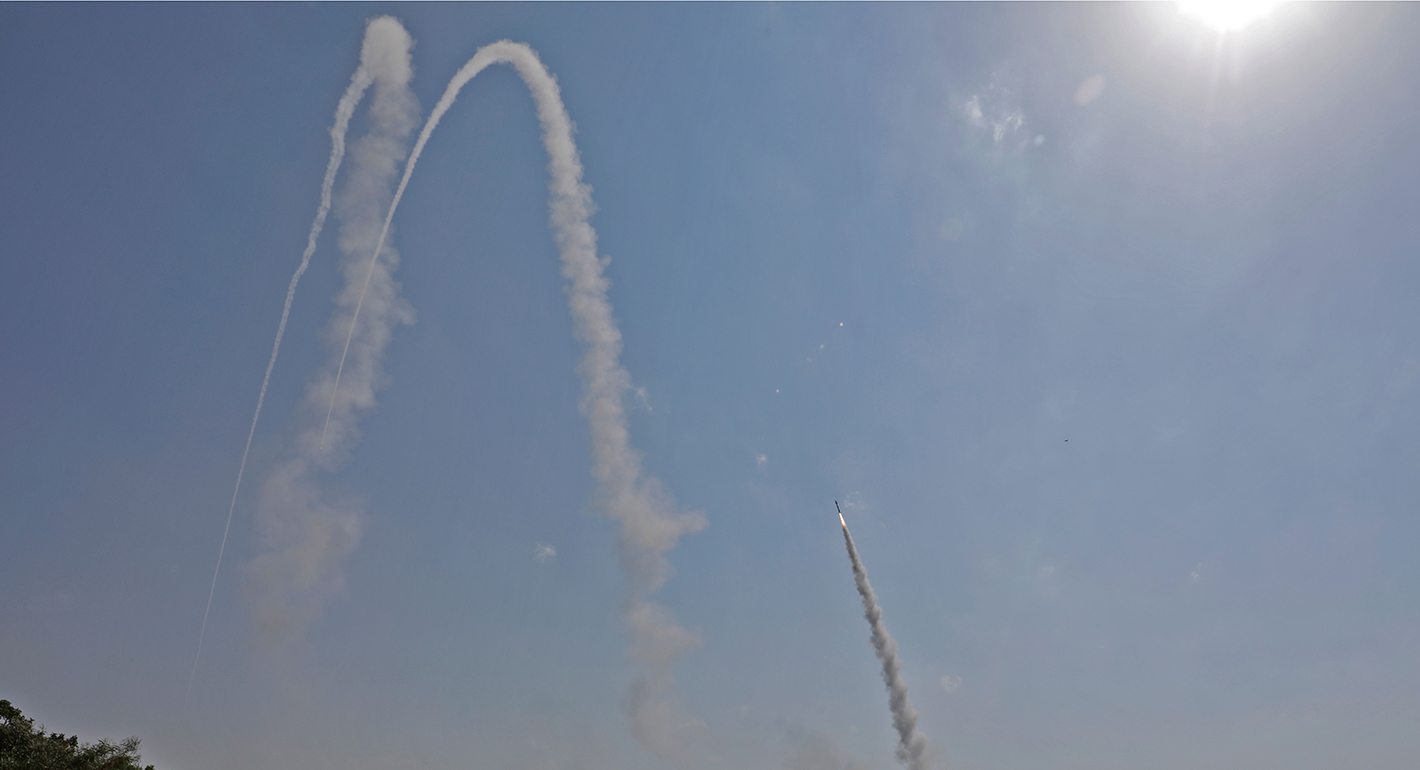
The U.S. withdrawal from the INF Treaty reflects Washington’s long-standing concern that the treaty constrained its ability to counter China’s fast-growing missile forces in the Asia Pacific.
The INF Treaty is dead, and U.S. officials are arguing that it’s not just about Russia’s treaty violations but about responding to a Chinese military build-up and Beijing’s growing influence. This outcome reflects the impulsive decisionmaking of U.S. President Donald Trump and the influence of U.S. National Security Adviser John Bolton, a noted opponent of arms control. But more importantly, it reflects a widespread and long-standing concern in Washington about how the treaty constrained the United States’ capacity to counter China’s fast-growing missile forces in the Asia Pacific. Now, for Chinese leaders, the message from the White House is loud and clear: the United States is fully committed to a strategic competition with China.
China’s security community now fears that the United States may quickly develop and then massively deploy medium- and intermediate-range land-based missiles around the region. Even if Washington were to arm such missiles with non-nuclear warheads, this could challenge Beijing’s military capabilities and significantly shift the current balance near China’s coast, making it harder for China to defend its sovereignty and territorial integrity. Chinese military strategists also believe that U.S. missiles would pose an unacceptable counterforce threat to the survivability of China’s own small nuclear arsenal, compelling Beijing to take radical measures to build up its own nuclear capabilities.
Because of the lack of adequate locations for ground-based U.S. intermediate-range missiles to be based in the Asia Pacific, Washington would need to work closely with its regional allies to find appropriate deployment sites. From Beijing’s perspective, this means that Washington has an inherent interest in exaggerating the so-called China threat in the region to make its allies afraid and more willing to host U.S. intermediate-range missiles in countries like Japan and South Korea. Beijing sees efforts to stir up tensions to encircle China with an anti-China alliance as both a means and an end of U.S. strategy.
Abandoning the INF Treaty also removes any obstacle for the United States to develop and deploy other cutting-edge ground-based medium- and intermediate-range weapon systems, such as missiles with trajectory shaping vehicles that are effective at neutralizing enemy defenses and are cheaper and less complicated to build than hypersonic weapons. U.S. Army officials have spoken for months about the need for long-range precision fires, even before any mention by U.S. officials of an INF withdrawal. It is highly likely that China would try to counter new U.S. capabilities by doubling down on its own investments in similar technologies and other countermeasures. A broader arms competition that spills over into additional technological domains other than traditional ballistic and cruise missiles seems hard to avoid.
The withdrawal is likely to heighten existing tensions in the region. China’s geography and deployed missile systems in East Asia give Chinese officials confidence that the country has the capacity to outcompete the United States in the long run. In this respect, a buildup of new U.S. missiles around China’s coast strengthens the Chinese view that the United States is pursuing a strategy of military encirclement against China, not merely looking out for U.S. interests in the region. Given the asymmetrically higher stakes involved, China cannot afford to back down.
U.S. officials who believe that they need new intermediate-range missiles to counter the China threat are creating a self-perpetuating cycle: China would react aggressively to perceived U.S. aggression in turn. Some U.S. analysts even advocate a competitive strategy that uses intermediate-range missiles to threaten China’s interior to force Beijing to divert significant military resources to defending its homeland. Chinese observers would assess such a policy as a deliberate offensive threat, one that would trigger escalating reactions from Beijing.
With the United States and China on the verge of a new major power competition, the most urgent task for officials and experts on both sides is to find ways to manage existing perceptions of rising tensions and to prevent them from causing a crisis. China sees its regional missiles as instruments to counter aggressive U.S. power projection toward its own coast and to deter foreign intervention in its defense of territorial integrity. For its part, the United States seeks to address the growing vulnerability of its forward-based military assets and alliances. In this sense, both countries are on the defensive. However, the two governments disagree about what constitutes each other’s legitimate security interests in the region and what means are justified to safeguard these interests in the future. This is a deeper political problem that can only be mitigated by developing more nuanced understandings of and empathy for each other’s thinking. Tougher military postures and more advanced military capabilities only contribute to negativity about each other’s intentions.
Neither country in any meaningful sense would win what could become an exceedingly expensive arms race. There is a need for new kinds of cooperative security measures to improve military stability and predictability as well as to dampen arms race dynamics and strategic competition. There is deep skepticism of arms control in China, which matches that of some actors in Washington. One view often heard in Beijing is that other big powers merely pay lip service to arms control and, in the case of the INF Treaty, both Russia and the United States have secretly prepared for a way out for a long time. Many Chinese strategists believe that arms control is a game of power politics rather than a useful tool to manage strategic competition. Such skepticism and cynicism toward arms control is a fundamental barrier to any effort to include China now in a multilateralized arms control treaty.
With arms control now out of vogue in Washington, it is incumbent upon U.S. and Chinese experts to find different means to build common understanding about how to mitigate risks from gaps in the security perceptions and the worst-case assumptions driving major power competition. Building such common understandings takes time and is hard. Perhaps in Washington, it will be seen as easier to build new intermediate-range missiles for Asia than to bridge these gaps with Beijing. But such a step would erode whatever foundation is left for cooperative security in East Asia.
In sum, the U.S. government needs to think about the costs and benefits of withdrawing from the INF Treaty and of deploying new missiles on China’s periphery. The next steps by Washington will significantly shape China’s threat perception and counterstrategy, both in and beyond its immediate region. It could either accelerate or slow the descent of the two countries into a comprehensive military competition.
For China, the era of relying on the U.S.-Russia bilateral arms control structure is at its end. Previous arms control arrangements have constrained the United States and Russia, while allowing China to build up its own defenses unconstrained by such rules. As China becomes a top-tier military power, its fast-growing force projection capabilities will meet with increasing international pressure and resistance. It is time for Beijing to think strategically about how to best defend its long-term security interests sustainably: is pursuing cooperative arms control better than simply accumulating military power? As a rising power aspiring to shape international norms and principles, China can no longer follow the lead of others. It has to set an example that it wishes others to follow.

Senior Fellow with the Nuclear Policy Program and Carnegie China
Tong Zhao is a senior fellow with the Nuclear Policy Program and Carnegie China, Carnegie’s East Asia-based research center on contemporary China. Formerly based in Beijing, he now conducts research in Washington on strategic security issues.
Recent Work



James M. Acton, Saskia Brechenmacher, Cecily Brewer, …
Tong Zhao
Carnegie does not take institutional positions on public policy issues; the views represented herein are those of the author(s) and do not necessarily reflect the views of Carnegie, its staff, or its trustees.

Are Germany’s economic, industrial, and political struggles becoming a liability for the EU’s ability to rise to the geopolitical moment?

Rym Momtaz, ed.

European states control several Overseas Countries and Territories around the world that carry strategic, economic, and environmental weight. As great powers challenge the rules-based order, defending them is a geopolitical imperative for Europe.

Marc Pierini

Mounting economic strain and battlefield losses will not necessarily make the Kremlin less dangerous. They could instead push Moscow toward a more aggressive hybrid campaign designed to test NATO’s Eastern flank, exploit allied hesitation, and fracture European resolve.

Maksym Beznosiuk

Over the past ten years, NATO has held almost as many summits as it did during the entirety of the Cold War. Are they still useful, or is it time to stop holding annual meetings?
Rym Momtaz, ed.
As Russia's war on Ukraine drags on, NATO is expanding its footprint in the Black Sea. Turkey, Romania, and Bulgaria are upgrading their fleets and deepening trilateral cooperation.

Dimitar Bechev