

Article
C. Raja Mohan, Darshana M. Baruah
{
  "authors": [
    "C. Raja Mohan"
  ],
  "type": "legacyinthemedia",
  "centerAffiliationAll": "",
  "centers": [
    "Carnegie Endowment for International Peace",
    "Carnegie India"
  ],
  "collections": [],
  "englishNewsletterAll": "",
  "nonEnglishNewsletterAll": "",
  "primaryCenter": "Carnegie India",
  "programAffiliation": "",
  "programs": [],
  "projects": [
    "Technology and Society"
  ],
  "regions": [
    "India"
  ],
  "topics": [
    "Foreign Policy",
    "Technology"
  ]
}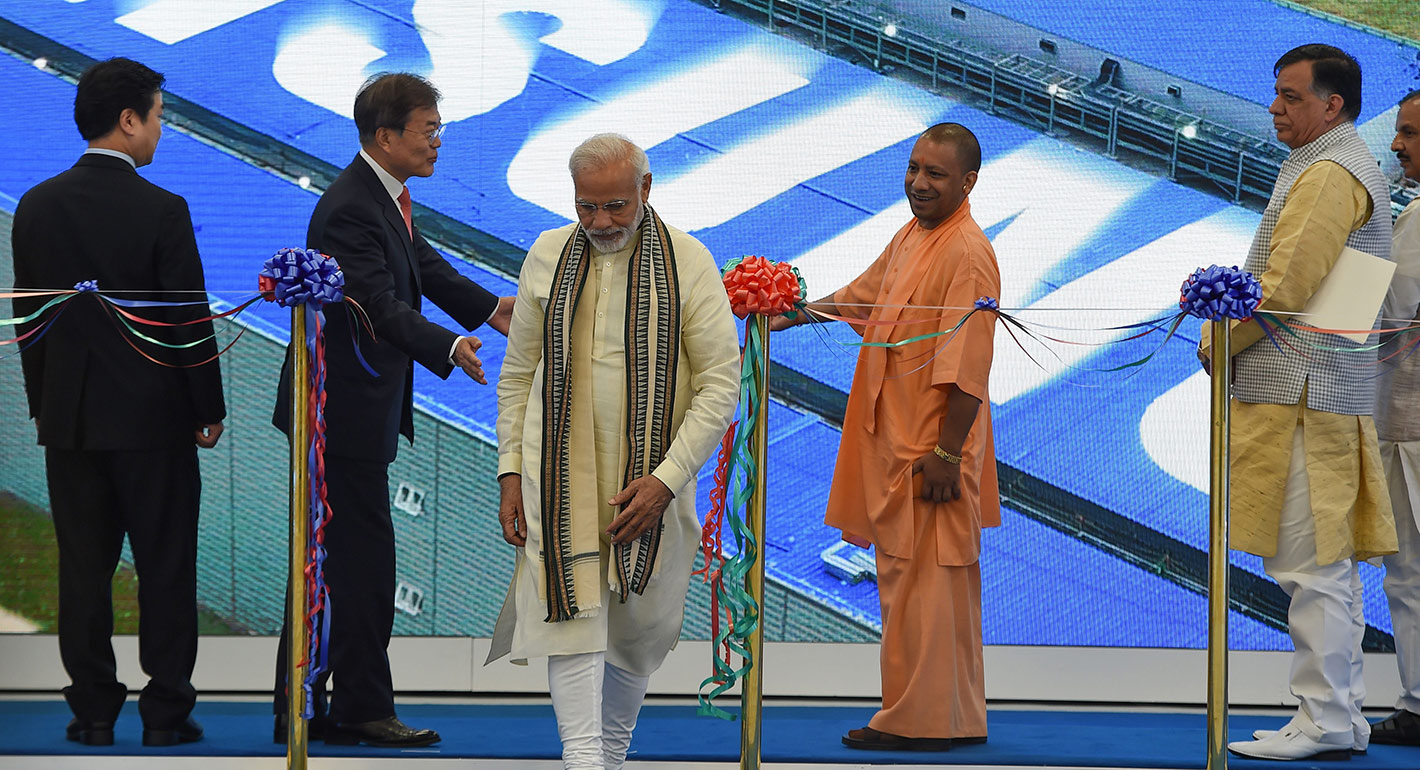
Source: Getty
As a far more sweeping technological revolution envelops the world today, governments are finding new ways to adapt.
Source: Indian Express
“My god, this is the end of diplomacy”. Those were the reported words from Lord Palmerston, the Prime Minister of Great Britain during 1855-65, when he received the first cable from overseas. The technological advances in mid-19th century certainly did not end diplomacy; but they forever changed the way it was conducted.
As a far more sweeping technological revolution envelops the world today, governments are finding new ways to adapt. Whether it is in using the social media to influence public opinion at home and abroad, conducting espionage on other states, securing one’s critical infrastructure against foreign interference, setting terms for cross-border data flows, governing the internet, countering terrorism, or preventing the militarisation of Artificial Intelligence, all major governments are reorganising their diplomatic mechanisms.
To enhance the effectiveness of its voice in the new domain, France appointed a full time “digital ambassador” in 2017. Denmark has set up offices of “TechPlomacy” in Silicon Valley, Copenhagen and Beijing. The French and Danish digital ambassadors don’t just deal with other governments. A major part of their mandate is to deal with technology giants like Google, Facebook and Alibaba and Huawei. India too needs to review and reorganise its technology diplomacy.
But first to the era of snail mail. The slow pace of long-distance communication until the 19th century meant that ambassadors acted on their own. Because they had no way to get frequent instructions from the sovereign, they were conferred with the title “ambassador extra-ordinary and plenipotentiary” and given the full authority to negotiate with the sovereigns to whom they were accredited.
The communications revolution ended the age of the aristocrat diplomat and turned the envoy and his staff into professional bureaucracies run from the governments at home. Beyond the process of diplomacy, the envoys had to deal with the substantive impact of new communications technologies on international affairs. In finding ways to facilitate wireless communication across territorial borders, major nations negotiated the establishment of the International Telegraph Union in 1865 that would later become the International Telecommunication Union. The ITU is one of the oldest international organisations.
As the impact of science and technology on the world expanded, diplomats had to go beyond their traditional focus on negotiating peace pacts and territorial settlements. Over the last century, the diplomatic mandate on science and technology has ranged from chemical weapons to climate change and naval arms limitation to nuclear proliferation.
Thanks to Prime Minister Jawaharlal Nehru’s deep commitment to the creation of national technical capabilities through international cooperation, technology diplomacy became an important priority for independent India’s foreign policy. Under Nehru, India’s positions on peaceful uses of atomic energy and limiting the dangers of a nuclear war were heard with respect through the 1950s and 1960s. But Delhi’s so-called “peaceful nuclear explosion” in 1974 resulted in an expanding regime of technology sanctions against India. Delhi’s economic de-globalisation in the 1970s made matters a lot worse.
As Delhi reconnected to the world and embarked on a high growth path in the 1990s, options opened up for ending the international technology blockade against India. Delhi’s decision to conduct nuclear tests in the summer of 1998 provided the occasion for a renegotiation of India’s relationship with the global nuclear order.
In two decades of productive diplomacy, built around the historic civil nuclear initiative with the US, Delhi has largely completed India’s integration with the international non-proliferation regime. From being a major target of technology sanctions, it is now part of the community that sets the rules for international transfers of sensitive technologies. The only exception is the membership of the Nuclear Suppliers Group that has been blocked by China.
The nuclear problem that Delhi had to address through the second half of the 20th century might pale into insignificance with the kind of challenges that the new technological revolution presents. The nuclear revolution affected only a small fraction of India’s economy and security. The current technological transformations, especially in the digital and genetic domains, will have far-reaching consequences for India’s economy, society, politics and international relations.
In the 20th century, India could afford to leave technology diplomacy to a handful of scientists and a small division in the Ministry of External Affairs. Today, successful technology diplomacy requires a wider foundation. Of special importance is the private sector, where much of the technological innovation is taking place.
The private sector, which played a key role in setting up modern scientific institutions, was quickly marginalised after Independence amidst the massive bureaucratisation of the Indian state. It was on the advice of Swami Vivekananda in 1893 that Jamshetji N Tata was encouraged to found the Indian Institute of Science in 1909 at Bangalore.
The Maharaja of Mysore and the Nizam of Hyderabad provided much needed material and financial support to the IISc. The Maharaja of Mysore and Walchand Hirachand along with an American engineer set up the Hindustan Aircraft Ltd in 1940 that later became the Hindustan Aeronautics Ltd. The Tatas also helped found atomic energy research by helping Homi Bhabha set up the Tata Institute of Fundamental Research in Bombay in 1945.
The challenges and opportunities presented by the unfolding technological revolution are too important to be left to individual departments and ministries. What India needs is a “whole-of-government” approach to technology diplomacy led by the Prime Minister’s Office.
This article was originally published in the Indian Express.
Former Nonresident Senior Fellow, Carnegie India
A leading analyst of India’s foreign policy, Mohan is also an expert on South Asian security, great-power relations in Asia, and arms control.
Recent Work

C. Raja Mohan, Darshana M. Baruah


Alexander Gabuev, Paul Haenle, C. Raja Mohan, …
Carnegie does not take institutional positions on public policy issues; the views represented herein are those of the author(s) and do not necessarily reflect the views of Carnegie, its staff, or its trustees.
As we close out another season of Strategic Europe, it is worth taking stock of the deep shifts underway.

Rym Momtaz
The hybrid warfare landscape is evolving rapidly, leaving policymakers without clear strategies. To better inform their work in addressing emerging challenges, governments must dig deeper into the underlying dynamics at play.


Raluca Csernatoni, Alicia Wanless
The EU had to compromise to adopt a twenty-first sanctions package against Russia, exposing growing cracks in the union’s resolve. Is this latest, weaker round worth it to keep pressure on Moscow?
Rym Momtaz, ed.

Trump is distracted and Ukraine wants Europe to step up. The continent’s leaders must find their voice and assert it in talks with Russia.

Alissa de Carbonnel

Mounting economic strain and battlefield losses will not necessarily make the Kremlin less dangerous. They could instead push Moscow toward a more aggressive hybrid campaign designed to test NATO’s Eastern flank, exploit allied hesitation, and fracture European resolve.

Maksym Beznosiuk