

Commentary
- +11
Cornelius Adebahr, Dan Baer, Rosa Balfour, …
{
  "authors": [
    "Erik Brattberg"
  ],
  "type": "legacyinthemedia",
  "centerAffiliationAll": "dc",
  "centers": [
    "Carnegie Endowment for International Peace"
  ],
  "collections": [],
  "englishNewsletterAll": "ctw",
  "nonEnglishNewsletterAll": "",
  "primaryCenter": "Carnegie Endowment for International Peace",
  "programAffiliation": "EP",
  "programs": [
    "Europe"
  ],
  "projects": [],
  "regions": [
    "North America",
    "United States",
    "Western Europe",
    "Iran"
  ],
  "topics": [
    "Political Reform",
    "Economy",
    "Trade",
    "Foreign Policy"
  ]
}
Source: Getty
Isolated progress on certain issues can still be made under Trump. Pompeo’s visit offers a glimpse of hope that the Trump administration is maybe finally beginning to recognize the strategic necessity of having a stronger European Union as a partner.
Source: Institue Montaigne
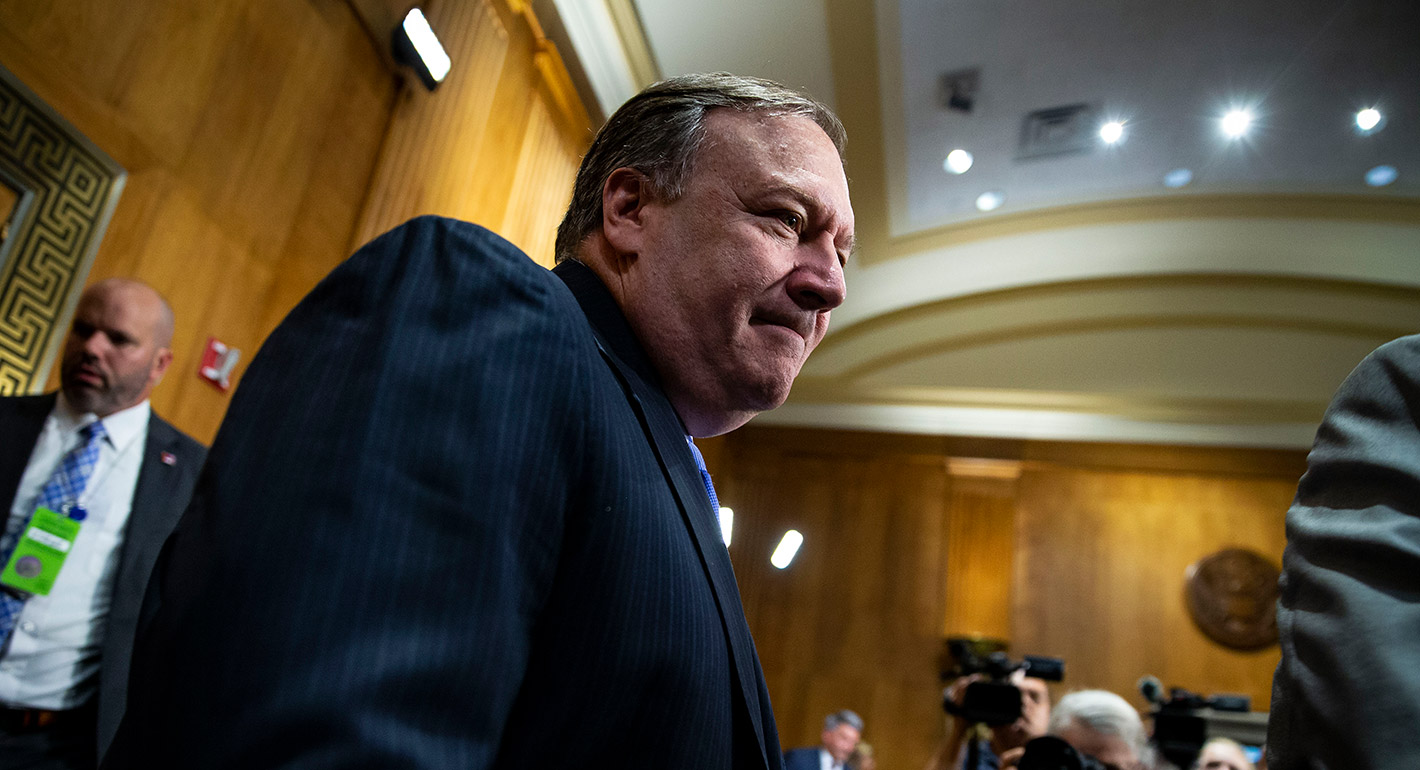
After attending the World War II commemoration in Poland earlier this week, U.S. Secretary of State Mike Pompeo seized the opportunity to embark on a diplomatic frenzy in Brussels. In a series of rendez-vous with the incoming EU leadership the message from the American diplomat-in-chief was surprisingly conciliatory, pledging a "reset" in the battered relationship between the EU and the Trump administration. Though one should obviously be wary of reading too much into a single diplomatic gesture by just one administration official, even someone like Pompeo who is unusually close to his President, Trump is apparently on board with the effort. The cordial tone is no doubt a welcome reprieve from Pompeo’s ill-received speech in Brussels late last year, but chances for a significant overhaul of the transatlantic relationship will remain low.
During his state visit to the White House in April 2018, President Macron’s proposal to join hands in dealing with China was rebuffed by Trump who reportedly remarked that the EU is a "worse" trade offender than China.
Underpinning the renewed U.S. outreach to Brussels is the perception in Washington that the new EU team led by Commission President-elect Ursula von der Leyen, Council President-elect Charles Michel, High Representative Josep Borrell, and European Parliament President David Sassoli, represent a less "hostile" group than the outgoing set of EU leaders. It is certainly true that von der Leyen is known as a staunch transatlanticist back home in Berlin. Likewise, Michel has previously expressed support for continued partnership with Washington under President Trump. But these new personalities aside, fundamental policy differences between the two sides are likely to remain and may in some cases even get worse over the next year.
Take Iran, for example. While President Macron is currently spearheading an initiative to broker fresh U.S.-Iranian talks, the U.S. administration had made clear it will continue its "maximum pressure" strategy against Teheran whilst threatening sanctions against European attempts to keep the JCPOA agreement alive. The lack of trust between the two sides was undoubtedly a key factor why it was so hard to cobble together a joint transatlantic response in the Strait of Hormuz earlier this summer.
Other issues on Pompeo’s agenda included trade, China, and EU defense initiatives – all which under more normal circumstances should be ripe for transatlantic cooperation. On trade, Trump early on walked away from the TTIP negotiations pursued by President Obama and imposed national security-based sanctions against European steel and aluminium producers. Although new trade discussions between the U.S. and the EU are underway with some incremental progress being made, the looming specter of U.S. tariffs against European car manufacturers (a decision is expected in the autumn) would deal a death blow to such talks, possibly even triggering an all-out trade war. Additionally, possible new EU policies on taxation of American tech giants and industrial policy will also certainly add to the tensions.
Meanwhile, China should in principle be an opportunity for deeper transatlantic engagement was it not for the fact President Trump thinks otherwise. During his state visit to the White House in April 2018, President Macron’s proposal to join hands in dealing with China was rebuffed by Trump who reportedly remarked that the EU is a "worse" trade offender than China (a line he has repeatedly recycled in his political rallies). And in a Twitter tirade this week, seemingly timed with Pompeo’s visit to Brussels, Trump once again pushed back against the notion of cooperating with the EU on China. Trump’s aversion against multilateralism and the WTO also undermines the potential for a coordinated multilateral strategy to jointly address unfair Chinese trade and economic behavior. The great irony here is of course that Europe itself has simultaneously become more critical in its own view of China in recent years.
Finally, new EU defense cooperation schemes should benefit Washington since they provide new mechanisms and incentives for Europe to generate desperately needed capabilities, thus contributing to transatlantic burden-sharing. However, the Trump administration has doubled down on a very critical view of PESCO and the European Defense Fund, even labeling them a "poison pill". While the issue of restricting American companies in new EU defense projects is a legitimate concern, the heavy-handed approach favored by the U.S. administration is counter-productive. If anything, we should expect these differences to persist as the new European Commission is likely to continue to push for stronger EU defense integration.
Pompeo’s visit offers a glimpse of hope that the Trump administration is maybe finally beginning to recognize the strategic necessity of having a stronger European Union as a partner.
Also add to this list climate, a top priority for the next European Commission where there is no sign that the Trump administration is willing to reenter into the Paris accords, and the outlook for transatlantic relations over the next year is not looking rosy.
Yet, this is not to say that the two sides should give up on engaging one another. On the contrary, EU leaders should resist the obvious temptation to simply try to wait Trump out. One reason for this is the chances that he could well be re-elected. Moreover, isolated progress on certain issues can still be made under Trump. Pompeo’s visit offers a glimpse of hope that the Trump administration is maybe finally beginning to recognize the strategic necessity of having a stronger European Union as a partner. But for real progress to be made, the Trump administration must abandon its ideological aversion to the EU and multilateralism, its encouragement of a no-deal Brexit, its support to European populists, and its misguided trade agenda.
Only if mutual trust can be reestablished can a new, rebalanced transatlantic relationship for the 21st century marked by growing great power competition come about. As long as Donald Trump is in the White House, this will be a tall order.
This article was originally published by Institut Montaigne.

Former Director, Europe Program, Fellow
Erik Brattberg was director of the Europe Program and a fellow at the Carnegie Endowment for International Peace in Washington. He is an expert on European politics and security and transatlantic relations.
Recent Work


Cornelius Adebahr, Dan Baer, Rosa Balfour, …

Erik Brattberg, Philippe Le Corre, Paul Stronski, …
Carnegie does not take institutional positions on public policy issues; the views represented herein are those of the author(s) and do not necessarily reflect the views of Carnegie, its staff, or its trustees.

As we close out another season of Strategic Europe, it is worth taking stock of the deep shifts underway.

Rym Momtaz

The hybrid warfare landscape is evolving rapidly, leaving policymakers without clear strategies. To better inform their work in addressing emerging challenges, governments must dig deeper into the underlying dynamics at play.


Raluca Csernatoni, Alicia Wanless
The EU had to compromise to adopt a twenty-first sanctions package against Russia, exposing growing cracks in the union’s resolve. Is this latest, weaker round worth it to keep pressure on Moscow?
Rym Momtaz, ed.

Trump is distracted and Ukraine wants Europe to step up. The continent’s leaders must find their voice and assert it in talks with Russia.

Alissa de Carbonnel

Mounting economic strain and battlefield losses will not necessarily make the Kremlin less dangerous. They could instead push Moscow toward a more aggressive hybrid campaign designed to test NATO’s Eastern flank, exploit allied hesitation, and fracture European resolve.

Maksym Beznosiuk