

Article
Stefan Lehne
{
  "authors": [
    "Stefan Lehne"
  ],
  "type": "legacyinthemedia",
  "centerAffiliationAll": "dc",
  "centers": [
    "Carnegie Endowment for International Peace",
    "Carnegie Europe"
  ],
  "collections": [
    "Coronavirus"
  ],
  "englishNewsletterAll": "ctw",
  "nonEnglishNewsletterAll": "",
  "primaryCenter": "Carnegie Europe",
  "programAffiliation": "EP",
  "programs": [
    "Europe"
  ],
  "projects": [],
  "regions": [
    "Europe",
    "Western Europe",
    "Iran"
  ],
  "topics": [
    "EU",
    "Political Reform"
  ]
}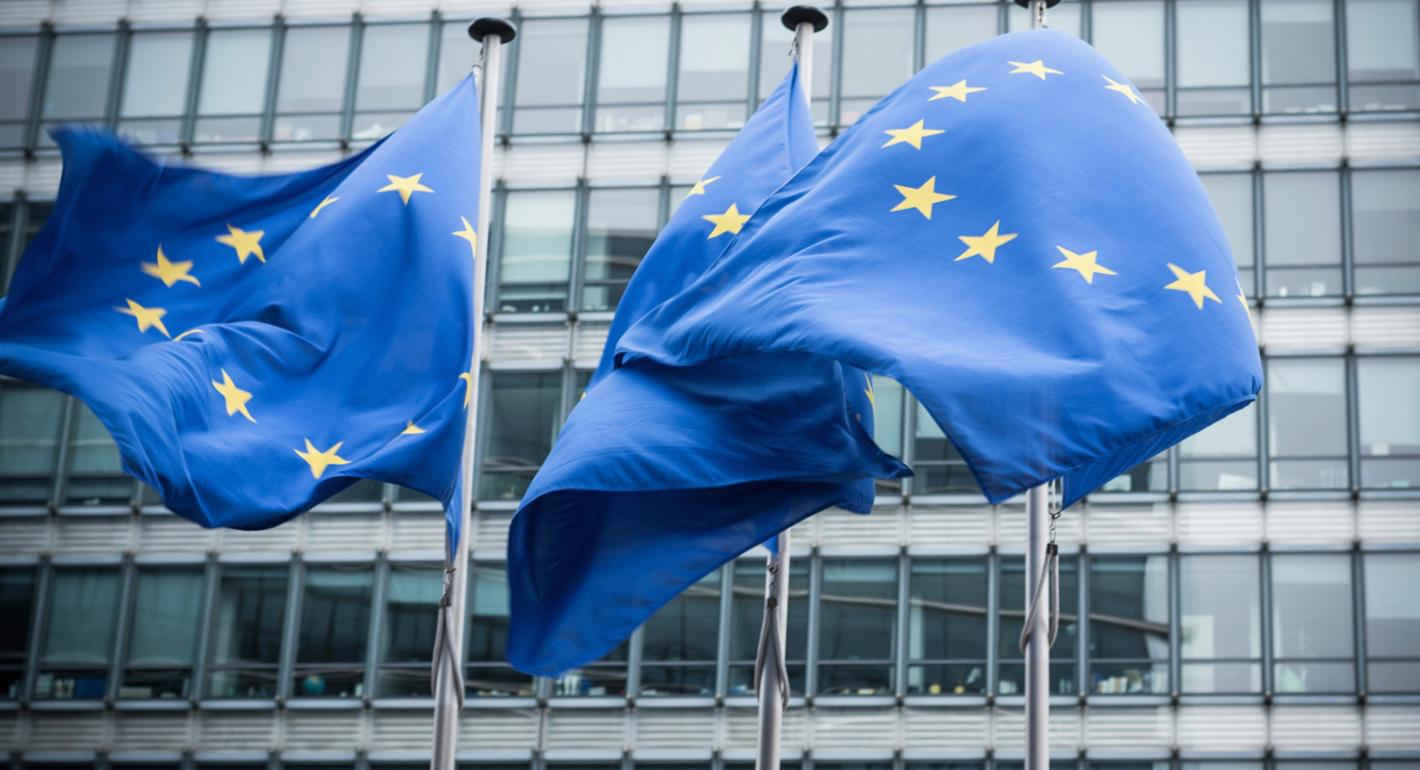
Source: Getty
The EU has gone through many crises over the past decades. But the coronavirus pandemic could well be the ultimate acid test of its resilience as a community based on solidarity and common values.
Source: EUobserver
The coronavirus crisis resembles a medieval morality play.
A bad fairy has put a curse on humankind putting the princes of this world before a terrible dilemma: either save as many people as possible - and, in the process, destroy the economy - or keep the economy going at the cost of thousands of lives.
For the coming months, national leaders will be torn back and forth between these conflicting imperatives, while everybody hopes - and some pray - for a deus ex machina, a medication or vaccine that would bring the nightmare to an end.What is the role of the EU in this drama?
As the virus affects all member states - though at different stages on the infection curve - it calls for crisis management at the European level and for strong mutual assistance among member states. This, however, has been slow to arrive.
For many people the spreading virus has led to a rapid shrinking of horizons.
Citizens reflexively turn to what is close and familiar. This is the hour of the nation state and of national leaders, leaving the EU on the sidelines.
In many countries, national egotism is resurging. Hence the rapid shutting down of national borders - even though the health benefits are dubious - and the initial bans of exports of medical supplies.
But this instinctive turning inwards is only one side of the story.
The Covid-19 crisis also marks the return of fact-based politics. Leading epidemiologists have become media stars. Their advice is translated into policy by pragmatic leaders who now enjoy broad support in the population.
The populists, who were recently still on the offensive, have shrunk into the background.
It is not clear how long this window of rational politics will last. If the suffering worsens and no end is in sight, all sorts of irrational behaviour and even greater national egotism can be expected. So this time must be used to ramp up crisis management also on the European level.
The governmental powers for healthcare and economic management remain on the national level.
Supplying intensive care units and bailing out companies threatened by bankruptcy is primarily a national responsibility.
However, the EU institutions must play a crucial supporting role by coordinating cross-border cooperation and mobilising additional funding.
Due to the wave of border closures, Schengen is currently on life support and the internal market shows many symptoms of infection.
By keeping national restrictive measures to a minimum and by safeguarding the free flow of goods, the European Commission must ensure that the single market does not fragment along national lines.
But a large part of the EU's job is also to get out of the way of the member states. By suspending the rules on state aid and on fiscal policy the commission has already given the member states enough room to launch unprecedented spending programs to make sure that sectors hit by the pandemic receive public support.
By initiating a €750bn bond-buying program, the European Central Bank has once again helped to shore up the European financial system.
EU institutions and the governments are now debating how to complement the national fiscal programs by mobilising the vast collective fiscal firepower of the EU.Now is the time to finally put to rest the old dispute between North and South about the sharing of risk.
It should be evident to everyone that if the economic survival of the countries suffering the worst damage from the crisis is in question, this also constitutes a huge threat for the eurozone and for EU as a whole.
The mindset of everybody for itself, which is so tempting under the acute stress of the crisis, must be countered by stepping up cooperation and mutual assistance among the member states.
Otherwise, the EU will be in great danger.
The worst affected countries will not forget that they have been abandoned by the EU and that the only aid came from China. Divisions will deepen and the cohesion among the EU members will suffer.
The first concrete acts of assistance are therefore encouraging. Some medical supplies have been shipped to Italy and Germany has opened a number of its hospitals to patients from France.
Much more needs to be done urgently to show that all EU countries are in this fight together.
The EU has gone through many crises over the past decades. But the coronavirus pandemic could well be the ultimate acid test of its resilience as a community based on solidarity and common values.

Senior Fellow, Carnegie Europe
Stefan Lehne is a senior fellow at Carnegie Europe in Brussels, where his research focuses on the post–Lisbon Treaty development of the European Union’s foreign policy, with a specific focus on relations between the EU and member states.
Recent Work
Stefan Lehne
Stefan Lehne
Carnegie does not take institutional positions on public policy issues; the views represented herein are those of the author(s) and do not necessarily reflect the views of Carnegie, its staff, or its trustees.

The European Commissioner for Trade is headed to China. But after President Xi’s bridge-building visit to Washington, can a more isolated EU overcome Beijing’s stranglehold on critical raw materials? Who will blink first?

Rym Momtaz, ed.

European NATO countries are wrestling with the possibility of U.S. disengagement from the alliance. With the continent’s security increasingly uncertain, governments must restore the credibility of their collective defense.



Hans-Dieter Lucas, Adam Thomson, Pierre Vimont

The domestic impacts of how long it is taking to end the war in Ukraine have pushed the French electorate to the political extremes and compromised the country’s diplomatic capacity.
Rym Momtaz

Before the next wave of EU enlargement takes place, the union needs to grapple with thorny questions of how power is distributed among its members.


Emil Sondaj Hansen, Ditte Brasso Sørensen

The new U.S.–Denmark–Greenland agreement will help Washington exert political, economic, and financial dominance under the guise of security. Yet, it acknowledged Copenhagen’s and Nuuk’s sovereignty on the island.

Marc Pierini