

Q&A
Dara Massicot, Aaron David Miller, Andrew S. Weiss
{
  "authors": [
    "Aaron David Miller"
  ],
  "type": "legacyinthemedia",
  "centerAffiliationAll": "",
  "centers": [
    "Carnegie Endowment for International Peace"
  ],
  "collections": [],
  "englishNewsletterAll": "",
  "nonEnglishNewsletterAll": "",
  "primaryCenter": "Carnegie Endowment for International Peace",
  "programAffiliation": "",
  "programs": [],
  "projects": [],
  "regions": [
    "Middle East",
    "Israel",
    "Palestine",
    "United Arab Emirates"
  ],
  "topics": [
    "Security",
    "Foreign Policy"
  ]
}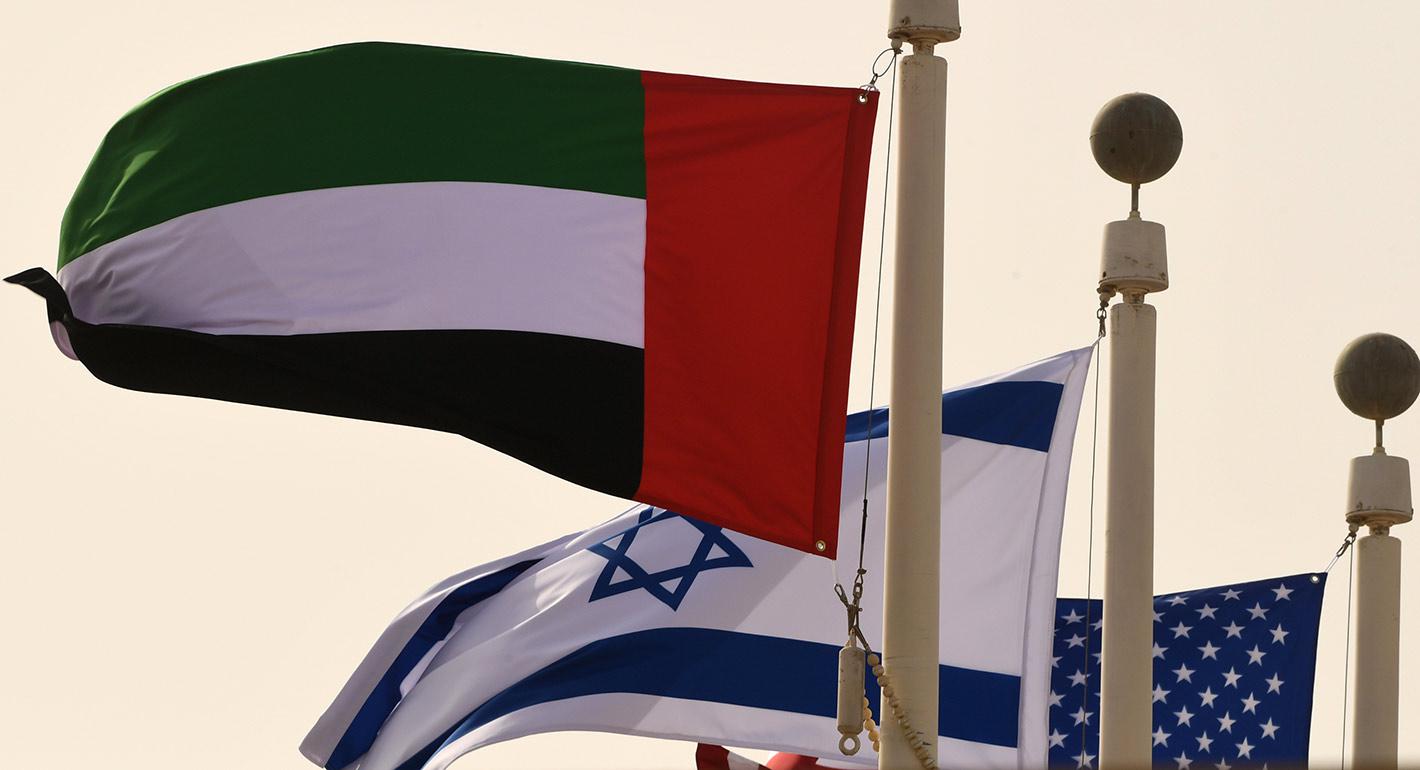
Source: Getty
Whether the Israel-UAE deal holds and has an enduring impact on the region will depend on several factors.
Source: USA Today
Jared Kushner’s success in facilitating the United Arab Emirates-Israel normalization accord is an undeniable piece of good news in a region that produces a steady flow of bad. Indeed, over time, it may well lead to warmer ties between Israel and the UAE than currently exist between Israel, Jordan, and Egypt.
But there’s no doubt the Kushner trip to the UAE on Monday — together with an Israeli delegation — is as much about politics and the narrow interests of the three key players as it is about peace. Whether it becomes more than that will depend on how many Arab states follow the UAE’s lead and how Israel deals with an unresolved Palestinian problem.
After meeting with Israeli Prime Minister Benjamin Netanyahu, on Sunday, Kushner and the U.S. delegation, which included NSA Robert O’Brien, landed in the Abu Dhabi on Monday on an El Al flight carrying the Israeli delegation, the first such open Israeli commercial flight in history. The aircraft’s route also apparently took it over Saudi Arabia — another first for an Israeli commercial airliner.
The so-called Abraham accords (an apparent reference to the common Abrahamic traditions of Judaism, Christianity, and Islam) was announced on Aug. 13 accord and if implemented will be the first normalization of relations with Israel since the peace treaties with Jordan in 1994 and Egypt in 1979.
Israeli Prime Minister Benjamin Netanyahu, left, and White House adviser Jared Kushner on Aug. 30, 2020, in Jerusalem, Israel.
Unlike Egypt and Jordan who fought a total of four wars with Israel, the Israel-UAE accord won’t have the same strategic or regional impact as peace treaties to end conflict between adversaries. But paradoxically because neither Israel nor the UAE were ever bitter enemies, relations could become much warmer faster. The two have been conducting discreet exchanges on intelligence and security for years. And business deals too. Israel's Economy Ministry estimates that exports to the UAE could increase from an annual $300,000 to $300 million-$500 million, and for annual UAE investment in Israel to reach $350 million.
The politics of the three the key players also played a dominant role in the timing of the accord.
For the Trump Administration, specifically, Jared Kushner architect of the Arab strategy, cultivating closer ties with Saudi Arabia and the UAE offered the promise of billions in arms sales and business deals for U.S. companies; as for peacemaking, Kushner’s priority, as he explained to me in 2017, was always focused on cultivating strategic ties with Gulf states, not the Palestinians, a more politically popular approach among pro-Israeli Evangelical Christians and conservative Republicans. And for a President hammered by pandemic, a normalization accord between Israel and a Gulf would demonstrate competency and some good news. That Kushner is physically accompanying the Israeli delegation is designed to demonstrate US centrality to the deal and to milk the political benefits for his beleaguered father-in-law, much as Secretary of State Pompeo’s norm-crushing address from Jerusalem to the RNC.
For Netanyahu, the deal couldn’t have come at a better time. Under pressure from a resurgence of COVID-19, economic recession, and facing trial, all of the hoopla was not just a distraction but a way to tout his view that Israel could make peace with Arabs without the Palestinians. Having committed himself to annexing the West Bank but lacking a green light from the Trump Administration, he now had a way out: trade normalization with the UAE in return for their insistence that he drop or at least suspend annexation.
Sheikh Mohammed bin Zayid, the de facto ruler of the UAE also fared well in the deal. By formalizing what had been a well-known “secret “set of ties with Israel, he could claim the UAE rescued the Palestinians from Israeli annexation, demonstrate the UAE’s bold independence as a regional player, grease the skids for his longstanding request from the U.S. to buy the F-35s fighter aircraft and pick up points in Washington by making nice to Israel regardless if Trump or Biden wins.
Whether the Israel-UAE deal holds and has an enduring impact on the region will depend on several factors. Will Netanyahu moderate his policies toward Palestinians, permanently shelve annexation and avoid high profile actions on the ground likely to embarrass the UAE? If not, bin Zayid will calibrate the pace of normalization accordingly.
Will other Arab states follow suit. After the UAE, Kushner is supposed to travel to Oman, Bahrain and Saudi Arabia. The first two — having already established informal ties with Israel — are likely candidates. But it may take some time. Saudi Arabia — the ultimate prize for Israel — is also unlikely to come along quickly. King Salman — unlike his son Crown Prince Muhammed bin Salman (MBS) is more traditional and pro-Palestinian, though moving closer to Israel might help his well-deserved image for ruthlessness and incompetency for his role in murder of journalist Jamal Khashoggi.
Arab states may await the outcome of the November presidential elections before making new public commitments on normalization with Israel. More than likely, Kushner will succeed in lining up commitments by the Arabs to attend a UAE-Israel signing ceremony the Administration would like to hold in September. Will all this hoopla make a difference in an election only 60 days away? Probably not. But my grandmother used to say about her chicken soup — it couldn’t hurt.

Senior Fellow, American Statecraft Program
Aaron David Miller is a senior fellow at the Carnegie Endowment for International Peace, focusing on U.S. foreign policy.
Recent Work


Dara Massicot, Aaron David Miller, Andrew S. Weiss


Sophia Besch, Eric Ciaramella, Steve Feldstein, …
Carnegie does not take institutional positions on public policy issues; the views represented herein are those of the author(s) and do not necessarily reflect the views of Carnegie, its staff, or its trustees.

Europe is facing rising populism internally as well as external pressures from Russia, China, Turkey, and the United States.

Dimitar Bechev

Much has been said of the changes Brussels is trying to make to the EU enlargement process. Here’s why gradual integration might—or might not—be the answer.
Dimitar Bechev

The European Commissioner for Trade is headed to China. But after President Xi’s bridge-building visit to Washington, can a more isolated EU overcome Beijing’s stranglehold on critical raw materials? Who will blink first?

Rym Momtaz, ed.

European NATO countries are wrestling with the possibility of U.S. disengagement from the alliance. With the continent’s security increasingly uncertain, governments must restore the credibility of their collective defense.



Hans-Dieter Lucas, Adam Thomson, Pierre Vimont

The new U.S.–Denmark–Greenland agreement will help Washington exert political, economic, and financial dominance under the guise of security. Yet, it acknowledged Copenhagen’s and Nuuk’s sovereignty on the island.

Marc Pierini