

Paper
James M. Acton, Ankit Panda
{
  "authors": [
    "James M. Acton"
  ],
  "type": "commentary",
  "centerAffiliationAll": "dc",
  "centers": [
    "Carnegie Endowment for International Peace"
  ],
  "collections": [],
  "englishNewsletterAll": "ctw",
  "nonEnglishNewsletterAll": "",
  "primaryCenter": "Carnegie Endowment for International Peace",
  "programAffiliation": "NPP",
  "programs": [
    "Nuclear Policy"
  ],
  "projects": [],
  "regions": [
    "North America",
    "United States",
    "East Asia",
    "Russia",
    "North Korea"
  ],
  "topics": [
    "Security",
    "Military",
    "Nuclear Policy",
    "Arms Control"
  ]
}
Source: Getty
Bush claimed the United States needed to leave the treaty to protect itself. Now it’s clear that was a mistake.
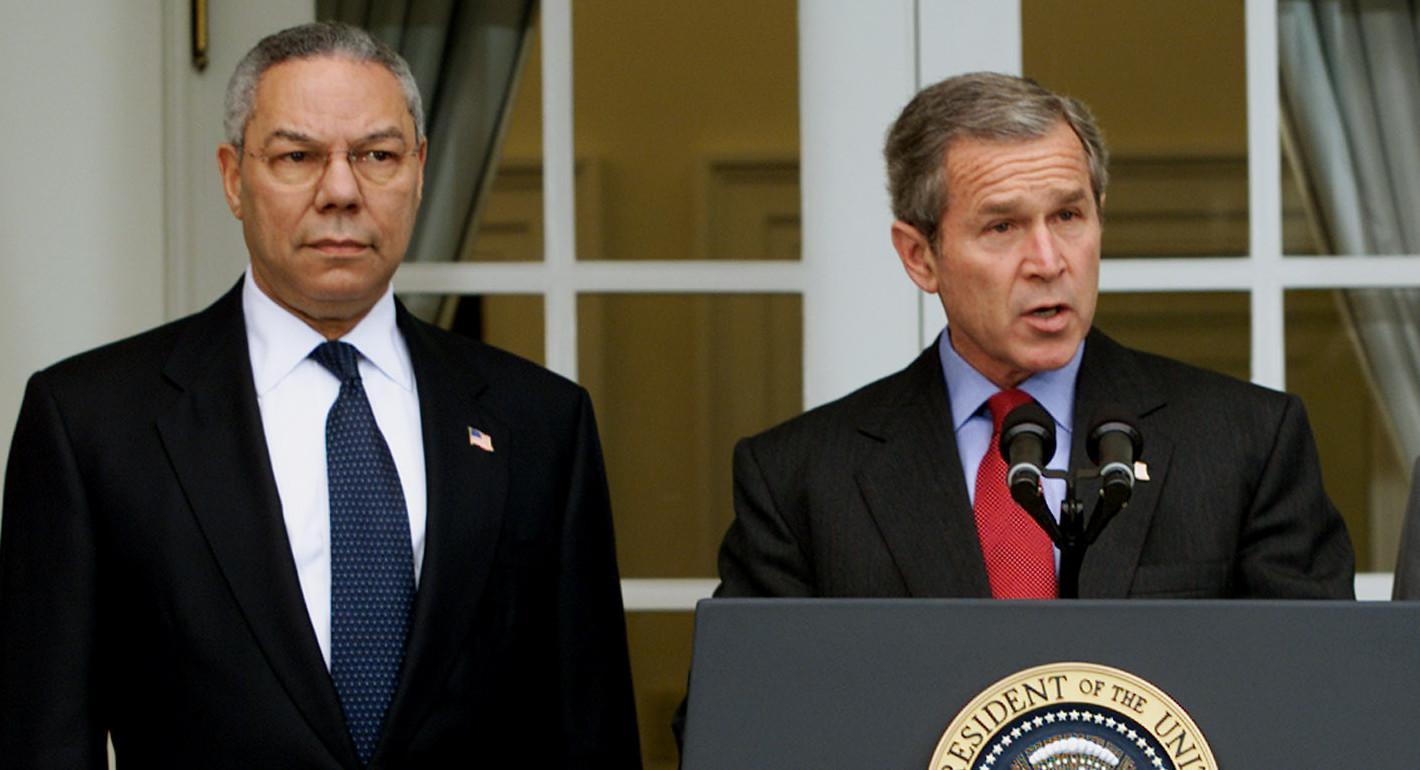
Twenty years ago today, then-president George W. Bush announced that the United States would withdraw from the Anti-Ballistic Missile (ABM) Treaty. This cornerstone of the Cold War arms control regime, signed in 1972, sought to cap the arms race by limiting homeland missile defenses, thus reducing pressures on the superpowers to build more nuclear weapons. Bush, however, claimed that the treaty had outlived its purpose, since “the hostility that once led both our countries to keep thousands of nuclear weapons on hair-trigger alert” had died alongside the Soviet Union. Instead, three months after September 11, 2001, he argued that the treaty was hindering the United States from protecting itself against “terrorists” and “rogue states.”
It’s clear now that withdrawing was an epic mistake. The United States’ homeland missile defenses are porous; why else would Washington worry that North Korea is deploying intercontinental ballistic missiles (ICBMs)? Yet those defenses have succeeded in fueling arms races with Russia, whose hostility toward the United States is alive and well, and now with China too. This experience should prompt Washington to try to negotiate new limits on missile defenses, and it provides a cautionary tale about the very real costs of withdrawing from international agreements.
Bush’s central contention was that the treaty “prevents us from developing effective defenses.” He was wrong on two counts.
First, the treaty wasn’t the problem. Physics was. And engineering. And program management. And budgets.
Homeland missile defense is fiendishly difficult, and there are good reasons to doubt the efficacy of the United States’ system. The system’s test record is 11 for 19: great for baseball, not so much for intercepting nuclear-armed ICBMs. In the real world, the system’s performance would likely be much worse—partly because in the tests the hitter knew which pitch was coming and partly because testing conditions have not been realistic.
No U.S. test has ever involved a target missile traveling at the speed necessary to reach the lower 48 states from North Korea. No test ever has involved a salvo of two or more incoming ICBMs or has appeared to have included realistic countermeasures, such as decoys shaped like real warheads. Only one test was conducted at night, when the incoming missile was not illuminated by the sun, and it was a failure.
So if North Korea fires a single, simple ICBM at Alaska during the daytime, then we should be fine—if the we spot the launch preparations and get lucky.
The second problem with Bush’s argument was that the United States did not need to leave the ABM Treaty to legally deploy defenses against North Korea, the system’s current focus. The agreement permitted the United States to field up to one hundred interceptors around ICBM silos in North Dakota—an arrangement that would have been roughly about as effective as (or no more ineffective than) the forty-four interceptors that the United States has deployed in Alaska and California since 2001. Yet, even though the United States’ homeland missile defenses do not provide effective protection against North Korea, they have stirred deep concerns in China and Russia.
As a matter of policy, the United States does not aim to defend the homeland against a Chinese or Russian nuclear attack; rather, it seeks to deter such attacks through the threat of retaliation. However, both Beijing and Moscow worry that, in the future, the United States may be able to deploy missile defenses capable of negating their nuclear forces and leaving them vulnerable to coercion. They have responded accordingly.
In 2018, Russian President Vladimir Putin gleefully unveiled a range of new developmental nuclear delivery systems—an intercontinental hypersonic glider, a nuclear-powered cruise missile, and a nuclear-powered torpedo—that he stated were a response to the demise of the ABM Treaty. History appears to back him up. The glider, which has now been deployed, was first tested in about 2004—just two years after the U.S. withdrawal took effect.
China is following suit. It has armed some ICBMs with multiple warheads. This summer, it conducted two tests of an orbital weapon capable of delivering a hypersonic glider (an unpowered reentry vehicle that glides in the atmosphere faster than five times the speed of sound). U.S. officials have stated that China is “looking at” nuclear-powered delivery systems. In 2020, the U.S. general who was then responsible for defending North America argued that China’s aim is to ensure that, after absorbing a preemptive U.S. attack, its surviving nuclear weapons can penetrate U.S. defenses.
The tens of billions of dollars that the United States has poured into homeland missile defense since 2001 have proved ineffective, and they have fueled arms races with China and Russia that have undermined U.S. security. President Joe Biden’s administration has sensibly identified arms control as a way to manage these growing dangers. A willingness to negotiate new limits on homeland missile defenses—in return for significant concessions from China and Russia—should be part of its approach.
There’s a more general lesson here, one that the United States’ withdrawal from the Iran nuclear deal also demonstrates: No international agreement is perfect, but before withdrawing, the United States needs to do more than simply assess the benefits of leaving. It also needs to take a long, hard, and unsentimental look at the costs.

Jessica T. Mathews Chair, Co-director, Nuclear Policy Program
Acton holds the Jessica T. Mathews Chair and is co-director of the Nuclear Policy Program at the Carnegie Endowment for International Peace.
Recent Work

James M. Acton, Ankit Panda
James M. Acton
Carnegie does not take institutional positions on public policy issues; the views represented herein are those of the author(s) and do not necessarily reflect the views of Carnegie, its staff, or its trustees.

The EU can impose sanctions but struggles to enforce them without the United States. With Washington increasingly disinterested in backing European interests, the bloc must now fend for itself.


Nicu Popescu, Tiago Antunes

Russia is testing the waters of NATO’s mutual defense clause. What do strikes in Romanian territorial waters mean for the alliance’s posture toward Moscow?

Dimitar Bechev

With its public finances in shambles, the far right polling at 35 percent ahead of the 2027 presidential election, and a growing protest movement, is France’s crisis a threat to the EU’s geopolitical awakening?

Rym Momtaz, ed.

Ahead of a tough winter for Ukraine, Donald Trump’s swing back toward Russia bodes ill. But instead of panicking, Kyiv’s European allies are focusing on action.
Rym Momtaz

While the EU and European governments are embracing the much-lauded middle-power moment, this entails three difficult conundrums.

Richard Youngs